Peter Spanton: The Man Who Chose the Bar Over the Spotlight and Built Something Quietly Extraordinary
Peter Spanton matters today not because he sought fame, but because, at every stage of a long and shape-shifting career, he understood what people wanted to drink before they could articulate it themselves.
Quick Bio
| Detail | Information |
| Full Name | Peter Charles Spanton |
| Born | January 1955, London, England |
| Nationality | British |
| Age (2026) | 71 |
| Known Roles | Restaurateur, Cocktail Mixer, Beverage Entrepreneur, Creative Director |
| Key Venture 1 | Owner, Vic Naylor Restaurant and Bar, Clerkenwell (June 1986 – December 2005) |
| Key Venture 2 | Founder and Creative Director, Peter Spanton Drinks (est. 2005, launched commercially c.2012) |
| Early Career | Cocktail mixer at Blitz (Covent Garden) and The Fridge (Brixton), early 1980s |
| Awards | Gold, Silver, and Bronze — SIP Awards, Great Taste Awards, Class Bar Awards (2017 & 2018) |
| Occupation (Companies House) | “Drink Designer” |
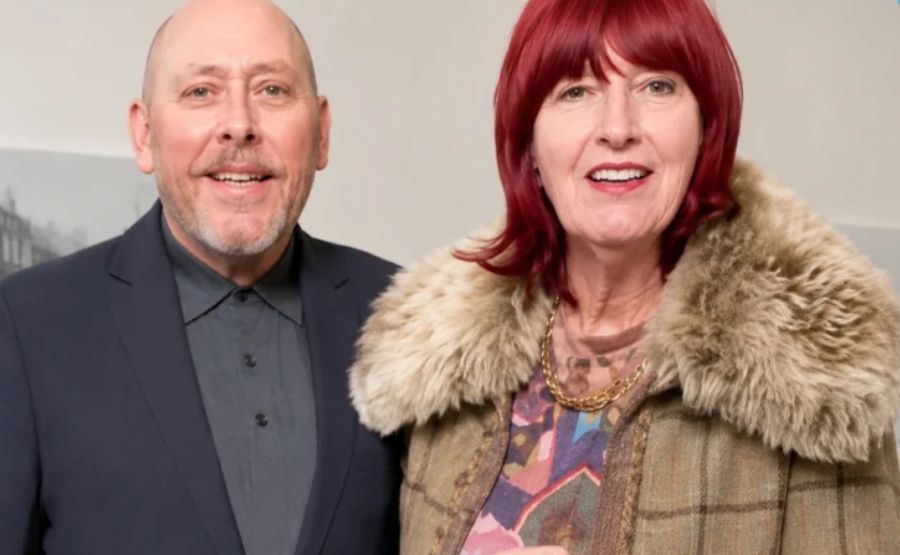
| Spouse | Janet Street-Porter (married at Great Yarmouth, Norfolk, on January 31, 2026) |
| Previous marriages | None (first marriage) |
| Residence | Haddiscoe, Norfolk; also maintains homes in Kent and London |
| Companies | Peter Spanton Limited (dissolved 2018); Peter Spanton Drinks Ltd (dissolved 2022) |
| Notable fans | Damon Albarn, Paul Simonon, Will Self, Mark Hix, Fergus Henderson |
The Man Nobody Knew
On 3 February 2026, Janet Street-Porter walked onto the set of Loose Women and casually upended the expectations of everyone watching. She and her partner of 27 years, she announced, had got married that past Saturday. The room erupted. The internet followed shortly after.
The groom was Peter Spanton. Almost nobody had heard of him. That was precisely the point.
For nearly three decades, Spanton had lived alongside one of Britain’s most recognisable broadcasters without once seeking the klieg lights himself. He gave no interviews, avoided red carpets, and built a business and a life on his own quiet terms. His sudden emergence into public consciousness in early 2026 offered a rare glimpse of a man who had, in fact, been doing genuinely interesting things for four decades — just not loudly.
See also “Kev Corbishley: The Man Who Lit the Darkness Behind British Television’s Brightest Shows“
Born Into a City That Was Changing
Peter Charles Spanton arrived in January 1955 in London — a city still rebuilding its confidence in the postwar years, still finding its rhythm. The specific borough of his birth has not entered the public record, though Companies House lists addresses that place him squarely within the orbit of east and central London across the decades. His father, known by the affectionate East End nickname “Notcher,” lived until 2012.
The city Spanton grew up in was transitioning. By the time he reached his late teens in the early 1970s, London’s cultural life was electric and restless. Punk was a few years away. Subcultural energy ran through Brixton, Soho, and the East End like voltage. Spanton absorbed it all.
Little is publicly documented about his formal education. What we know instead is what he chose: he gravitated toward the social, the tactile, the world of bars and cocktails and crowds.
The New Romantic Apprenticeship
Before Spanton opened a venue of his own, he worked behind some of the most culturally charged bars in 1980s London. According to The Caterer, the leading UK hospitality trade publication, Spanton mixed cocktails at two venues that together defined the early-decade mood of the capital.
The first was Blitz, a Covent Garden club that served as the New Romantic movement’s spiritual center. Boy George worked in the cloakroom there. Spandau Ballet formed in its orbit. Blitz was not merely a nightclub — it was a laboratory for identity and style. Behind that bar, Spanton learned to read a room.
The second was The Fridge, the legendary Brixton venue that ran from 1981 until 2010. If Blitz was glamour, The Fridge was voltage. It pulled in artists, musicians, and partygoers with a more diverse and anarchic energy. Mixing drinks at both venues in the same period gave Spanton an education no hospitality school could replicate.
The Clerkenwell Years: Building an Institution
By June 1986, Spanton had taken the logical next step. He opened Vic Naylor’s at 38–42 St John Street in Clerkenwell, directly opposite Smithfield meat market — the oldest wholesale meat market in Britain, operating since the tenth century. The address was not chosen carelessly. Smithfield gave the area its character: earthy, working, unapologetic.
Vic Naylor’s became something more than the sum of its parts. Barbican Life later described it as “supposedly the start of the Clerkenwell bar and restaurant scene” — a claim that speaks to its cultural timing if not its singular cause. The venue attracted artists, journalists, designers, musicians, and what the same publication characterised as a “celeb/gangster clientele.” That mix — creative energy alongside edge — was Spanton’s recipe, and it worked for nearly two decades.
The venue’s most lasting pop-cultural imprint came in 1998, when Guy Ritchie used it as the filming location for JD’s bar in Lock, Stock and Two Smoking Barrels. The character of JD was played by Sting. The scene captured something of Vic Naylor’s actual atmosphere: slightly dangerous, definitely alive.
Spanton managed the venue for almost twenty years, until December 2005. The sale of the building itself came around 2010. By then, he had already begun building something new.
The Pivot: Quitting Alcohol and Starting a Revolution
Spanton left the restaurant trade and, in a move that surprised those who knew him, quit drinking alcohol entirely. The decision was personal and definitive. It also revealed a problem he had not anticipated.
He could not find anything decent to drink instead. He told The Independent that he bought every non-alcoholic drink on the market, lined them up on a table, sorted them into categories, and evaluated them honestly. Only two were good enough for an adult palate. The rest were either cloyingly sweet, artificially flavoured, or simply designed for children who wanted to pretend they were drinking something grown-up.
So he started making his own. The idea, as the brand’s own website later put it, “wafted forth from the glorious fug of London’s famous Vic Naylor’s bar.” The lived experience of the venue — what guests ordered, what they craved, what the bartenders mixed and what failed — became the intellectual foundation of the new enterprise.
Peter Spanton Drinks launched commercially around 2012. The brand grew to nine products, each carrying a number rather than a name. The numbering runs out of sequence deliberately. Spanton told I Love Gin that he wanted people “to be intrigued, to ask why.” The gap between the numbers is not an oversight — it is an invitation.
The Products: Designed for Adults
The flagship product, No.9 Cardamom Tonic, carries the heady fragrance of cardamom and pairs particularly well with gin. It won awards and became the drink that most clearly articulated what the brand stood for: something botanical, adult, and uncompromising.
No.3 Dry Ginger is dedicated to Spanton’s father. The label reads: “In memory of Notcher Spanton 1928 to 2012.” It draws on the flavour profile of 1950s East London, the London his father knew. No.4 combines fresh mint and dark chocolate with aromatic bitters, designed as a mixer for rum and amaretto. No.5 pairs lemongrass with ginger, built around vodka. No.13 is a grapefruit Salted Paloma soda, aligned with tequila and mezcal.
The brand made two further distinctions that mattered in the trade. First, the products were among the first UK beverages carbonated using carbon-neutral volcanic CO₂. Second, they were not designed as afterthoughts to spirits — they were designed as equals. The brand philosophy held that a mixer should command the same attention as the spirit it accompanies.
When Will Self Changed Everything Overnight
The launch of one product — No.7, an Acai berry drink — illustrates both the appeal and the chaos of getting something right in public. Before the drink had officially launched, novelist and journalist Will Self wrote a piece praising it.
The response was immediate and overwhelming. Spanton had offered free samples through the brand website. By that evening, he told The Independent, he had received 3,000 emails — from recovering alcoholics, pregnant women, members of Muslim communities, and people with medical conditions that prevented them from drinking alcohol. He took the website down.
The episode revealed something important about the market Spanton had accidentally uncovered. Millions of people needed a sophisticated non-alcoholic option, and nobody had given them one they could respect. Damon Albarn and Paul Simonon of The Clash and Gorillaz reportedly took No.7 on tour with them. Writer and intellectual Will Self had championed it before the world could even order it.
Chef Mark Hix stocked the range across his restaurants. Fergus Henderson, one of the most respected figures in British cooking, served Peter Spanton Drinks at St John — his Michelin-recognised Clerkenwell restaurant. The geographic coincidence was meaningful: St John sits in Clerkenwell, the same neighbourhood where Vic Naylor’s had stood.
The Corporate Reality: Success and Structural Strain
The story of Peter Spanton Drinks is not uniformly triumphant. Companies House records tell a more complicated story.
Peter Spanton Limited was incorporated in May 2008 and dissolved in May 2018. Peter Spanton Drinks Ltd was incorporated in July 2014 but entered creditors’ voluntary liquidation in June 2020. It was formally dissolved in July 2022. These are not minor administrative details — creditors’ voluntary liquidation indicates real financial strain, most likely accelerated by the hospitality sector’s catastrophic 2020.
And yet the brand has not vanished. Products still appear on Amazon UK and Ocado. The website remains live. The brand’s Instagram account, @peterspanton_, carries over 1,500 posts. Spanton’s official occupation on Companies House still reads “Drink Designer.” The legal entity collapsed; the enterprise, in some form, persists. It is a distinction that says something about the man: he keeps building regardless of the formal scaffolding around him.
A Personal Life Conducted in Private
While Janet Street-Porter spent five decades in the full glare of British public life, Peter Spanton spent almost exactly the same period avoiding it. The contrast between the two, in temperament and in public posture, runs through their entire partnership.
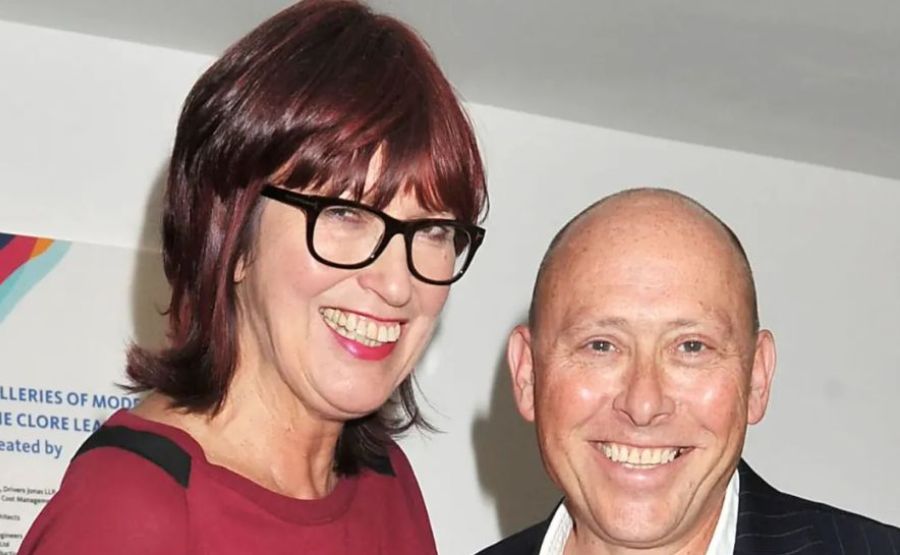
They met in 1999. Street-Porter, then freshly divorced from her fourth husband David Sorkin, was 52 years old. Spanton was 44. Both had lived through enough to know what they wanted and what they did not. They began a relationship that would last 27 years before they formalised it at all.
Street-Porter, speaking to The Guardian in 2025, described it as “probably” her longest relationship. Asked whether it was a good one, she replied: “What do you define good as? It survived. I’m not bored.” It is not a romantic declaration. It is something more durable: honest assessment of a thing that has stood the test of time.
The couple live primarily in Haddiscoe, Norfolk, with additional homes in Kent and London. Spanton served as company secretary of Janet Street-Porter Limited from April 2005 until October 2017 — a quiet administrative fact that nonetheless suggests a practical collaboration running alongside the personal one.
The Wedding: Six Guests, a Dog, and a Ten-Minute Ceremony
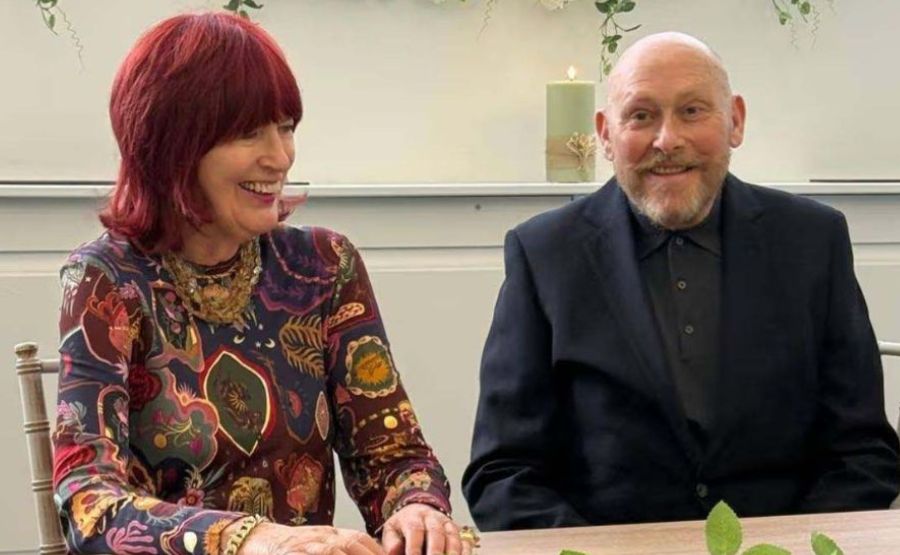
The wedding happened on Saturday 31 January 2026 at a registry office in Great Yarmouth, Norfolk. The entire ceremony lasted approximately ten minutes. Six people were present: the couple, two former neighbours acting as witnesses, and two close friends. There was also a dog called Badger.
Street-Porter did not tell anyone beforehand. Not colleagues, not family, nobody. She revealed it the following Monday on Loose Women, showing a home video of herself and Spanton alongside their dog. She said she had “waited till the last for the best.”
For Spanton, it was his first marriage. He was 71 years old. He had built two significant careers, lived through the financial dissolution of his company, maintained a 27-year partnership with a nationally famous figure, and done almost all of it without appearing in a single tabloid photograph. That he finally stepped into public view to marry, briefly, at a Norfolk registry office — and then stepped back out — feels entirely consistent.
The Confusion: Two Peter Spantons
No honest account of Peter Spanton can ignore the identity confusion that surrounds him online. A significant number of websites have conflated the entrepreneur born in January 1955 with an entirely different man of the same name.
Peter Spanton was born in Bow, East London, in 1943. He was a pioneering figure in British Wado-ryu karate, one of the first Englishmen graded to black belt under Tatsuo Suzuki. He represented England internationally, became the first European WUKO kata judge, officiated at multiple World Championships, and achieved a 9th Dan ranking. He died on 23 November 2020.
These two men shared a name and a city. They shared nothing else. Several content-mill websites built narratives that combined both lives into a single fictional biography, giving the drinks entrepreneur a martial arts backstory he never had. The karate pioneer deserves his own accurate account. So does Spanton the restaurateur. This article concerns only the latter.
Legacy: What He Actually Built
Peter Spanton’s legacy operates on three levels. The first is geographic and cultural: Vic Naylor’s helped establish Clerkenwell as a destination. Today the neighbourhood is one of London’s most sought-after for design studios, architecture firms, food businesses, and independent bars. Whatever else shaped that district, Spanton’s bar was operating there before almost anyone else thought of it as interesting.
The second is commercial. Peter Spanton Drinks arrived before the premium mixer category existed as a defined market. Fever-Tree went public in 2014. The craft soft drink movement accelerated through the mid-2010s. Spanton was bottling his cardamom tonic, his lemongrass mixer, and his volcanic CO₂-carbonated ginger ale while the rest of the industry was still treating tonic water as a commodity. He built the market and then watched the market build around him.
The third legacy is harder to quantify but perhaps the most interesting. Spanton represents a particular kind of entrepreneurial intelligence: the person who does not produce ideas from spreadsheets but from lived experience behind a bar, from a table covered in inadequate soft drinks, from a conviction that adults deserve better than what they are being offered. That approach — lateral, sensory, stubbornly quality-focused — continues to influence how premium beverage brands position and present themselves.
Final Words
Peter Spanton spent four decades building things other people then spent years trying to replicate. He ran one of London’s defining bars, walked away, quit drinking, noticed a gap in the market, and filled it with a brand that attracted musicians, novelists, and chefs before it attracted press coverage.
The company that carried his name formally dissolved in 2022. The brand still sells. That tension — between institutional structure and persistent creative identity — captures something essential about who Spanton is.
He is not a celebrity by temperament or aspiration. He is something slightly rarer: a maker, a taster, an evaluator of atmospheres and flavours, who happened to spend 27 years alongside someone the whole country knew. His marriage in January 2026 gave him a moment of public visibility he had spent three decades carefully avoiding. He appeared, briefly, with a dog called Badger, and then went back to Norfolk.
That, in its way, is its own kind of integrity.
FAQs
1. When and where was Peter Spanton born?
Peter Charles Spanton was born in January 1955 in London, England. Companies House records, which list his occupation as “Drink Designer,” confirm this birth date.
2. How old is Peter Spanton in 2026?
He turned 71 in January 2026, the same month he married Janet Street-Porter.
3. When and where did Peter Spanton and Janet Street-Porter marry?
They married on Saturday 31 January 2026 at a registry office in Great Yarmouth, Norfolk. The ceremony lasted approximately ten minutes.
4. Had Peter Spanton been married before?
No. It was his first marriage. Janet Street-Porter’s co-host on Loose Women, Kay Edwards, pointed out that it was Street-Porter’s fifth.
5. How long were Peter Spanton and Janet Street-Porter together before marrying?
They began their relationship in 1999, making their partnership approximately 27 years old at the time of their wedding.
6. What was Vic Naylor’s, and where was it?
Vic Naylor’s was a bar and restaurant at 38–42 St John Street in Clerkenwell, London, situated directly opposite Smithfield meat market. Spanton owned and operated it from June 1986 to December 2005, with the actual building sold around 2010.
7. What is the connection between Vic Naylor’s and Lock, Stock and Two Smoking Barrels?
Guy Ritchie used Vic Naylor’s as the filming location for JD’s bar in his 1998 film. The character of JD was played by Sting.
8. Where did Peter Spanton work before opening Vic Naylor’s?
According to The Caterer, he worked as a cocktail mixer at two culturally significant 1980s London venues: Blitz in Covent Garden, the epicentre of the New Romantic movement, and The Fridge in Brixton.
9. What is Peter Spanton Drinks?
It is a premium mixer and tonic brand Spanton founded after leaving the restaurant business, launched commercially around 2012. Products are numbered out of sequence (No.3, No.4, No.5, No.7, No.9, No.13, etc.) and are made using botanical ingredients.
10. Why did Peter Spanton start a drinks brand?
After quitting alcohol, he found that nearly all non-alcoholic adult drinks on the market were unsatisfactory. He evaluated every available product, found only two acceptable, and began developing his own recipes.
11. Who are some notable fans of Peter Spanton Drinks?
Damon Albarn and Paul Simonon (The Clash and Gorillaz) reportedly toured with the No.7 Acai drink. Novelist Will Self wrote a piece praising No.7 before it officially launched, generating 3,000 emails to the brand’s website overnight. Chefs Mark Hix and Fergus Henderson stocked the range.
12. What awards has Peter Spanton Drinks won?
In 2017 and 2018, the brand took home Gold, Silver, and Bronze at the SIP Awards, Great Taste Awards, and Class Bar Awards.
13. What happened to the Peter Spanton Drinks company?
In June 2020, Peter Spanton Drinks Ltd. went into creditors’ voluntary liquidation, and in July 2022, it was officially dissolved. However, the brand’s products remain available via Amazon UK and Ocado, and the website remains active.
14. Is there confusion about Peter Spanton’s identity online?
Yes. Many websites have incorrectly merged his biography with that of a different Peter Spanton — a pioneering Wado-ryu karate instructor born in Bow, East London in 1943, who died on 23 November 2020. The two men had entirely separate lives.
15. Where do Janet Street-Porter and Peter Spanton reside?
They live primarily in Haddiscoe, Norfolk, and maintain additional homes in Kent and London.
Connecting curious minds with stories that educate, inspire, and inform with The Editorial Times.