Kev Corbishley: The Man Who Lit the Darkness Behind British Television’s Brightest Shows
In a screen culture that worships faces, Kev Corbishley spent his working life in the shadows — and when he died, two of Britain’s most beloved television productions stopped to say his name out loud.
Quick Bio
| Detail | Information |
| Full Name | Kevin Corbishley |
| Known As | Kev Corbishley |
| Born | 1965, United Kingdom |
| Died | Early 2022 |
| Age at Death | 56–57 |
| Nationality | British |
| Profession | Light Rigger, Camera and Electrical Department Technician, Art Department (Set Construction), and Standby Rigger |
| Key Productions | Anna Karenina (2012); Call the Midwife (BBC, 2020–2022); Ghosts (BBC, Season 2 onward) |
| Role on Call the Midwife | Standby Rigger, Camera and Electrical Department (15 episodes, 2020–2022) |
| Role on Ghosts | Light Rigger (Season 2 onward, until early 2022) |
| Role on Anna Karenina (2012) | Art Department / Set Construction (Plasterer’s Laborer) |
| Director, Anna Karenina | Joe Wright; starring Keira Knightley and Jude Law |
| Cause of Death | Not publicly disclosed |
| Tributes Received | Call the Midwife S11E8 (aired 20 February 2022): “In memory of Kev Corbishley 1965–2022”; Ghosts S4E1 (September 2022): “In loving memory of our friend Kevin Corbishley” |
| Official Tribute Statement | Call the Midwife Twitter account: “A dearly loved member of our crew who died very recently. He will be missed.” |
| Wikipedia Page | None |
| IMDb Page | Yes (nm5719745) |
| Personal Life | Private; family details not publicly disclosed |
Why He Still Matters
The tributes that appeared on British television screens in 2022 for Kevin “Kev” Corbishley arrived in the final seconds of episodes that millions of people were watching. Audiences expecting closing credits saw instead a name they did not recognize and a pair of dates that told a story in miniature: born 1965, died 2022. The questions that followed on social media — who is Kev Corbishley, and why is a BBC drama stopping to honour him? — captured something television rarely pauses to examine.
He was not a star. He was neither a director nor a writer. He was a rigger — a specialist in the physical infrastructure that makes filmed storytelling possible. And yet two productions, Call the Midwife and Ghosts, each chose to dedicate screen time to him. That choice, made separately by two different production teams, amounts to a verdict: this man’s absence changed things.
See also “Hadley Klein: The Man Behind the Camera Who Built a Career in the Spaces Between Big Names“
A Career Begun in Set Construction: The Anna Karenina Years
Kevin Corbishley’s earliest documented contribution to British cinema arrives through a credit that says a great deal about where careers in this industry begin. For Joe Wright’s 2012 adaptation of Anna Karenina — a visually audacious production starring Keira Knightley and Jude Law that was itself nominated for multiple Academy Awards — Corbishley worked as a plasterer’s assistant in the art department.
The role placed him at the physical foundation of one of that year’s most elaborately conceived productions. Wright’s Anna Karenina was structured around a theatrical conceit: action moved between the interior of a crumbling Russian theatre and the exteriors beyond it. The sets were not simple backdrops. They were structural installations requiring skilled hands to build, finish, and maintain across an extended shoot. A plasterer’s laborer on that production was not a peripheral figure. He was one of the craftspeople whose work the camera scrutinized in extreme close-up.
This early credit signals a particular professional temperament. Plasterers on film sets work under conditions that reward precision and patience. The surfaces they create become the visual world of the finished film. Beginning there — in physical construction, in material reality — gave Corbishley a grounding that would later inform his work in electrical rigging, where the same principles apply: get it right before the camera rolls, because failure is visible and safety is non-negotiable.
What a Rigger Actually Does: The Architecture of Invisible Work
Before exploring Corbishley’s later career, it is worth pausing on the job itself — because “rigger” is a word that routinely appears in film credits and is rarely explained.
In British television production, rigging divides broadly into two categories. A general rigger constructs the supporting framework — the scaffolding, clamps, track, and mounting systems — that hold lighting and camera equipment in place. A standby rigger, the role Corbishley occupied on Call the Midwife, is present during active filming. He or she adjusts, repositions, and maintains equipment in response to changing requirements as a scene is shot. This is reactive, high-pressure work that demands both technical knowledge and the ability to work quietly and quickly under the gaze of a director who cannot wait.
A light rigger — Corbishley’s title on Ghosts — has a specific relationship with the electrical and lighting departments. He handles the physical installation and repositioning of luminaires, the management of power and cabling, and the practical safety of setups that often involve equipment positioned at height, in tight spaces, or in listed historical buildings where damage to structure cannot occur.
Both roles require what the industry calls “invisible” competence: work so well executed that no one notices it has been done. A poorly rigged light falls, delays shooting, or creates a safety hazard. A perfectly rigged light simply illuminates the scene. The audience sees warmth, period atmosphere, and emotional truth. The rigger who made that possible is never mentioned.
This is not incidental to understanding Corbishley. It is the defining condition of his professional existence. He was, by training and by temperament, someone whose success consisted entirely of being imperceptible.
Call the Midwife: Fifteen Episodes and a Lasting Dedication
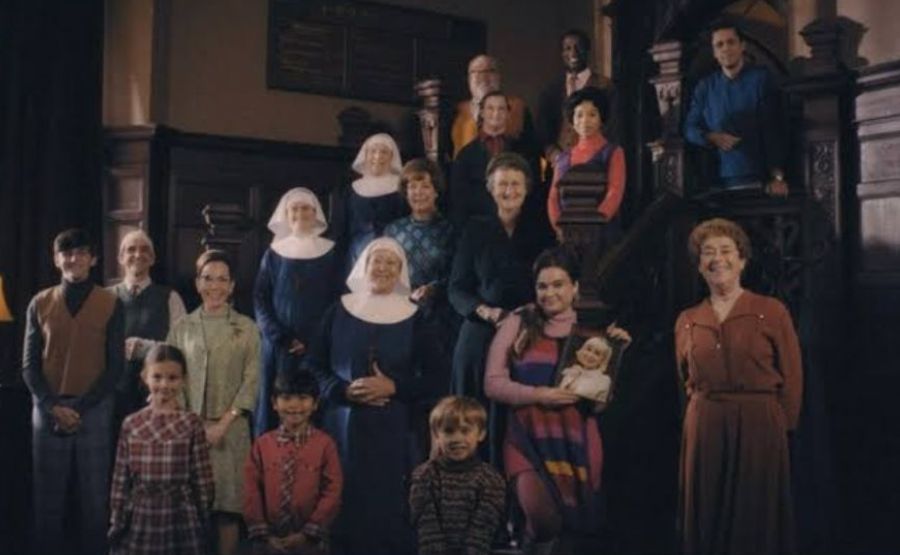
Kevin Corbishley joined the crew of Call the Midwife in 2020, working as a standby rigger in the camera and electrical department. He remained with the production until his death in early 2022, contributing to fifteen episodes of a series that demands exceptional technical consistency.
Call the Midwife is set in the late 1950s and 1960s in the East End of London. Its visual identity depends on warmth — a particular quality of light that evokes the domestic intimacy of the period without tipping into period-drama nostalgia. Birth scenes, night scenes, interior community scenes, and the wintry streets of Poplar all require a lighting approach that feels present without being obtrusive. The show’s emotional register — grief, joy, physical effort, institutional compassion — is carried partly by its visual tone, and that tone is built by people like Corbishley, one rigged setup at a time.
He worked for two years on that production before his death. The final episode of Series 11 — broadcast on BBC One on February 20, 2022 — carried a dedication in its closing credits that read: “In memory of Kev Corbishley 1965–2022.”
The placement of that tribute was precise. Series 11, Episode 8 concluded a season in which two beloved characters — Dr. Turner and Sister Julienne — had been placed in mortal danger by a train disaster. The episode resolved their fates with relief, gathering the Nonnatus House community together in a moment of collective survival. Then the credits rolled. And there, positioned after the emotional climax of the season, was Kev’s name.
It was not a casual afterthought. Production teams choose where tribute cards appear. The decision to place his name in that position, after that episode, speaks to how the crew understood his death — as a loss that belonged to the community of the show, not just to an HR record.
The official Call the Midwife Twitter account published its own response the same evening. The message described him as “a dearly loved member of our crew who died very recently” and added, simply: “He will be missed.”
Ghosts: From Season Two to the Final Tribute
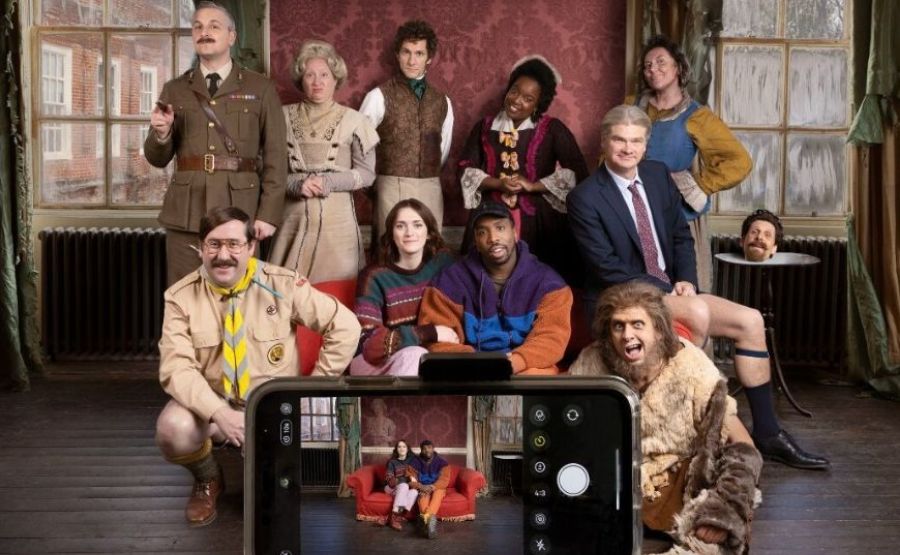
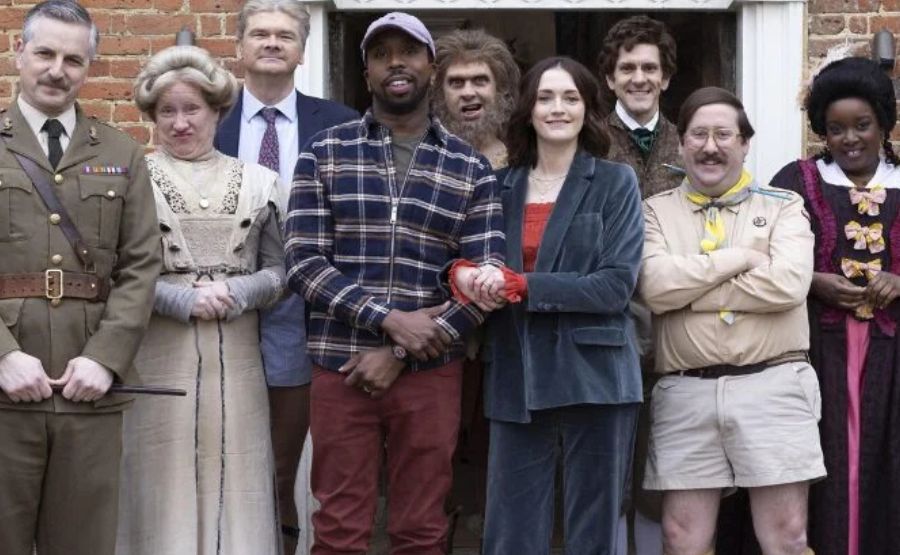
Kevin Corbishley joined Ghosts as a light rigger during its second season. The show — a BBC comedy-drama in which the ghost inhabitants of an ancient English manor house haunt its new living owners — ran from 2019 onward and became one of the BBC’s most celebrated comedies of the early 2020s.
Filming at West Horsley Place, a historic Grade I–listed building in Surrey, presented particular challenges. Working in a listed building means that no lighting fixture can be fixed to a wall, ceiling, or floor with conventional fittings. Rigging must work around the structure rather than into it. Every setup requires invention, negotiation with the physical space, and careful disassembly to ensure no mark is left on surfaces that the heritage designation protects.
Corbishley navigated this from Season 2 onward. He developed, over multiple series, the kind of institutional knowledge about a specific location that no new crew member can acquire quickly. He knew how the light behaved in West Horsley Place at different times of year. He knew which rigging approaches worked for which rooms. He knew the show’s visual grammar, which blends the broad daylight of traditional sitcoms with the more atmospheric quality required when ghosts are present in frame.
He died in early 2022, shortly before filming began on the fourth season. That context matters: he was a regular, not a visitor. His absence from Season 4 was the absence of someone who had expected to be there.
The first episode of Ghosts Season 4, broadcast in September 2022, closed with the words: “In loving memory of our friend Kevin Corbishley.”
The word “friend” distinguishes this tribute from a standard in memoriam credit. Productions commonly acknowledge crew deaths with the name and dates. The choice to refer to the relationship as “friend” signified that it was more than just a business arrangement.
Personal Life: The Dignity of Privacy
The private life of Kevin Corbishley is, by every available measure, genuinely private. No details about his family, his relationships, or his personal circumstances appear in any public record. His cause of death was never disclosed. His home location was not publicly reported.
This is not a gap to be filled with speculation. It is a reflection of who he was. Corbishley did not give interviews. He did not maintain public social media profiles. He was a professional who moved through the entertainment industry on the strength of his work and his relationships with colleagues — not through the cultivation of a public persona.
The sources that describe his character consistently use specific language: reliable, kind, warm, calm under pressure, willing to go beyond what was required. These are the descriptors that emerge from workplaces where reputation travels by word of mouth rather than by press release. In the close-knit world of British television production, where the same crew members often move between shows and where personal relationships can span decades, reputation is the only currency that matters. Corbishley’s was evidently significant.
What the tributes reveal is a man who had earned genuine affection rather than professional respect alone. Two separate production teams, working on shows with entirely different tones and creative identities, reached independently for the same word: loss. The loss they described was personal. The people who placed those tribute cards did not do so out of obligation. They did it because it was true.
The brevity of what is known about his private life should be read not as absence but as fidelity — a life lived according to its own priorities, which did not include the performance of self for public consumption.
The BBC’s Two Testimonies: What the Tributes Said and What They Left Unsaid
It is worth reading the two tributes carefully, because they differ in register and together say more than either does alone.
Call the Midwife‘s tribute — “In memory of Kev Corbishley 1965–2022” — is formal. It uses the name by which he was known on set. It gives his dates. It appears at the end of the series finale, a position of structural significance. The accompanying social media statement from the official account described him as “dearly loved” — language that goes somewhat beyond professional acknowledgment.
Ghosts‘s tribute — “In loving memory of our friend Kevin Corbishley” — is more intimate. It uses the full given name. It uses the word “friend” without qualification. It appeared at the opening of the Season 4 premiere, which meant that the production’s welcome back to its audience was preceded by a goodbye to someone who had been part of making the show. That structural choice inverts the usual hierarchy: the crew member came first, before the story.
Together, the tributes establish something that his absence of a Wikipedia page and sparse public record cannot: that Kevin Corbishley was genuinely loved. Not admired for output. Not respected for professionalism. Loved — in the particular way that develops when people work alongside each other in physically demanding conditions over years, when the nature of the job means that trust is not optional and competence is the baseline of relationship.
That is a meaningful biographical fact. It belongs in the record alongside the credits.
The Role of Riggers in British Television: Context for a Career
Understanding the unique circumstances of British television production in the 2010s and 2020s is essential to comprehending what Corbishley contributed.
British television drama operates under financial pressures that American network and streaming productions largely do not face. Budgets are tighter, shooting schedules are more compressed, and the expectation of high production values is nonetheless consistent. Shows like Call the Midwife, which deploys multiple location settings, period-authentic visual design, and complex lighting needs across an eight-episode series and a Christmas special, depend on technical departments that work efficiently, without error, under time pressure.
A standby rigger on such a show is not a person who can afford to be slow or imprecise. The camera department waits for the electrical and rigging department. The director waits. The actors wait. Every minute of delay on a British television schedule has a measurable cost. A rigger who is fast, accurate, and able to read the next requirement before being asked for it is worth considerably more than someone of equivalent formal qualification who lacks those qualities.
The fifteen episodes of Call the Midwife that Corbishley worked on represent a sustained relationship with that pressure. The fact that the production trusted him with that role for two years — and mourned him publicly when he was gone — is evidence of consistent performance under conditions that do not easily accommodate inconsistency.
Legacy and Lasting Influence
Kevin Corbishley’s legacy operates on two levels, and both matter.
On the level of British television, his work is embedded in programmes that continue to find new audiences. Call the Midwife remains one of the BBC’s most popular drama series, broadcast internationally and available through streaming platforms. Ghosts developed a significant following in the United States through a CBS adaptation and through streaming availability of the original. Every episode of those series that Corbishley helped to light carries, invisibly, the result of his competence.
Viewers who watch Call the Midwife Seasons 10 and 11 and feel the warmth of its visual atmosphere are partly experiencing the work of a man whose name they do not know. The candlelight effect in an intimate birth scene, the cold grey of a winter street in Poplar, the functional brightness of the Nonnatus House surgery — these qualities result from work that Corbishley and his colleagues executed during shoots that audiences will never see.
On a wider level, the tributes his death generated introduced a broader conversation into public consciousness. Social media responses to both tribute cards — from viewers who went online to ask who he was and why he mattered — produced genuine engagement with the question of how television is made. Thousands of people who had never thought about what a standby rigger does spent February and September 2022 finding out. In a modest but real way, Corbishley’s death prompted an education.
The TheMomentsMag tribute essay observed that his story invites audiences to watch credits differently — not as filler, but as the record of a collective effort. That observation has reached a readership that continues to encounter it years after his death. In industry forums and training discussions, his case is cited as an example of the professional culture that sustains British television’s reputation for quality.
He did not build a legacy intentionally. He built a reputation, quietly, through work. The legacy arrived because the people around him chose to make it visible after he was gone.
Final Words
Kevin Corbishley was born in 1965 and died in early 2022. In between, he helped build one of British cinema’s most distinctive film sets, helped light fifteen episodes of one of British television’s most emotionally resonant dramas, and spent multiple seasons helping to create the visual identity of one of British comedy’s most celebrated series. He worked in a job that requires precision, physical stamina, and the particular kind of professional courage that consists of being accountable for things no one will notice unless they go wrong.
He was known as Kev. He was described, by people who worked alongside him daily, as a friend.
The contradiction at the heart of his biography is the same contradiction that defines the work of every skilled technical professional in the arts: he spent his career making himself invisible so that other people’s creativity could be visible. His success was measured, in real time, by the absence of anyone noticing his contribution. And then he died, and the people who had relied on that invisible competence noticed his absence immediately, and permanently.
Two BBC productions paused their stories to say his name. That is not a standard gesture. That is a measure of a life that connected with people on a level that goes beyond professional performance.
The public record of Kevin Corbishley is thin because that is how he chose to live and work. What the tributes left behind is not thin at all. They constitute, in miniature, the portrait of a person who understood his role, executed it with exceptional care, and was genuinely loved by the people who stood beside him in the dark and helped make the light.
FAQs
1. Who was Kev Corbishley?
British television and film crew member Kevin “Kev” Corbishley served as a light rigger and standby rigger. He contributed to major BBC productions including Call the Midwife, Ghosts, and the 2012 feature film Anna Karenina directed by Joe Wright. He was born in 1965 and died in early 2022.
2. What did Kev Corbishley do professionally?
He worked primarily in the camera and electrical departments as a standby rigger and light rigger. On Call the Midwife, he served as a standby rigger — present during filming to adjust and maintain lighting and equipment. On Ghosts, he worked as a light rigger, setting up and managing lighting systems. His earliest documented credit was as a plasterer’s laborer on the 2012 film Anna Karenina.
3. Why did Call the Midwife pay tribute to him?
Corbishley worked on the series as a standby rigger for fifteen episodes between 2020 and his death in early 2022. The Series 11 finale, broadcast on BBC One on February 20, 2022, closed with a credit card reading: “In memory of Kev Corbishley 1965–2022.” The official show Twitter account described as “a dearly loved member of our crew.”
4. Which specific episode of Call the Midwife contains the tribute?
Series 11, Episode 8 — the finale of the eleventh series, which aired on February 20, 2022, on BBC One and BBC iPlayer. It was also the 95th episode of the series overall.
5. Why did Ghosts also pay tribute to him?
From Season 2 onward, Corbishley was employed by Ghosts as a light rigger.He died in early 2022, shortly before Season 4 began filming. The premiere episode of Season 4, broadcast in September 2022, closed with the dedication: “In loving memory of our friend Kevin Corbishley.”
6. What does a standby rigger do?
A standby rigger is present during active filming and is responsible for adjusting, repositioning, and maintaining lighting and camera rigging in real time as scenes are shot. Unlike general riggers who prepare setups before filming begins, standby riggers respond to the evolving needs of a live set. The role requires both technical precision and the ability to work quickly and quietly under pressure.
7. What is the difference between a standby rigger and a light rigger?
A standby rigger focuses on the physical infrastructure — maintaining rigs and adjusting equipment during shooting. A light rigger specialises in the installation and management of lighting equipment, including the electrical connections and physical placement of luminaires. On productions like Ghosts filmed in listed historical buildings, light rigging requires additional expertise to work around structural constraints.
8. What was Kev Corbishley’s role on Anna Karenina (2012)?
He worked in the art department on Joe Wright’s 2012 adaptation of Anna Karenina, starring Keira Knightley and Jude Law, in a set construction role as a plasterer’s laborer. The film used an elaborate theatrical set design requiring extensive physical construction, and his contribution was to the building of those sets.
9. When did Kev Corbishley die, and what was the cause of death?
He died in early 2022. His exact date of death has not been publicly disclosed. The cause of his death was never publicly reported. The Call the Midwife tribute aired on February 20, 2022, and the show’s social media described his death as “very recent” at that time.
10. Did Kev Corbishley have a Wikipedia page?
No. He did not have a dedicated Wikipedia page. He has an entry on IMDb (nm5719745), where his credits and the dedications made after his death are documented.
11. How many episodes of Call the Midwife did Kev Corbishley work on?
He worked as a standby rigger on fifteen episodes of Call the Midwife between 2020 and his death in early 2022.
12. Is anything known about Kev Corbishley’s personal life?
Very little. He kept his personal life completely secret, didn’t do interviews, and didn’t have a public social media presence.No information about his family, relationships, or personal circumstances has been made publicly available. This appears to have been a deliberate choice consistent with a career built on craft rather than public profile.
13. What was the public reaction to the Call the Midwife tribute?
Viewers who saw the tribute card in the closing credits of Series 11, Episode 8 immediately went to social media to ask who Corbishley was. The reaction was one of genuine curiosity and mourning — fans expressed condolences to his family and the production team, and many described feeling moved by the show’s decision to honour a crew member so publicly. The tribute sparked wide discussion about the contributions of behind-the-scenes professionals in television.
14. Why is Kevin Corbishley’s story significant for the television industry?
His case is notable because it illustrates both the depth of community within British television production and the general invisibility of technical crew members to public audiences. The fact that two separate BBC productions independently chose to dedicate screen space to a rigger — a role with no public profile — prompted broader conversations about how television is made and who makes it. In industry forums and training contexts, his tributes are cited as examples of the professional culture that sustains British television quality.
15. Where can audiences see the tributes to Kev Corbishley?
The Call the Midwife tribute appears at the end of Series 11, Episode 8, available on BBC iPlayer. The Ghosts tribute appears at the beginning of the Series 4 premiere, which aired in September 2022 and is available through BBC iPlayer and international streaming platforms. Both are part of the permanent broadcast record of those productions.
Connecting curious minds with stories that educate, inspire, and inform with The Editorial Times.