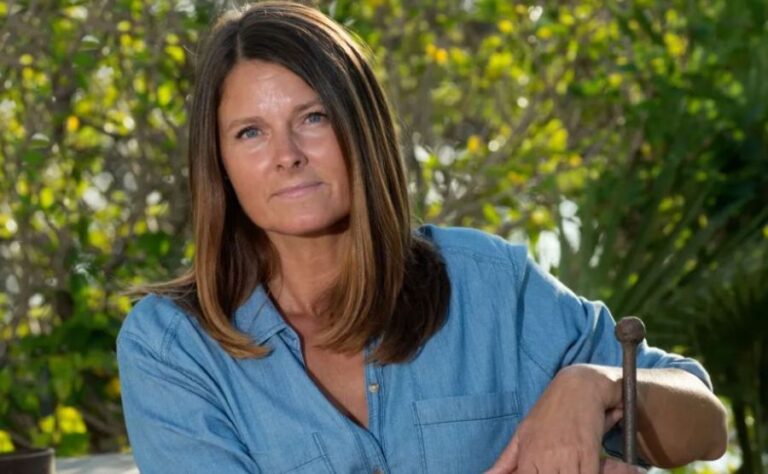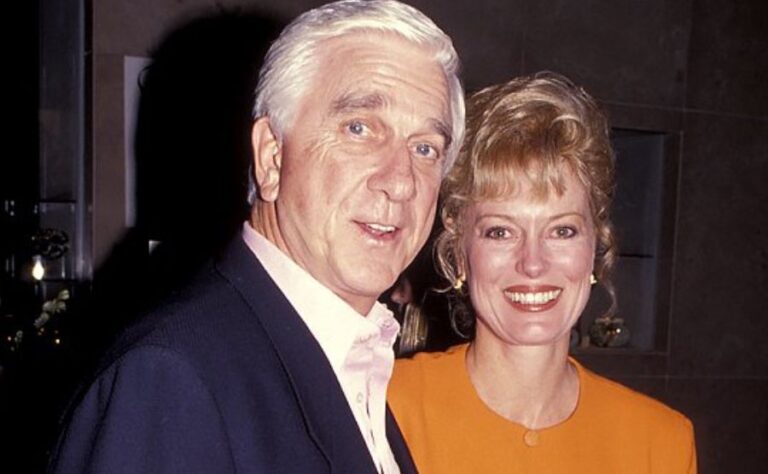
Debby Clarke Belichick: The Quiet Foundation of a Football Dynasty
Debby Clarke Belichick matters in today’s world not because of the famous name she once shared, but because her story illuminates the invisible architecture that supports public greatness — the decades of steady, uncelebrated work that make legendary careers possible.
Quick Bio
| Detail | Information |
| Full Name | Debby Clarke Belichick (born Deborah Clarke) |
| Born | 1955, Nashville, Tennessee, USA |
| Nationality | American |
| Education | Annapolis High School; Wesleyan University, Middletown, Connecticut (BA, graduated 1977) |
| Known For | Entrepreneur, interior designer; former wife of NFL coach Bill Belichick |
| Marriage | Bill Belichick (June 1977 — divorced 2006; separated approximately 2004) |
| Children | Amanda Belichick (born 1984); Stephen “Steve” Belichick (born 1987); Brian Belichick (born 1991) |
| Business | Co-founder of Wellesley, Massachusetts’s The Art of Tile & Stone (founded in 2009) |
| Business Partner | Paige Yates (Massachusetts realtor) |
| Current Residence | Massachusetts |
| Estimated Net Worth | $2–4 million |
| Philanthropic Work | RoxComp’s Reading is the Best Medicine program; AccesSportAmerica |
| Family Legacy | All three children entered coaching careers in sports |
Why Her Story Demands Its Own Chapter
For nearly thirty years, Debby Clarke Belichick occupied the role that professional sports culture rarely acknowledges: the person who makes everything function while someone else receives the credit. She managed households across multiple states, raised three children largely on her own schedule, and maintained the domestic stability that allowed one of the most obsessive coaching minds in NFL history to focus entirely on football.
The public record of her life is thin and fragmented. Most of what exists appears in articles written about her ex-husband. She has never given a major interview, never written a memoir, and never attempted to monetize her proximity to fame. That silence is itself a form of statement — deliberate, consistent, and, as the years have shown, accurate.
Debby Clarke Belichick built a real life twice. The first time, alongside a man ascending toward one of sports’ greatest careers. The second time, entirely on her own terms, in a Wellesley, Massachusetts tile showroom where nobody walks in asking about football.
Nashville Roots and the Annapolis Years
The details of Debby Clarke’s early life are sparse by her own choice, but the broad outlines carry meaning. She was born in 1955 in Nashville, Tennessee, into what multiple sources describe as a close-knit, middle-class family. Her father is reported to have run a small local business. Her mother managed the household. The combination — entrepreneurial father, homemaking mother — planted seeds she would eventually harvest in both her professional and personal life.
Her family relocated to the Annapolis, Maryland area, and it was there that her story became entangled with the Belichick name. Bill Belichick grew up in Annapolis, where his father Steve Belichick served as a football coach and scout at the United States Naval Academy. The two met during their school years in Annapolis — a meeting that would shape the next five decades of both their lives.
Debby attended Annapolis High School, the same institution where Bill Belichick played football and lacrosse and developed the analytical habits of mind that would define his coaching career. She was, by multiple accounts, a focused and engaged student with strong interests in the visual arts and in music — classical music in particular. Those interests were not casual adolescent enthusiasms. They would later evolve into the professional identity she built for herself after her marriage ended.

Wesleyan and the Beginning of a Partnership
Both Debby Clarke and Bill Belichick enrolled at Wesleyan University in Middletown, Connecticut — a small liberal arts institution in the Connecticut River Valley known for its emphasis on arts and humanities alongside strong athletic programs. The connection that had started in Annapolis deepened in Middletown. By the time they graduated, their bond had become a serious, committed relationship.
Bill Belichick earned a bachelor’s degree in economics in 1975, two years before Debby completed her degree in 1977. The records of what Debby studied are consistent across multiple sources: art and sociology, a combination that reflected both her creative sensibility and her interest in how people function within systems and communities. The juxtaposition of those two disciplines — formal aesthetics and social structure — would prove oddly prophetic.
In June 1977, the year Debby graduated from Wesleyan, she and Bill Belichick married. The timing was neither coincidental nor rushed. They had been together through his undergraduate years, his first professional steps, and the early anxieties of a coaching career that was then paying its practitioners almost nothing. Bill Belichick’s first NFL salary as an assistant to Ted Marchibroda with the Baltimore Colts in 1975 was famously $25 per week. Debby Clarke entered that life with open eyes.
Twenty-Nine Years on the Road: The NFL Wife’s Hidden Labor
What the public saw during the years of Bill Belichick’s NFL ascent was a stoic, brilliant, and increasingly successful football coach. What those inside the family witnessed was the scaffolding that made his total focus possible: a wife who handled virtually everything outside the building.
The coaching life the Belichicks shared from 1977 through their separation in 2004 involved constant relocation. Bill moved from the Baltimore Colts to the Detroit Lions, then to the Denver Broncos, then to the New York Giants, where he served as defensive coordinator under Bill Parcells and won two Super Bowl championships — in Super Bowl XXI and Super Bowl XXV. From New York he moved to the Cleveland Browns as head coach from 1991 through 1995, and finally returned to New England as Patriots head coach beginning in 2000. Each move meant new schools, new communities, new social networks, and new domestic arrangements — all managed primarily by Debby.
Amanda was born in 1984, Stephen in 1987, and Brian in 1991. The children grew up on football sidelines, in coaches’ boxes, and in the orbit of professional athletes and staff. But their daily lives — their schooling, their routines, their sense of normalcy — depended on Debby’s steady management of the household during seasons when Bill spent more waking hours at the facility than at home. That is not a grievance; it is simply the documented reality of how NFL head coaching families operate.
Debby attended games. She appeared at public events. She co-founded, with Bill, a charitable organization that raised money for homeless assistance efforts in Cleveland and Massachusetts — the early iteration of what eventually became the Bill Belichick Foundation. She was, by every account, both supportive and capable. But she consistently avoided the spotlight, declining to give interviews and maintaining a privacy boundary that the media largely respected during the marriage.
The Fracture: Separation, Scandal, and Silence
In February 2005, a telling photograph circulated in Boston media: Bill Belichick riding the duck boats through the city’s streets after the Patriots’ third Super Bowl championship, accompanied only by his daughter Amanda — not by Debby. Reporters who noticed the absence asked questions. What emerged over the following months was the beginning of the public accounting of a marriage that had already effectively ended.
The couple had separated privately around 2004. The specific circumstances surrounding the end of their marriage became public not through their own statements — Debby has never spoken publicly about the divorce — but through New Jersey court proceedings. During the 2007 financial resolution of the divorce case between Vincent and Sharon Shenocca, it emerged that Sharon had received substantial financial support from an undisclosed source. That source, according to court documents and subsequent reporting by The New York Post, was Bill Belichick.
The allegations were specific and documented: Belichick had allegedly provided Sharon Shenocca — a former receptionist for the New York Giants who had known him since his time as the team’s defensive coordinator in the 1980s — with cash payments, expensive gifts, and a Park Slope, Brooklyn townhouse valued at $2.2 million. Shenocca herself denied any romantic involvement, characterizing the relationship as a longtime friendship. Bill Belichick made no public statement on the matter.
What Debby Clarke did in response is itself revealing: nothing public. She filed for divorce in 2004. After 29 years of marriage, the divorce was finalized in 2006. She accepted whatever settlement was reached, which reportedly included a valuable Nantucket property among its terms. She made no statements to the press. She gave no interviews expressing hurt, anger, or vindication. The silence was not passive. For someone who had spent nearly three decades avoiding public visibility, it was entirely in character.
The contrast between the chaos of the public narrative and the steadiness of her private response captures something essential about who Debby Clarke Belichick is. While the sports media dissected the scandal with considerable relish, she had already moved on.

Personal Life, Private Grief, and the Work of Rebuilding
The emotional reality behind Debby Clarke Belichick’s years of rebuilding is not something she has narrated publicly. That absence of self-disclosure should not be mistaken for an absence of experience. Ending a 29-year marriage is among the more significant losses a person can absorb, and ending one under the circumstances she faced — with public scrutiny, three young-adult children watching, and a national media apparatus interested in the details — compounds the difficulty substantially.
What is documented is the manner of her response. She stayed in Massachusetts, the state that had been her home through the most consequential years of the Patriots dynasty. She maintained her relationships with her children, all of whom were by 2004 entering or completing their college educations and beginning their own professional lives. She did not remarry. She did not seek public rehabilitation through television appearances or memoir.
In the years immediately following the divorce, she focused on what the record suggests had always been her truest interests: visual aesthetics, design, and the creation of environments where beauty and function coexist. That focus would eventually produce The Art of Tile & Stone. But before the business existed, there were presumably the harder and less visible tasks: processing the end of the only marriage she had known, reestablishing an independent domestic life, and determining what the next chapter of her existence would look like without the framework of a coaching career to organize it around.
Those who describe her personally — neighbors, customers, occasional press references — characterize her with notable consistency as warm, engaged, and genuinely interested in the people she encounters. There is a distinction between the person she was required to be as an NFL coach’s wife, presenting well and managing carefully, and the person she apparently chose to be in Wellesley, helping clients select tile for their bathrooms with personal attention and creative investment.
The Art of Tile & Stone: Building Something Her Own
In 2009, three years after her divorce was finalized, Debby Clarke co-founded The Art of Tile & Stone in Wellesley, Massachusetts, alongside Paige Yates, a Massachusetts realtor from the Weston area. The boutique opened in a suburb widely regarded as one of the wealthiest in New England — a market that would prove naturally aligned with the high-end residential design services the business offered.
The company’s positioning was deliberate and well-considered. In the description attributed to Debby and her business, The Art of Tile & Stone distinguished itself from larger competitors by rejecting the overwhelming abundance model — the warehouse approach that confronts customers with thousands of options and minimal guidance. Instead, the boutique offered a curated selection of premium tiles, stone, granite, and quartz materials, paired with personalized design consultation and full installation services. Joe DiMare, an industry professional who appeared on the television program This Old House, managed operational aspects of the business.
The professional identity Debby built at The Art of Tile & Stone drew directly on the interests she had cultivated since adolescence. Her background in art at Wesleyan, her decades of exposure to high-level design environments through the homes and facilities she occupied as an NFL family member, and her fundamental aesthetic sensibility all converged in a business model that was less about retail transactions and more about the experience of choosing materials for places where people actually live.
She maintained an active Facebook presence for the business, posting photographs of tile samples, stone finishes, and new arrivals with a genuine enthusiasm that comes through even in brief social media updates. One post referenced glitter grout on glass with evident delight. The business earned respect within the Massachusetts design community for its craftsmanship, attention to detail, and the personalized attention Debby brought to client interactions. Customers at The Art of Tile & Stone encountered the co-founder herself, with 70 years of lived aesthetic expertise, who assisted them in making decisions, in contrast to the massive franchise tile outlets. that would remain in their homes for decades.
Three Children, Three Coaches: The Legacy in Motion
The most visible evidence of what Debby Clarke Belichick built during her marriage is not a championship trophy or a coaching record. It is about three adult children, each of whom chose to spend their professional lives in competitive sports — a decision that reflects the environment she helped create during their formative years.
Amanda Belichick, born in 1984, graduated from Wesleyan University in 2007 with a degree in history, continuing the family’s connection to the institution where her parents met. She was a four-year lacrosse letterwinner and senior captain at Wesleyan. Her coaching career took her through Choate Rosemary Hall, UMass (where she helped the Minutewomen win the Atlantic 10 Championship in 2010), Ohio State University as assistant coach and recruiting coordinator, and back to Wesleyan as head coach from 2014 to 2015. In July 2015, she became head women’s lacrosse coach at the College of the Holy Cross in Worcester, Massachusetts — a Division I program she has led for a decade, developing it into a consistent Patriot League competitor. She is married to AJ DeSantis and has two children.
Born in 1987, Stephen Belichick attended Rutgers University to play football and lacrosse. He joined the New England Patriots coaching staff in 2012 as a coaching assistant and rose steadily through the ranks, eventually calling defensive formations under his father’s broader system. After the Patriots’ 2024 season ended and Bill departed, Stephen served as defensive coordinator at the University of Washington for one season — a sole year during which he transformed the Huskies’ defense from 99th nationally to a top-26 unit. In December 2024, when Bill Belichick took the head coaching position at the University of North Carolina, Stephen followed as defensive coordinator. He is married with four children.
Brian Belichick, born in 1991, studied anthropology at Trinity College in Hartford, Connecticut, where he also played Division III lacrosse. He joined the Patriots organization in 2016 as a scouting assistant and worked his way to the safeties coaching role before joining his father and brother at the University of North Carolina as defensive backs and safeties coach. In 2021, he wed Catherine “Callie” McLaughlin.
The three children together constitute something remarkable: a second-generation coaching family, with their daughter leading a women’s lacrosse program and both sons working in football. Bill Belichick has spoken about never pushing his children toward coaching — he has said it was their own choice, driven by years of organic exposure. That exposure happened because Debby Clarke Belichick organized a household where it could. She drove them to practices, managed their school schedules through multiple relocations, and created the stable base from which all three launched careers that now continue the family’s sports legacy.
Philanthropy and Community: The Unheralded Record
Among the least-discussed dimensions of Debby Clarke Belichick’s public life is her philanthropic work — conducted, like everything else about her, without seeking recognition.
During the marriage, she and Bill Belichick jointly ran charitable work supporting homeless populations in Cleveland and Massachusetts. That work evolved into the Bill Belichick Foundation, though the public-facing name reflects the asymmetry common to how charitable endeavors attached to famous athletes and coaches are branded, regardless of the spousal contribution behind them.
After the divorce, Debby supported two causes that reflected genuine personal values rather than strategic brand management. The first was RoxComp’s Reading is the Best Medicine program, which addresses childhood illiteracy among low-income youth by distributing books during routine medical visits — a program that sits at the intersection of public health infrastructure and educational access. The second was AccesSportAmerica, an organization that provides adaptive sports opportunities for children and adults with disabilities. Neither cause has an obvious connection to the NFL world or the celebrity culture that surrounds it. Both reflect a commitment to community invested over time rather than attached to a public identity.
Legacy and Influence: The Quiet Architecture
Debby Clarke Belichick’s legacy does not fit the standard template for the wives of famous men. She did not become famous herself. She did not write the book about what it was really like. She did not become the cautionary tale or the aggrieved ex-wife that the sports media occasionally expects.
What she leaves behind is more durable and more interesting. She leaves three children who entered their professions with the work ethic, competitive drive, and knowledge base that could only have developed in the home she managed. She leaves a boutique design business in Wellesley that represents over fifteen years of independent professional success built on her own knowledge and talent. She leaves a record of consistent philanthropy attached to causes that reflect genuine conviction.
She also leaves, for those willing to look carefully, a template for how to navigate the specific challenges of being the supporting partner of a high-profile career without losing the self in the process. The fact that she rebuilt so effectively after the divorce is evidence of a person who had maintained her own identity throughout the marriage — her own interests, her own aesthetic sensibilities, her own social relationships — even when those interests were secondary to the demands of Bill Belichick’s schedule.
Her influence on the Belichick coaching dynasty is not measurable in wins and losses. But it runs through every corner of it: in Amanda Belichick’s patient development of Holy Cross lacrosse; in Steve Belichick’s ability to call a defense under pressure; in Brian Belichick’s disciplined approach to player development. They learned resilience, discipline, and commitment to craft somewhere. They learned it at home.
Final Words
Debby Clarke Belichick represents a category of person that American culture acknowledges in theory while consistently underdocumenting in practice: the capable, intelligent individual who spends decades in a supporting role and then, given the chance to define herself on her own terms, does exactly that.
Her story holds no shortage of complexity. She spent 29 years building a life predicated on someone else’s ambitions, managed the domestic labor of a high-achieving household through nearly constant relocation, and ultimately ended the marriage under circumstances involving public humiliation she absorbed with characteristic restraint. The same person who navigated all of that opened a boutique tile store in Wellesley in 2009 and has operated it with quiet success for fifteen years.
There are things about Debby Clarke Belichick that remain genuinely unknown. Her precise birth date is not confirmed in the public record. The details of her divorce settlement have never been published. Her interior emotional experience of the marriage’s end has never been narrated. Those gaps are not failures of research — they are the deliberate result of her choices about what belongs to the public and what does not.
What the record confirms is this: she came from a modest background in Nashville and Annapolis, educated herself at a serious liberal arts institution, spent three decades building a family and supporting a career that became historic, absorbed a painful and public dissolution with grace, and built something new from her own resources. None of that required a stadium or a camera. All of it required character.
FAQs
1. Who is Debby Clarke Belichick?
American businesswoman and interior designer Debby Clarke Belichick was born in Nashville, Tennessee, in 1955.She is best known publicly as the former wife of legendary NFL coach Bill Belichick, with whom she was married from 1977 to 2006. Since the divorce, she has built an independent professional identity as co-founder of The Art of Tile & Stone, a boutique design business in Wellesley, Massachusetts.
2. Where did Debby Clarke Belichick grow up?
She was born in Nashville, Tennessee, and grew up in the Annapolis, Maryland area, where she attended Annapolis High School. Bill Belichick also grew up in Annapolis, where his father coached at the United States Naval Academy, which is how the two met during their school years.
3. Where did Debby Clarke Belichick attend college?
She attended Wesleyan University in Middletown, Connecticut, graduating in 1977 with studies in art and sociology. Wesleyan is also the institution where Bill Belichick earned his degree in economics in 1975 and where their relationship deepened before their marriage.
4. When did Debby Clarke and Bill Belichick marry?
They married in June 1977, the year Debby graduated from Wesleyan University. Bill had already begun his NFL coaching career two years earlier with the Baltimore Colts.
5. How long were Debby Clarke Belichick and Bill Belichick married?
From June 1977 until their divorce was completed in 2006, they were married for about 29 years.They separated privately around 2004.
6. Why did Debby Clarke Belichick and Bill Belichick divorce?
The couple separated around 2004 and divorced in 2006. The publicly circulated circumstances involve allegations that Bill Belichick had a relationship with Sharon Shenocca, a former New York Giants receptionist he had known since the 1980s. Court documents from a 2007 New Jersey divorce case alleged that Belichick provided Shenocca with cash payments and purchased a $2.2 million Park Slope, Brooklyn townhouse for her use. Shenocca denied any romantic involvement. Neither Bill nor Debby Belichick made detailed public statements about the reason for their split.
7. What business did Debby Clarke Belichick found after her divorce?
In 2009, she co-founded The Art of Tile & Stone in Wellesley, Massachusetts, alongside business partner Paige Yates, a Massachusetts realtor. The boutique specializes in high-end residential tile and stone design, offering curated material selection, personalized design consultation, and full installation services.
8. What are Debby Clarke Belichick’s children doing now?
All three of her children pursued coaching careers. Amanda Belichick (born 1984) has been the head women’s lacrosse coach at the College of the Holy Cross in Worcester, Massachusetts, since 2015. Stephen Belichick (born 1987) is the defensive coordinator at the University of North Carolina, where his father Bill is head coach. Brian Belichick (born 1991) serves as defensive backs and safeties coach at the University of North Carolina.
9. Did Debby Clarke Belichick remarry after her divorce from Bill Belichick?
No public record confirms that Debby Clarke Belichick remarried after her 2006 divorce. She has maintained a private life in Massachusetts focused on her business and family.
10. What is Debby Clarke Belichick’s estimated net worth?
Multiple sources estimate her net worth at approximately $2–4 million. Her wealth comes from the revenue generated by The Art of Tile & Stone over more than fifteen years of operation and reportedly from a divorce settlement that may have included a Nantucket property. Exact figures have never been publicly confirmed.
11. What philanthropic causes has Debby Clarke Belichick supported?
She has supported RoxComp’s Reading is the Best Medicine program, which distributes books to low-income youth during pediatric medical visits to combat childhood illiteracy. She has also contributed to AccesSportAmerica, an organization providing adaptive sports opportunities for children and adults with physical disabilities. During her marriage she co-ran charitable work with Bill Belichick supporting homeless assistance in Cleveland and Massachusetts.
12. Did Debby Clarke Belichick attend Wesleyan University like her daughter Amanda?
Yes. Debby attended Wesleyan University, graduating in 1977. Her daughter Amanda also attended Wesleyan, graduating in 2007 with a degree in history. Amanda played lacrosse there and served as team captain her senior year.
13. What is The Art of Tile & Stone?
The Art of Tile & Stone is a boutique residential design showroom co-founded by Debby Clarke Belichick and Paige Yates in 2009, located in Wellesley, Massachusetts. It offers curated tile, stone, granite, and quartz products alongside personalized design consultation and installation services for high-end residential projects. The business positions itself as an alternative to large tile warehouses, emphasizing quality, curation, and personal attention.
14. How old is Debby Clarke Belichick?
Born in 1955, Debby Clarke Belichick is approximately 70–71 years old as of 2026. Her exact birth date has not been confirmed in the public record.
15. Is Debby Clarke Belichick still alive?
Yes. As of 2026, there is no credible verified reporting — no obituary, no family statement, no confirmed news coverage — indicating that Debby Clarke Belichick has died. Unverified claims circulating online lack supporting evidence.
Connecting curious minds with stories that educate, inspire, and inform with The Editorial Times.