Yasmin Abdallah Age: The Lebanese-Australian Who Reinvented What a Fashion Career Can Become
She left school at sixteen with no credentials, no connections, and no map — and by fifty-one, she had built a fragrance company backed by Estée Lauder, L Catterton, and Manzanita Capital, while quietly rewriting what a second act in business can look like for a woman who refuses to be defined by her most famous nine months.
Quick Bio
| Detail | Information |
| Full Birth Name | Yasmin Abdallah |
| Professional Name | Yasmin Sewell |
| Born | 1975, Sydney, Australia |
| Age (2026) | Approximately 51 |
| Nationality | Australian |
| Ethnicity | Lebanese-Australian |
| Hometown | Maroubra, Sydney (beachside suburb) |
| Education | Left school at age 16 |
| First Career | Real estate personal assistant, Sydney |
| Major Career Roles | Founder, Yasmin Cho boutique (1999); Buying Director, Browns (2006); Chief Creative Consultant, Liberty London; Fashion Director, Style.com (2015); VP Style & Creative, Farfetch (2017–2018); Co-founder, Être Cécile (2013) |
| Current Company | Vyrao (founded 2021) — Founder & CEO |
| Key Investors | Estée Lauder New Incubation Ventures, L Catterton (Elevate Beauty), Manzanita Capital |
| Total Funding Raised | $11.4 million (as of 2025, per PitchBook) |
| Award | Sun Rae — Best Independent Fragrance, 2024 Fragrance Foundation Awards |
| First Marriage | Rufus Sewell (March 1999 – 2000) |
| Second Marriage | Kyle Robinson (date undisclosed) |
| Children | Three sons — Renzo, Knox, Gene |
| Current Base | London, England |
| Estimated Net Worth | $1 million–$4 million (unverified) |
The Woman Behind the Name
Most people first encounter Yasmin Abdallah through a search bar, looking for the ex-wife of British actor Rufus Sewell. What they find instead is someone whose career dwarfs that brief biographical footnote by every measurable standard.
She goes by Yasmin Sewell professionally — a name she kept after her 1999 divorce and one that now carries genuine weight across three industries: fashion retail, brand building, and luxury wellness. The decision to keep the name was pragmatic, not sentimental. She built her public identity under it, and that identity proved worth holding onto.
Yasmin’s story is, at its core, a study in conviction operating faster than credentials. She has no formal fashion training, no industry diploma, and no record of a conventional career trajectory. What she has instead is a sequence of well-timed leaps — each one bolder than the last, and most of them landing.
See also “Ethnicity Burzis Kanga: The Tanzanian-Born Coach Who Built a Tennis Empire in New Orleans“
Sydney to Soho: The Formation of a Sensibility
Yasmin grew up in Maroubra, a beachside suburb of Sydney known more for surf culture than couture. Her family was Lebanese-Australian, and she has spoken about her grandmother’s house as the emotional center of her early life — a place where Arabic cooking, Arabic music, and the cadences of a different world shaped her sense of beauty long before she could name it.
Her mother worked as a hairstylist, which meant that craft, care, and presentation were household languages from the beginning. The ocean was nearby. The culture was layered. Neither pointed obviously toward a future in London fashion.
She left school at sixteen, a decision she has described without apology. She simply knew studying wasn’t her path. That kind of early self-knowledge is either recklessness or clarity, and in Yasmin’s case it proved to be the latter.
Her first job was as a personal assistant at McGrath, a prominent Sydney real estate agency. It lasted until she was twenty. Then she moved to London, alone, in the mid-1990s — arriving in a city electrified by the British fashion explosion, where Alexander McQueen and Vivienne Westwood were making clothes that felt like arguments.
The Boutique That Changed What “Emerging” Meant
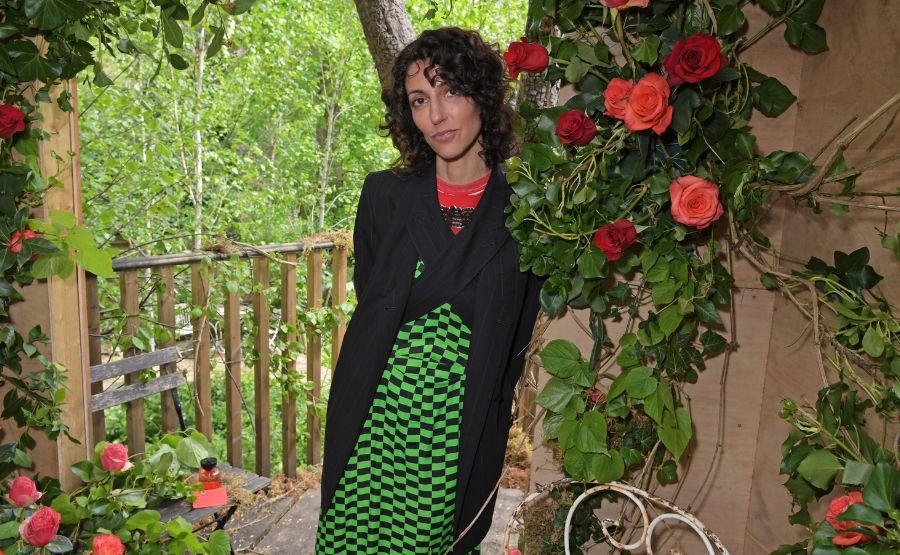
At twenty-two, Yasmin opened a boutique in Soho called Yasmin Cho. In the context of late-1990s London, this was an act of genuine audacity. She was Australian, unknown, and undercapitalized. She stocked designers no one had heard of yet.
Among them was Rick Owens — then a relative unknown whom she positioned as central to her edit. Courtney Love was a regular customer. The store used cloth bags instead of plastic at a time when that choice read as philosophy, not policy. People who visited were repeatedly shocked to learn the owner was only in her early twenties.
The boutique did what the best retail always does: it argued for a point of view. Yasmin’s point of view turned out to be excellent. The store closed, but its legacy was the relationships and reputation it built for its founder — a track record that landed her at one of the most powerful addresses in British fashion.
Browns, Liberty, and the Architecture of a Career
In 2006, legendary Browns founder Joan Burstein approached Yasmin to take the buying helm at the Mount Street institution. The appointment mattered enormously. Browns was not simply a store — it was a launching pad, and Yasmin used it as one.
During her tenure, she played a direct role in elevating Christopher Kane, Nicholas Kirkwood, Roksanda Ilincic, and Meadham Kirchhoff into the European market. She also introduced Acne and The Row to UK customers at a moment when both brands were defining what minimalism could achieve commercially. Her instinct for identifying talent before consensus caught up proved consistent and replicable.
From Browns, she moved to Liberty London as Chief Creative Consultant, adding another landmark institution to a growing portfolio of influence. By 2015 she had moved again — this time to Style.com, then owned by Condé Nast, as Fashion Director. When Farfetch acquired Style.com in 2017, Yasmin came with the deal, joining the luxury e-commerce platform as Vice President of Style and Creative. She left in 2018, reportedly by mutual choice, after approximately a year.
Each move built on the last. Each role gave her access to a different layer of the industry. By the time she stepped away from Farfetch, she had logged a career that most fashion insiders would consider complete.
She was not finished.
Être Cécile and the Logic of Owning Something
In 2013, while still consulting and accumulating senior roles, Yasmin co-founded Être Cécile, a sportswear-inflected ready-to-wear label pitched at the intersection of Parisian nonchalance and London edge. The brand found its audience quickly. It represented her first serious attempt at building something with her name attached in a proprietary sense — not advising, not directing, but owning.
The experience mattered as preparation. Running a label taught her the difference between shaping a brand from the inside and being accountable for one. She also became a director at Paper Mache Tiger, a showroom and boutique operation co-founded with her then-husband Kyle Robinson, which the New York Times recognized as one of the world’s most notable boutiques.
While the public saw an effortlessly cool fashion insider attending shows and advising global platforms, those closer to her work saw someone quietly accumulating the operational experience she would eventually need to build a company from scratch.
Vyrao: When a Career Becomes a Calling
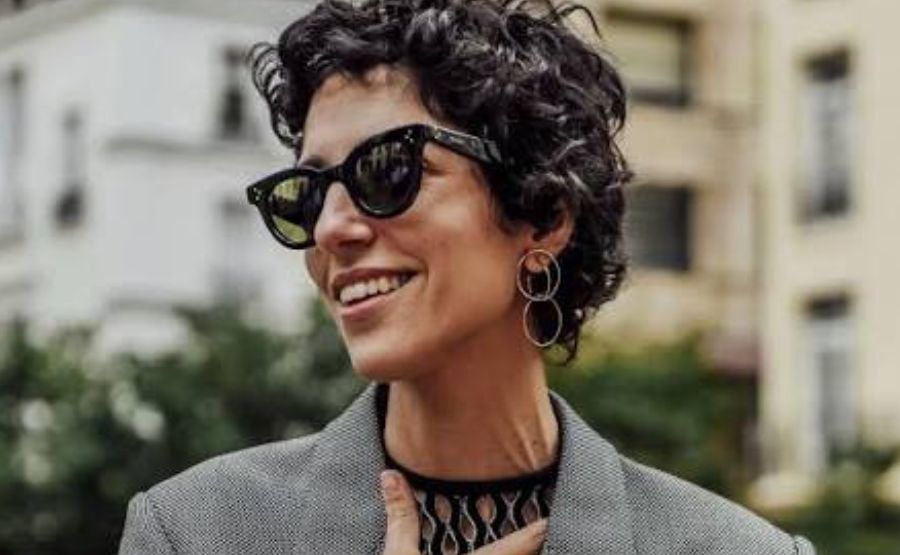
Yasmin departed Farfetch in 2018. In the interviews that followed, she spoke plainly about the shift. She described spending years in parallel — doing fashion work during the day while studying reiki, Ayurveda, flower remedies, and integrative quantum medicine in the margins of her professional life. These were not hobbies. She was certified in multiple practices.
In 2019, she had what she called her “aha” moment. She had grown up in what she described as a psychic Arabic family, where sensing and feeling things beyond the visible was simply part of how reality was understood. For decades, she had kept that world separate from her professional identity. She decided to stop.
Vyrao launched in London in 2021. The name means, in Sanskrit root: I am verdant, I am vigorous, I sprout new green growth. The brand debuted with five unisex fragrances, each built around an emotional state — liberation, self-love, courage, transformation, attraction — rather than a seasonal trend or demographic profile. Every 50ml bottle contained a Herkimer diamond crystal, chosen for its purported energetic properties.
The industry was skeptical and then, gradually, intrigued. Vyrao made its debut at Selfridges. Within a year it reached Liberty, Browns, Saks Fifth Avenue, and Mecca in Australia. The functional fragrance category was still thin in 2021, and Yasmin’s combination of neuroscience collaboration, crystal healing, master perfumery, and luxurious packaging filled a space no one had precisely defined yet.
She had been worried no one would understand what she was doing. They understood.
Investment, Awards, and the Business Behind the Vision
By March 2023, the Estée Lauder Companies’ New Incubation Ventures arm had taken a minority stake in Vyrao. The terms were not disclosed, but the signal was unmistakable: a company that invests in Ruka and KIKI World had chosen Yasmin’s brand as a strategic bet on the future of luxury fragrance.
In 2024, Vyrao’s Sun Rae fragrance — a spicy citrus scent created to promote joy, developed in collaboration with IFF’s Science of Wellness program — won Best Independent Fragrance at the Fragrance Foundation Awards, one of the industry’s most credible honors.
Later that same year, L Catterton’s Elevate Beauty growth fund led a second investment round. Manzanita Capital — the family office that holds a majority stake in Diptyque and D.S. & Durga — also participated. PitchBook records Vyrao’s total funding at $11.4 million as of 2025. Yasmin has confirmed she remains the majority shareholder.
The brand’s eighth fragrance, Mamajuju, launched in 2024, inspired by the soil of her native Australia and built around sandalwood and cumin for a grounding effect. It continued Vyrao’s pattern of scents anchored in specific emotional and environmental intentions rather than generic luxury appeal.
Personal Life, Private Struggles, and the Name She Kept
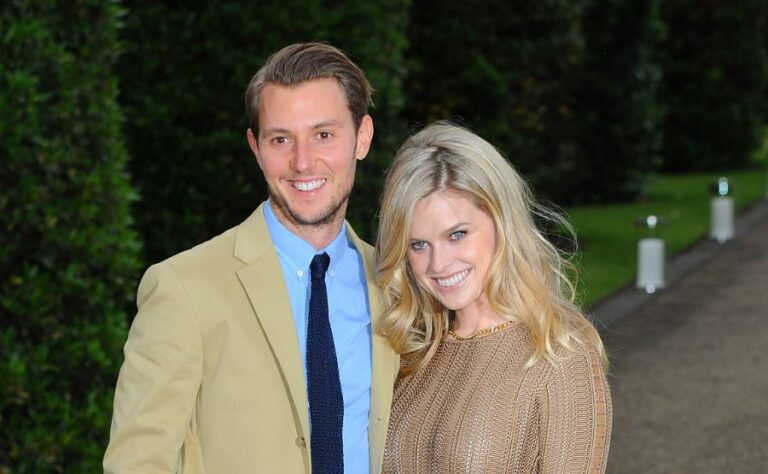
Yasmin met Rufus Sewell in 1995 when she was around nineteen. They dated for approximately four years before marrying in March 1999. The marriage ended within nine months. The divorce was finalized in 2000.
The reasons were not widely discussed. Sewell said almost nothing publicly. Yasmin was more direct in scattered interviews, describing herself at the time as not in the right place emotionally. Her words, reported variously, were characteristically honest and unadorned. She was young, she was unsettled, and the marriage did not survive contact with those realities.
She kept his surname professionally. By the time she might have reconsidered, Yasmin Sewell was already a name that belonged to her career as much as it had ever belonged to a marriage.
She later married Kyle Robinson, a fashion entrepreneur who co-founded the Paper Mache Tiger showroom. They had two sons together — Renzo and Knox. Reports from 2023 suggest the relationship may have ended by then; an Instagram post she shared that year showed a family portrait with a man named Craig alongside her children and dogs, though she offered no public explanation. She has three sons: Renzo, Knox, and Gene.
She has spoken about her domestic life in terms of texture rather than milestones. Her home is full of objects with sentimental meaning — gifts from Vyrao’s art director, a photograph of her grandmother Georgette (after whom she named one of the brand’s fragrances), notes from her youngest, and a crystal collection given to her by people she loves. Her morning routine runs to tongue-scraping, three glasses of water, an eight-minute skincare protocol, and a 6:30 a.m. start. She raises three sons, one dog named Pizza, and a company.
Style, Identity, and the Lebanese-Australian Lens
Yasmin has discussed her appearance and aesthetic choices with some candor. She is known for androgynous, architecturally confident dressing — wide-leg trousers, oversized blazers, handmade Australian boots from R.M.Williams. She has said she stopped wearing heels to work almost entirely after founding Vyrao. She carries a backpack instead of a handbag. She wears a Bulgari watch from the 1970s she describes as one of her most treasured possessions.
Her Lebanese heritage has shaped her brand in ways she articulates deliberately. She has spoken about growing up in a household attuned to the unseen — to smell, to feeling, to what she describes as psychic awareness. Eucalyptus is her most nostalgic scent. Her grandmother’s Lebanese cooking — fried burnt onion at its core — is a scent memory she carries with her. These are not incidental details. They are the experiential architecture behind a brand built on the thesis that smell is emotional and emotional is biological.
While the fashion world knew her primarily as a tastemaker with impeccable retail instincts, those close to her saw someone who had spent decades simultaneously navigating two worlds — the internal realm of reiki, flower remedies, and sensory healing, as well as the external realm of purchasing and brand development. Vyrao is what happens when those two worlds stop running parallel and start running together.
Legacy and Influence: What She Built That Lasts
Yasmin Sewell matters to the fashion industry as a historical document of good taste. She introduced Christopher Kane, Acne, Roksanda, The Row, and others to audiences who then built those designers into global names. The buyers and creative directors who came after her learned, partly, by watching what she selected and why.
She matters to the fragrance industry as a category pioneer. Vyrao did not invent wellness fragrance, but it defined the high end of it before anyone else had organized that space coherently. Brands including Charlotte Tilbury, Bella Hadid’s Orebella, and Nette entered this market after Vyrao had already established that wellness and luxury perfumery were compatible. Yasmin built first and then watched the category expand around her.
She matters to the broader conversation about second acts — particularly for women who reach their forties with seniority in a field and choose to risk it on something they believe in more deeply. Her departure from Farfetch in 2018, at the height of her fashion influence, was not a retreat. It was a recalibration, and the evidence of that is an $11.4 million funded company with institutional backing and a Fragrance Foundation Award.
She mentors emerging designers. She participates in industry panels. She continues to operate from London, a city she moved to alone at twenty, with nothing but certainty that she was going somewhere useful.
Final Thoughts
Yasmin Abdallah is not an easy person to categorize, and that resistance to categorization appears to be entirely intentional. She is a Lebanese-Australian woman who left school at sixteen and rose to a vice presidency at one of fashion’s most-watched platforms. She is a divorcée who kept her ex-husband’s name and turned it into a commercial asset. She is a certified reiki practitioner who convinced Estée Lauder that spiritual healing and master perfumery belong in the same bottle.
Her contradictions are not contradictions upon closer inspection — they are a coherent personality expressing itself across different contexts. The intuition that made her a great buyer is the same intuition that told her to stop buying for others and start building for herself. The cultural rootedness that shaped her childhood is the same rootedness that runs through every Vyrao fragrance description.
She is not famous in the celebrity sense of the word. She generates no tabloid coverage and appears not to want any. But she has built something that institutions with decades of industry experience have chosen to fund — and she did it after fifty, in a category she largely invented, using a set of beliefs that most serious businesspeople would have dismissed as eccentric.
The measure of a career is not one thing but the shape the whole thing makes. Yasmin Abdallah’s shape, viewed from 2026, is unusually interesting: a line that never stops moving forward, and never quite goes where anyone expected.
FAQs
1. What is Yasmin Abdallah’s age in 2026?
She was born in 1975 in Sydney, Australia, making her approximately 51 years old in 2026. Her exact birth date has not been publicly disclosed.
2. Why is Yasmin Abdallah also known as Yasmin Sewell?
She took the surname Sewell after marrying British actor Rufus Sewell in 1999. Despite their divorce in 2000, she retained the name professionally because her career identity had already been built under it.
3. How long was Yasmin Abdallah married to Rufus Sewell?
Their marriage lasted approximately nine months. They wed in March 1999 and separated in 2000.
4. Why did Yasmin Abdallah and Rufus Sewell divorce?
The specific reasons were never formally stated by either party. Yasmin has indicated in interviews that she was emotionally unsettled at the time and not in the right place for marriage. Rufus Sewell has not spoken publicly about it.
5. What is Vyrao?
Vyrao is a London-based luxury fragrance and wellness company Yasmin founded in 2021. It produces unisex eau de parfums, candles, and incense that are formulated using natural and vegan ingredients and structured around specific emotional states. Each 50ml fragrance contains a Herkimer diamond crystal.
6. Who has invested in Vyrao?
Vyrao has received investment from Estée Lauder Companies’ New Incubation Ventures (2023), L Catterton’s Elevate Beauty fund (2024), and Manzanita Capital. Total funding per PitchBook stands at $11.4 million as of 2025.
7. What award has Vyrao won?
Vyrao’s Sun Rae fragrance won Best Independent Fragrance at the 2024 Fragrance Foundation Awards, one of the perfume industry’s most respected competitive honors.
8. What major fashion companies has Yasmin Sewell worked for?
She served as Buying Director at Browns (from 2006), Chief Creative Consultant at Liberty London, Fashion Director at Style.com (2015), and Vice President of Style and Creative at Farfetch (2017–2018).
9. What is Être Cécile?
Être Cécile is a sportswear-influenced ready-to-wear label that Yasmin co-founded in 2013. It blended contemporary Parisian and London sensibilities and established itself as a respected independent brand with retail partnerships across Europe and the US.
10. How many children does Yasmin Abdallah have?
She has three sons: Renzo, Knox, and Gene. Renzo and Knox were born during her marriage to Kyle Robinson.
11. Did Yasmin Abdallah attend university or fashion school?
No. She left school at sixteen and has no formal fashion education. Her career was built entirely through direct experience, self-directed learning, and professional relationships.
12. What is Yasmin Abdallah’s estimated net worth?
Estimates range from $1 million to $4 million depending on the source. No verified public figure exists. Her income has spanned roles as a boutique owner, buyer, creative director, brand co-founder, and CEO across more than two decades.
13. Where does Yasmin Abdallah live?
She is based in London, England, where she has lived since her early twenties and where Vyrao operates.
14. Is Yasmin Abdallah still married to Kyle Robinson?
This is unclear. Reports from 2023 suggest the marriage may have ended, based on an Instagram post she shared showing a family portrait with a man named Craig. She has not made any formal public statement about her current relationship status.
15. What holistic techniques has Yasmin Sewell received training or certification in?
She is certified in reiki and has trained in Ayurveda, flower essence remedies, and integrative quantum medicine. These practices directly inform the philosophy and formulation approach behind Vyrao.
Connecting curious minds with stories that educate, inspire, and inform with The Editorial Times.