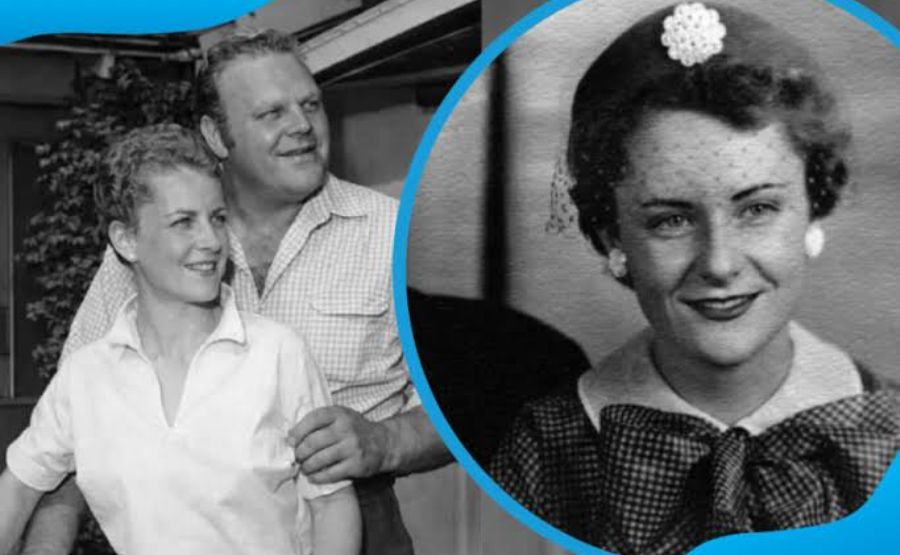
Dolphia Parker: The Woman Who Chose Her Life on Her Own Terms
She never appeared on a single episode of Bonanza, never gave a Hollywood interview, and never allowed her husband’s fame to define the woman she had decided to become — and in that refusal, Dolphia Lee Parker left behind something rarer than celebrity: a life lived entirely on her own terms.
When Dolphia Parker died on April 19, 2026, at 93 — peacefully, surrounded by children and grandchildren in a Santa Barbara hospital — the notices came not from entertainment publicists but from her family, who described her as “the heart and soul” of the Blocker household. She had outlived her famous husband by 54 years. Those decades, invisible to the public, were no less full.
Quick Facts
| Detail | Information |
| Full Name | Dolphia Lee Parker Blocker |
| Born | July 29, 1932, Shattuck, Oklahoma |
| Died | April 19, 2026, Santa Barbara, California |
| Age at Death | 93 |
| Nationality | American |
| Parents | Verner Vilas Parker and Gladys (Akers) Parker |
| Siblings | Five: Elaine Caldwell, Marilyn Sullivan, Deryl Parker, Shirley Robinson, Janice Smith |
| Education | Sul Ross State University, Alpine, Texas |
| Occupation | Actress (stage), homemaker, estate manager, poet |
| Spouse | Dan Blocker (m. September 1952 – d. May 13, 1972) |
| Children | Danna Lynn Blocker, Debra Lee Blocker (twins, b. 1953); David Blocker (b. 1955); Dirk Blocker (b. ca. 1957) |
| Notable Connections | Wife of Bonanza star Dan Blocker; mother of actor Dirk Blocker (Brooklyn Nine-Nine) and Emmy-winning producer David Blocker |
| Estimated Net Worth | Approximately $2–2.8 million at time of death |
| Final Residence | Santa Barbara, California (nearly 40 years) |
Born Just Over the Texas Line
Dolphia Lee Parker arrived on July 29, 1932, in Shattuck, Oklahoma — a small agricultural town sitting just north of the Texas state line. She did not stay long. Her parents, Verner Vilas Parker and Gladys Akers Parker, raised their six children on a ranch in the wide open country of West Texas, and Dolphia would later call that childhood idyllic.
The word carries weight. The early 1930s were not gentle years for ranch families in Texas. The Great Depression ground down wages and prospects, and the Dust Bowl ravaged the region’s farmland. Yet the Parker household, by all family accounts, held together with a particular warmth. Six children under one roof creates a kind of built-in community — constant negotiation, constant cooperation, and the early formation of the patience and adaptability that Dolphia would carry through the rest of her life.
Her mother, Gladys, proved especially forward-thinking. When her older children reached high school age, Gladys recognized that their remote ranch location limited their educational options. She relocated the family to Alpine, Texas, during each school year — a practical sacrifice that opened doors. Dolphia graduated from high school in Alpine and went on to attend Sul Ross State University there.
See also “Carla Crummie: Grief, Faith, and a Second Marriage That Tested a Megachurch“
A Small Campus, a Large Man, and a Life Altered
Sul Ross State University in Alpine sits in the Trans-Pecos region of far West Texas, bounded by the Chihuahuan Desert and the peaks of the Davis Mountains. It is not a glamorous place. What it has always offered is intimacy — the kind of small-campus closeness where a shared theatrical rehearsal can become the beginning of a decades-long partnership.
Dolphia found her way to the theater program at Sul Ross. The stage gave her a structured outlet for the creativity she had carried since childhood — a place where careful listening, disciplined preparation, and genuine expression mattered. She appeared in productions including Fumed Oak and worked behind the scenes on plays like Arsenic and Old Lace.
It was in this context that she encountered Dan Davis Blocker, a man impossible to overlook. Standing six feet four inches and weighing more than 300 pounds, Blocker carried a physical presence that could have been intimidating. His nature made it otherwise. He was warm, funny, and genuinely passionate about drama and storytelling. He had come to Sul Ross to study speech and drama, and he threw himself into the theater program with the same energy he had brought to the football field.
Their first meeting, according to family accounts, was not cinematic. Dan was watching a production and heckling the performers from the audience. Dolphia Parker, working behind the scenes, was the one who walked out and told him to stop. It was an ordinary moment of irritation that somehow became the foundation of a 20-year marriage.
The Marriage: Built Before the Fame
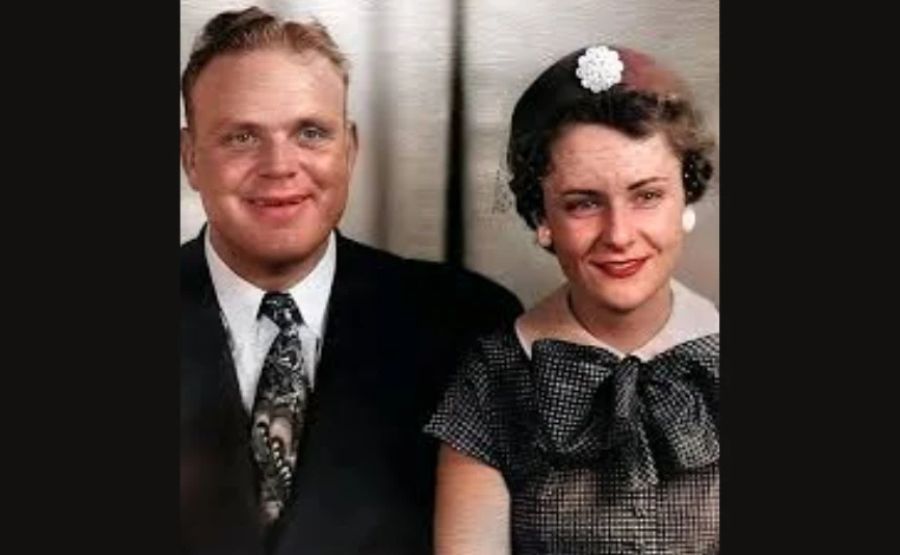
Dan Blocker returned from Korea in 1952, having served as an infantry sergeant with the 45th Infantry Division and having earned a Purple Heart for wounds suffered in combat. He came back to Sul Ross, completed his master’s degree in dramatic arts, and married Dolphia Lee Parker in September of that year.
He was 23. She was 20. Neither of them had the faintest idea that his face would eventually appear in 60 million American living rooms every Saturday night.
The early years of their marriage were modest and instructive. Dan taught English and drama at a high school in Sonora, Texas, and then served as a sixth-grade teacher and coach in Carlsbad, New Mexico. Dolphia managed their home and, beginning in 1953, their twin daughters — Danna Lynn and Debra Lee. A son, David, arrived in 1955. These were working-class years: a teacher’s salary, young children, and a man who had not yet tested his creative ambitions against the professional world.
In late 1956 or early 1957, Dan made the decision to pursue acting in Los Angeles. He enrolled at UCLA to work toward a PhD in dramatic arts. Dolphia followed him west after packing up the family, which included three children under four. She did not merely tolerate the leap; family accounts suggest she actively encouraged it.
Their fourth child, Dirk, was born in Hollywood shortly after the family arrived.
The Bonanza Years: Domestic Steadiness, Living Room Fame
In 1959, NBC cast Dan Blocker as Hoss Cartwright in Bonanza, a Western drama set on a Nevada ranch. He was a perfect fit for the part. Hoss was gentle despite his size, loyal without calculation, and possessed of a quiet moral seriousness that audiences recognized and trusted. By the early 1960s, Bonanza had become the most-watched show on American television. Dan Blocker had become a household name.
The Blocker family settled into a 6,000-square-foot Tudor-style mansion in the Hancock Park neighborhood of Los Angeles. The scale of the house marked a dramatic shift from the Carlsbad schoolteacher years. But Dolphia, by every account, worked deliberately to ensure that the shift did not reach her children’s sense of themselves.
She kept the routines. She handled school, homework, doctor’s appointments, and the ordinary machinery of family life while Dan worked the demanding schedule of a network television production. The children — all four of them — took karate lessons from a young Chuck Norris. The household ran on discipline and warmth in roughly equal measure.
Dan held strong political convictions. He was a committed liberal Democrat who supported Pat Brown’s 1966 reelection bid against Ronald Reagan and backed Eugene McCarthy’s antiwar presidential campaign in 1968. Civil rights, peace, and justice were, in the family’s own words, “inextricably part of their household’s culture.” Dolphia shared those values. The Blocker home was a political household as well as a theatrical one, and those commitments shaped the children who grew up inside it.
The Theater She Never Abandoned
Dolphia Parker made a choice that many women connected to entertainment figures do not: she let her own creative identity exist on its own terms, privately, without the pressure to perform for an audience that had already decided who she was.
She had loved theater since her Sul Ross days, and she did not abandon that love when Hollywood entered her life. She participated in stage productions — the intimate, collaborative world of live performance that she had first discovered as a college student. The stage suited her preference for depth over visibility.
She was not, by any measure, a woman without artistic sensibility. She wrote poetry. She engaged with the causes and ideas that animated her household. Her family’s tribute after her death described her as someone who wrote “wonderful poetry” throughout her Santa Barbara years. This is a detail that tends to get lost in the biographical shorthand of “devoted wife and mother” — the truth that Dolphia Parker maintained a creative inner life long after the footlights of Sul Ross had dimmed.
She simply declined to make that life public. There is a difference between hiding and choosing, and Dolphia Parker was choosing.
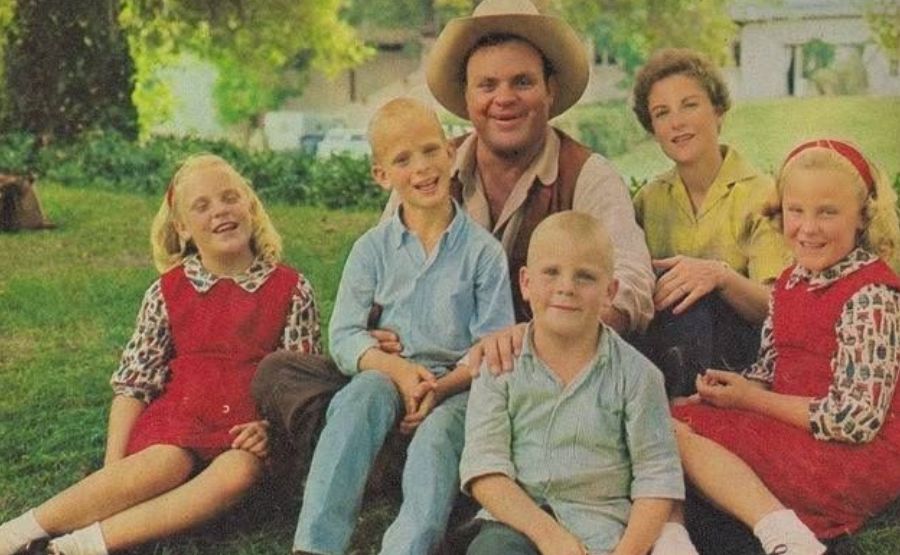
Personal Life: The Private Architecture of a Public Family
The tension at the center of Dolphia Parker’s life was this: she had married a man who became genuinely, massively famous, and she fundamentally did not want fame for herself. This is not a contradiction that resolves easily.
While Dan Blocker was one of the most recognized faces in America, Dolphia gave no interviews, attended no fan conventions, and made no effort to capitalize on his visibility. During the peak years of Bonanza, when the show was drawing more viewers than any program on the air, she was running a household in Hancock Park with four children and a husband who worked long days on set.
Those closest to them saw something different from the public image. The public saw Hoss Cartwright’s warmth and gentleness on screen. Those inside the Blocker home saw a marriage between two people with shared roots — Texas, theater, modesty, political conviction — who had built their relationship before celebrity had any bearing on their choices.
Dan’s politics complicated his public standing in ways that are often overlooked. His support for civil rights and his vocal opposition to the Vietnam War put him at odds with some of Bonanza‘s core audience, who saw the show as patriotic and traditional. The Blocker household embraced those causes regardless. Dolphia was part of that culture.
When Dan died on May 13, 1972 — a pulmonary embolism following gallbladder surgery, at 43 years old — Dolphia Parker was 39. She had four children, the oldest of whom were 19-year-old twins. She had no Hollywood career of her own to lean on, no public identity to fall back into. She had a family to hold together.
She held it together.
Widowhood: The Forty Years Nobody Watched
The death of Dan Blocker shocked the country in a way that only the sudden loss of a beloved cultural figure can. Bonanza — in its 13th season at the time — never truly recovered. The next year, the show was canceled. Hoss Cartwright was irreplaceable, and the audience knew it.
For Dolphia, the grief was not a public spectacle. She withdrew from media attention entirely — not dramatically, not with any announcement, but simply by being unavailable. Reporters who reached out received no response. Opportunities to sell her story or trade on her husband’s legacy were declined.
She managed the family estate with what multiple sources describe as quiet competence. The wealth Dan had accumulated through more than a decade of top-tier television work needed to be administered, invested, and preserved for her children’s futures. Dolphia handled this without visible strain and without hiring her grief out to a publicist.
Her family later noted that she was just 39 when Dan died and that she “managed to keep the family close through the kids’ teenage years.” The phrase is modest to the point of understatement. Raising four children through adolescence as a single parent — while managing the estate of a famous man, while navigating Hollywood’s attempts to commodify her husband’s memory, while processing her own loss — is not a quiet achievement. It is an extraordinary one.
When her children were grown, Dolphia made another deliberate choice. She moved to Santa Barbara, California, and she stayed there for nearly 40 years. She traveled. She wrote poetry. She supported political and social causes. She welcomed grandchildren for extended stays. She threw open her home for holidays, filling it, in her family’s description, with “food and wine, joy and love.”
Her children, most of them, eventually settled in Santa Barbara too — drawn there, they said, by something in her presence that they could feel but not quite name.
Her Children: The Evidence of Her Work
Any biography of Dolphia Parker must reckon honestly with what her children became, because they are the clearest record of who she was.
Dirk Blocker became an actor. His most prominent role — Detective Michael Hitchcock on the NBC comedy Brooklyn Nine-Nine — put him before a new generation of television audiences entirely unaware of the Bonanza connection. He has spoken publicly about the values his parents instilled: a strong work ethic, a moral compass, and the expectation that one shows up and does the job.
David Blocker built a career as a Hollywood producer. In 1998, he won an Emmy Award for producing Don King: Only in America. He was the son who confirmed his mother’s death to The Hollywood Reporter — a quiet act of stewardship that mirrored everything she had modeled.
Debra Lee Blocker became an artist, working in a field that rewards individual vision and craft. Danna Lynn Blocker maintained a private life, consistent with the values her mother had demonstrated from the beginning.
Four children. Four lives built on different foundations but recognizable common ground. The credit for that belongs substantially to the woman who ran the household while their father worked on set, and then continued running it after he was gone.
Legacy: What Quiet Strength Actually Means
The phrase “quiet strength” attaches itself easily to women like Dolphia Parker — women who lived adjacent to famous men without seeking fame themselves. The phrase is accurate, but it risks becoming patronizing if it isn’t followed by specificity.
What Dolphia Parker actually did: she moved across the country with three small children on the strength of her husband’s creative ambitions, before he had any reason to believe those ambitions would pay off. She maintained a functioning, grounded family life inside one of the most fame-distorting environments in the world. She made sound financial decisions in the aftermath of her husband’s sudden death, protecting her children’s futures when she herself was still in grief. She lived nearly four more decades in a condition of genuine privacy — not obscurity, but chosen invisibility — and filled those decades with poetry, travel, causes, grandchildren, and hospitality.
She also demonstrated that the partner of a famous person retains the right to be someone other than that person’s partner. She was Dolphia Parker before she was Dan Blocker’s wife, and she remained Dolphia Parker — with her Oklahoma birthplace, her Texas ranch childhood, her Sul Ross theater training, her political convictions, and her creative interior life — long after he was gone.
Her influence on American culture is indirect but real. Dirk Blocker’s warmth and comedic timing on Brooklyn Nine-Nine carries something of his parents’ household in it. David Blocker’s Emmy-winning work in film production reflects an upbringing in which storytelling was treated as serious and valuable. The Blocker name carries weight in Hollywood because Dolphia Parker decided, decades ago, that it should.
Final Words
Dolphia Lee Parker had a lengthy and fulfilling existence that is difficult to sum up because of its resistance to exposure.The instinct to define her in relation to Dan Blocker — as the wife, the widow, the woman behind the man — is understandable but incomplete.
She came from rural Oklahoma and West Texas at a time when the options for women were narrower than the landscape. She found the theater and found her voice there. She found a partner who matched her intellectually and temperamentally, and she built a life with him that was genuinely collaborative before his career made collaboration look like support.
When Dan died at 43, she could have retreated into grief, or into his shadow, or into the comfort of his celebrity. She did none of those things. She made practical decisions, raised four children, moved to the coast, wrote poetry, and drew her family close for the better part of four decades.
She was not, in any obvious sense, a public figure. However, the qualities she instilled in her offspring—discipline, warmth, creative seriousness, and political engagement—can be traced back to the home she managed. These individuals went on to become public personalities.That is a form of authorship. It is not the kind that wins awards or earns obituaries in entertainment trades, except, as it happened, it eventually did.
Dolphia Parker died surrounded by the children she had raised and the grandchildren she had cherished. She was 93 years old. Her home, in the end, was always full of people who loved her — which was, by every indication, exactly what she had wanted.
FAQs
1. When and where was Dolphia Parker born?
On July 29, 1932, Dolphia Lee Parker was born in Shattuck, Oklahoma. Her family moved to West Texas shortly afterward, and she grew up on a ranch there, spending school years in Alpine, Texas.
2. When did Dolphia Parker die?
She died on April 19, 2026, following a stroke, at a hospital near her home in Santa Barbara, California. She was 93 years old. The news was confirmed by her elder son, producer David Blocker, who spoke to The Hollywood Reporter.
3. Who were Dolphia Parker’s parents?
Her parents were Verner Vilas Parker and Gladys (Akers) Parker. Gladys was notably practical about her children’s education, relocating the family to Alpine, Texas, during school years so her children would have better opportunities.
4. How many siblings did Dolphia Parker have?
Dolphia had five siblings: sisters Elaine Caldwell, Marilyn Sullivan, Shirley Robinson, and Janice Smith, and a brother, Deryl Parker. Elaine, Marilyn, and Deryl predeceased her; Shirley and Janice survived her.
5. Where did Dolphia Parker go to college?
She attended Sul Ross State University in Alpine, Texas, where she became involved in the theater program and where she met Dan Blocker.
6. How did Dolphia Parker and Dan Blocker meet?
They met through campus theater productions at Sul Ross State University in the early 1950s. One family account holds that their first exchange occurred when Dolphia, working backstage during a production, had to ask Dan — who was in the audience heckling the performers — to leave the auditorium.
7. When did Dolphia Parker and Dan Blocker marry?
They married in September 1952, shortly after Dan returned from his military service in the Korean War, during which he received a Purple Heart.
8. How many children did Dolphia Parker have?
She and Dan had four children: twin daughters Danna Lynn and Debra Lee, born in 1953; a son, David, born in 1955; and a son, Dirk, born in Hollywood around 1957 after the family relocated to California.
9. Who is Dirk Blocker?
Dirk Blocker is an actor best known for playing Detective Michael Hitchcock in the NBC comedy Brooklyn Nine-Nine. He is Dolphia Parker and Dan Blocker’s younger son, born in Hollywood shortly after the family moved from New Mexico.
10. Who is David Blocker?
David Blocker is a Hollywood film and television producer. He won an Emmy Award in 1998 for producing the HBO film Don King: Only in America. He is Dolphia and Dan’s older son and confirmed his mother’s death publicly after she passed away in April 2026.
11. What happened to Dan Blocker?
On May 13, 1972, Dan Blocker, at 43 years old, passed away from a pulmonary embolism after gallbladder surgery.His death came in the middle of Bonanza‘s 13th season and effectively ended the run of the series, which was cancelled the following year.
12. How did Dolphia Parker respond to Dan Blocker’s death?
At 39, she declined all media attention, managed the family estate prudently, and devoted herself to raising her four children through their teenage years. She gave no public interviews and made no appearances connected to Dan’s legacy or the entertainment industry.
13. Where did Dolphia Parker live after Dan Blocker’s death?
Once her children were grown, she relocated to Santa Barbara, California, where she lived for nearly 40 years. Most of her children eventually settled nearby. She spent those decades writing poetry, supporting causes, traveling, and hosting family.
14. Did Dolphia Parker have a career of her own?
She participated in stage theater during her college years at Sul Ross, appearing in productions including Fumed Oak and working on others behind the scenes. She wrote poetry throughout her later life. She did not pursue a professional career in Hollywood and chose not to capitalize on her husband’s fame in any commercial way.
15. What is Dolphia Parker’s legacy?
Her legacy lives most clearly in her four children and their accomplishments — two of whom built recognized careers in the entertainment industry. She also modeled, over nine decades, the possibility of a life defined by authentic values rather than public visibility. Her family described her as possessing a “truly ineffable, numinous presence” — the kind of quality that draws people near not because of what someone has done, but because of who they fundamentally are.
Connecting curious minds with stories that educate, inspire, and inform with The Editorial Times.