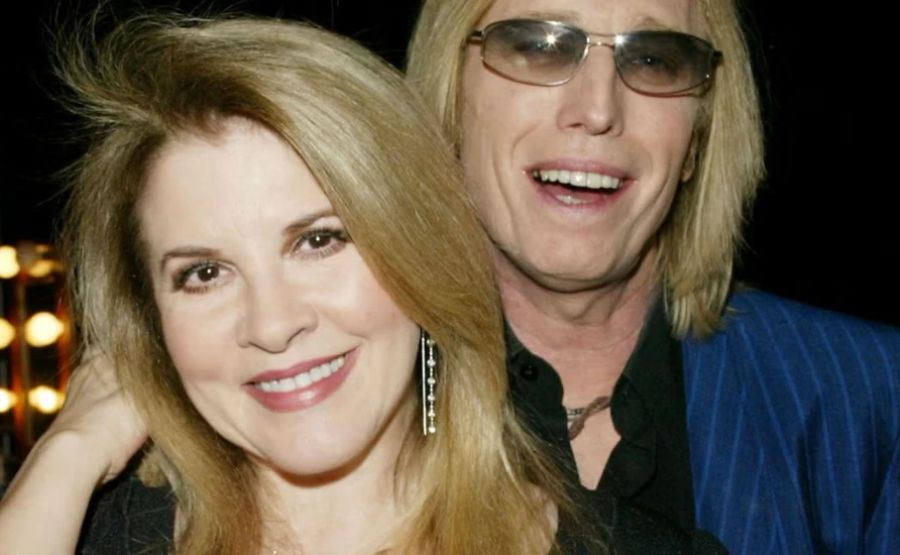
Jane Benyo: The Woman Who Shaped a Rock Legend’s World Before the World Knew His Name
Jane Benyo matters today not because she sought fame — she emphatically did not — but because her life illuminates something rock mythology tends to bury: the human cost, paid by real people in private, of becoming a legend.
Before record deals, sold-out stadiums, and Rolling Stone covers, she was there. She was the woman Tom Petty lived with in Gainesville, Florida, in the early 1970s, when his ambitions looked more like delusion than destiny. She is the woman who insisted on marriage before the move west. She is the woman whose casual conversation with a new acquaintance named Stevie Nicks accidentally seeded one of the most recognizable riffs in rock history. And she is the woman whose later struggles with mental illness, depression, and addiction were documented in a major biography — without her consent, without her voice, and without the counterweight of her own account.
Her story does not resolve neatly. It contains love and suffering, influence and erasure, marriage and its wreckage. That is precisely what makes it worth telling carefully.
Quick Bio
| Detail | Information |
| Full Name | Jane Ann Benyo |
| Year of Birth | Approximately 1950–1951 |
| Birthplace | Gainesville, Florida, USA |
| Nationality | American |
| Known For | First wife of Tom Petty (1974–1996); inspiration for the title of Stevie Nicks’ “Edge of Seventeen” |
| Marriage | Tom Petty (March 26, 1974 – September 9, 1996) |
| Children | Adria Petty (born 1974, film director); AnnaKim Violette (born 1982, visual artist) |
| Education | Gainesville High School, Gainesville, Florida |
| Public Profile | Extremely private; has given no known public interviews |
| Post-Divorce | Withdrew from public life; focused on daughters |
| Estate Connection | Named as a party in the Tom Petty estate trust structure alongside daughters and widow Dana York Petty |
| Documented Struggles | Depression, substance use, mental illness (as described in Warren Zanes’ Petty: The Biography, 2015) |
Gainesville: Where the Story Actually Begins
Every biography of Jane Benyo starts with Tom Petty. That framing itself tells you something about how her story has been received, and how little it has been allowed to stand on its own terms.
Jane Ann Benyo grew up in Gainesville, Florida — a college town anchored by the University of Florida, surrounded by flatwoods and Spanish moss, humid in all seasons and shaped by the particular rhythms of the mid-century American South. She was born in 1950 or 1951. Her exact birth date has never been confirmed publicly, which is consistent with a person who has spent most of her adult life deliberately avoiding documentation.
Her parents and siblings remain entirely unknown to the public record. She has never discussed her ancestry in any public venue. This absence of family history is not mysterious — it is the result of a woman exercising sustained, deliberate control over her own narrative in an era when the people around her did not always extend her the same courtesy.
What is confirmed is that she attended Gainesville High School. It was there, in the ordinary social geography of a Florida adolescence, that she encountered a restless, music-obsessed teenager named Thomas Earl Petty. He would drop out of high school to pursue music. She would stay in Gainesville — for a while — as their relationship deepened from teenage connection into something more permanent and defining.
See also “Johan Riley Fyodor Taiwo Samuel: The Artist in the Shadow of Giants“
The Teenager Who Saw Petty Before the World Did
Tom Petty met Jane Benyo when both were approximately 17 years old — a fact later famously immortalized, by accident, in a Stevie Nicks song. Their romance developed during the early 1970s, when Petty was cycling through early band configurations — the Epics, then Mudcrutch — and Gainesville was unusually rich with musical ambition. Don Felder, who would later anchor the Eagles, was there. Bernie Leadon was there. Duane and Gregg Allman passed through.
Jane knew Petty in the years before any of that mattered. She knew him when Mudcrutch was the house band at a Gainesville bar called Dub’s Steer Room, when the recordings were going nowhere, when the dream was entirely local and entirely speculative. The relationship that formed in those years carried the particular texture of young love built on proximity and shared uncertainty rather than on fame or external validation.
They lived together in Gainesville. By the time Petty made his move toward Los Angeles — where Mudcrutch would try to find a foothold in the industry — Jane had become an indispensable part of his daily life. She was already pregnant with their first daughter, Adria, when the question of marriage became pressing. The account that appears in Warren Zanes’ 2015 biography Petty: The Biography — drawn from extensive interviews with Petty himself — describes Petty as initially reluctant to marry, and his mother as the person who pushed him to act morally. Jane, by multiple accounts, also wanted the commitment made formal before the move west.
They married on March 26, 1974. Tom Petty was 23. Jane was approximately 23. They packed their lives into a departure from the only geography either of them had known and drove toward a city that would change everything about their circumstances — and, eventually, everything about their marriage.
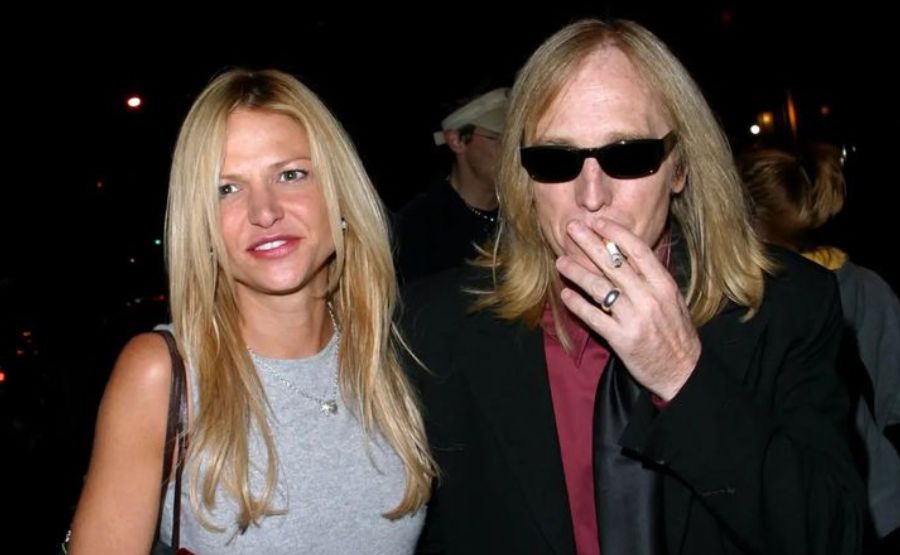
Los Angeles and the Architecture of Isolation
The move to Los Angeles in the mid-1970s placed Jane Benyo inside one of the most demanding ecosystems in American culture, without giving her any of the tools that might have helped her navigate it.
Tom Petty arrived with a band, a mission, and a ferocious professional focus. Jane arrived as his wife, newly a mother, and essentially alone in a city of millions. In the San Fernando Valley’s Sherman Oaks neighborhood, Petty rented a modest home. The band’s early work was not immediately successful — Mudcrutch broke up in late 1975. But from its members, Petty soon assembled the Heartbreakers: guitarist Mike Campbell, keyboardist Benmont Tench, drummer Stan Lynch, and bassist Ron Blair.
The self-titled debut album Tom Petty and the Heartbreakers arrived in 1976, featuring “American Girl” and “Breakdown.” It didn’t immediately break through in the United States but found a massive audience in the United Kingdom, which gave the band the momentum to build American recognition through relentless touring. That touring was the structural reality that defined Jane’s life through the late 1970s and 1980s: Tom was on the road, and she was home.
By 1979, Damn the Torpedoes made Tom Petty a genuine American star, achieving triple platinum status in the United States. Hard Promises followed in 1981, going platinum. The 1989 solo debut Full Moon Fever reached five-times platinum and delivered “Free Fallin'” and “I Won’t Back Down” into the cultural atmosphere. Through all of it, Jane held the household together in California while her husband held arenas across the world.
That asymmetry — one partner achieving enormous public recognition while the other manages invisible domestic labor — is one of the most well-documented generators of marital fracture. In Jane’s case, the Zanes biography and multiple secondary sources describe a progression from loneliness to alcohol and drug use to depression to what was eventually described as mental illness. The isolation she experienced in those early Los Angeles years appears to have set conditions that the rest of the marriage could not repair.
The Accidental Muse: “Edge of Seventeen”
In the landscape of rock music, few biographical footnotes have achieved the cultural durability of Jane Benyo’s role in the creation of Stevie Nicks’ 1982 single “Edge of Seventeen.”
The story, told by Nicks herself in a 2014 interview with Billboard and confirmed by Petty’s Wikipedia entry and multiple primary sources, is deceptively simple. When Jane met Stevie Nicks — Tom had made the introduction as Nicks came into Petty’s professional orbit around 1981 — the two women spoke. Nicks asked Jane when she had met Tom. Jane replied, in her North Florida drawl, that she met him “at the age of seventeen.” Nicks heard “the edge of seventeen.”
That mishearing became the title of one of Nicks’ most enduring solo tracks. But the connection went deeper than a title. Nicks told Billboard that part of the song is also about Tom himself — that the lyric “He seemed broken-hearted / Somethin’ within him” came directly from what Jane told her about Petty at the time. Jane was, in Nicks’ telling, describing her own husband’s interior life, and Nicks absorbed it and built a song around it.
The relationship between Jane and Stevie Nicks also had further dimension. According to accounts in the Zanes biography, it was Nicks who bonded with Jane and who, during Petty’s 1986 Australian tour with Bob Dylan, was enlisted — at Jane’s suggestion — to keep an eye on Tom. Jane was not naive about the pressures of her husband’s world. She was, by that point, deeply embedded in its politics and its dangers, even as she remained invisible to the industry that profited from them.
What the “Edge of Seventeen” story reveals, beyond its rock-trivia surface, is that Jane Benyo was an active, observant, and psychologically perceptive participant in the world she inhabited. She was not merely a backdrop. She was a source.
The Marriage: What the Zanes Biography Says — and What It Can’t
In 2015, Warren Zanes published Petty: The Biography, a deeply researched account produced with Petty’s cooperation and access. It became the primary public document of Petty’s life, and the primary public account of Jane Benyo’s struggles.
The biography is valuable and thorough. It is also, inevitably, one-sided in a specific way: Jane Benyo never participated in it. She gave no interviews. Her perspective on her own marriage does not appear in the text in her own words. What the book contains is Tom Petty’s account of the marriage, filtered through Zanes’ narration, supplemented by the perspectives of people in Petty’s professional circle.
That account describes a marriage that deteriorated progressively as Petty’s stardom intensified. Zanes wrote that Jane would call Petty obsessively and threaten suicide if he indicated he was hanging up. Petty himself, in a Rolling Stone interview, described their relationship with a characteristic contradiction: “I’m still thrilled about her. She’s the most honest, frank person I’ve ever met… But there were times when we definitely were not getting along, when we fought like f*cking Apaches.”
Daughter Adria has spoken publicly about the emotional complexity of her upbringing, acknowledging that her mother suffered from mental illness and that insecurity drove some of the abusive behavior within the household. At the same time, the Zanes biography also makes clear that Tom Petty’s own drug and alcohol use was severe — he was, by the time of the divorce, deep into addiction to heroin — and that his absence from the home was structural and relentless across two decades of touring.
In 1987, an arsonist burned down the family’s home in Encino, California. Petty and his family escaped unharmed, but the trauma of that event added to the accumulation of stresses the marriage had already been absorbing. By the early 1990s, Petty was living separately from Jane while on tour, and the separation that preceded the formal divorce had already effectively begun.
The marriage ended on September 9, 1996, after 22 years.
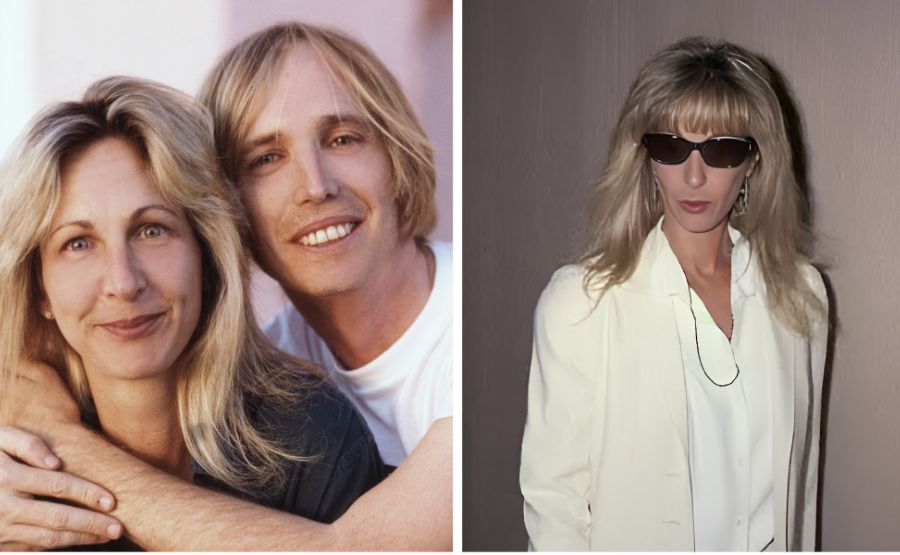
Personal Life: The Story Behind the Official Account
The honest biographical challenge with Jane Benyo is that every account of her personal struggles comes from sources other than herself — and those sources had every incentive to construct a narrative favorable to their own positions.
Tom Petty described a marriage that became abusive. His daughters confirmed elements of that account while adding the important nuance that Jane’s behavior arose from identifiable emotional causes — deep love, isolation, insecurity — rather than from malice. Stevie Nicks, writing in the space between both accounts, presented Jane as someone she cared for, confided in, and worried about. None of these perspectives is the same as Jane’s own.
What can be reconstructed from the factual record is this: Jane moved across the country for a man whose ambitions required his constant absence. She raised two daughters — Adria, born in 1974, and AnnaKim Violette, born in 1982 — while her husband was on the road. She developed substance use problems in a context where recreational drug use was entirely normalized by the professional and social environment surrounding the Heartbreakers. She struggled with mental illness in an era before celebrity spouses had access to the support infrastructure that now exists, or the cultural permission to speak publicly about mental health challenges.
The fires that burned in that marriage burned in both directions. Tom Petty, in his own biography, described his first marriage as resembling his parents’ abusive household — the one from which music had been his escape. He went into therapy before the divorce was finalized. He spiraled into clinical depression and heroin addiction after the separation. His second wife, Dana York — whom he had first spotted in a concert audience in Texas around 1991 — is credited in his account with helping him find his way back.
Jane disappeared from public record when the marriage ended. She did not resurface until Tom Petty died on October 2, 2017, of an accidental drug overdose at his home in Malibu, California. Even then, she made no public statement.
Her Daughters: The Legacy She Actually Built
The most durable evidence of Jane Benyo’s life and character is not a song title or a biography’s characterization. It is her two daughters.
Adria Petty, born in 1974, has built a genuine career as a film director and editor, working on music videos for Beyoncé, Coldplay, Regina Spektor, and others. She has engaged publicly and thoughtfully with the complexity of her parents’ relationship, offering accounts that acknowledge her mother’s mental illness while resisting the reduction of Jane to a villain. Adria, by multiple accounts, has maintained a relationship with her mother even through the difficult years.
AnnaKim Violette, born in 1982 and known professionally by her full artistic name, has established herself as a visual artist with a distinctive creative voice. She appears publicly, participates in the cultural conversation about her father’s legacy, and has been an active party in the Tom Petty estate proceedings.
Both daughters emerged from a childhood that was, by their own accounts, emotionally complicated. Both have built independent professional identities that owe nothing to their father’s fame and do not trade on their mother’s notoriety. That outcome — two creatively thriving adults who have processed rather than buried their origins — speaks to something Jane Benyo gave them that no biography has yet found adequate language to describe.
The Estate Battle: Jane Benyo in the Legal Record
When Tom Petty passed away in October 2017, he left behind a trust structure intended to oversee both his music archive and his estate, which is estimated to be worth $75 million.included recordings with MCA Records, Geffen Records, and Warner Music Group across four decades of commercial success.
The trust established a three-party structure for decision-making: Dana York Petty (his widow), Adria Petty, and AnnaKim Violette. The daughters interpreted “equal participation” to mean they held a combined two-thirds majority over decisions. In April and May 2019, that dispute became public litigation, with the daughters filing suit in Los Angeles Superior Court against Dana York Petty, seeking $5 million in damages and accusing her of “self-dealing, theft, and gross mismanagement.”
Jane Benyo’s name appeared in these proceedings not as a principal, but as one of the identified parties in the broader estate architecture. One Rolling Stone statement from Adria Petty named “Jane Benyo Petty” as one of four partners in the estate’s governance framework. This suggests that Petty’s trust included Jane — his first wife, divorced from him 21 years before his death — as a recognized stakeholder in some capacity.
The litigation settled on December 10, 2019. The terms of the settlement were not made public. A joint statement from all parties expressed regret for the pain the dispute had caused and attributed it to the intensity of grief following Petty’s death. The catalog — including Wildflowers, Damn the Torpedoes, and the Heartbreakers’ full commercial legacy — was returned to shared management.
Jane made no public statement about any of it.
Legacy: What Silence Actually Protects
In an era that prizes disclosure as both catharsis and content strategy, Jane Benyo’s silence is not a gap in the record. It is itself a deliberate position.
She has watched a biography tell her story without her cooperation. She has watched her daughters fight a public legal battle over the assets of a man she married when they were both 23. She has watched “Edge of Seventeen” — accidentally seeded by a passing conversation — become one of the defining tracks of 1980s rock, earn Grammy nominations, appear in Stranger Things, and accrue hundreds of millions of streams in the digital era. She has done all of this without issuing a single statement, granting a single interview, or establishing any social media presence.
That refusal is not passivity. It takes sustained effort to remain silent about one’s own life when the cultural appetite to discuss it — and to define it — is perpetual. Jane Benyo has exercised that effort for decades.
What she leaves behind is not an argument or a correction. It is the persistent fact of her own absence from her own public narrative — which, in the decades since 1996, has been written entirely by others. Her daughters’ careers, her accidental muse role in a Grammy-nominated song, her position inside the legal framework of one of rock’s most complex estate structures — these are the traces of a life that was more than it appeared, lived by a woman who consistently declined to tell anyone so.
The world Petty built — artistically, commercially, culturally — was built on a foundation that included Jane Benyo’s presence, her sacrifice of a conventional life, her psychological suffering, her material support during the years of struggle. None of that foundation is visible in what stands above it. Most foundations never are.
Final Words
There are people in rock history who occupy what might be called the inhabited background — present for the formative years, absent from the official account, their contributions legible only in retrospect and inference.
Jane Benyo is one of the most consequential of these figures, and one of the most poorly served by the biographical machinery that has addressed her. The accounts that exist describe her through Petty’s eyes, through the lens of mental illness and marital dysfunction, and through the ambient pity or judgment that tends to attach to women who struggled in situations not of their making. Very few of those accounts begin from the premise that her experience, in its full complexity, is worth understanding on its own terms.
What this biography has attempted to do — within the genuine limits of a public record that Jane herself has declined to expand — is to resist the simplest available framings. She was not merely the troubled first wife. She was not merely the muse. She was not merely the mother of two accomplished daughters. She was all of these, and she was also someone whose inner life, private reasoning, and real understanding of her own circumstances have never been made available to anyone who wasn’t there.
That unavailability should register not as biography’s failure, but as Jane Benyo’s final and most durable act of self-determination. In a world that has wanted to tell her story since the moment she became adjacent to someone famous, she has consistently chosen not to let it.
Whether that choice reflects peace or pain, resolution or ongoing grief — whether Gainesville, Florida, where she returned to after the unraveling — whether any of it added up to something she herself would call a life well-lived, is something only she knows.
The rest of us have the songs, the lawsuits, and the daughters. It will have to be enough.
FAQs
1. Who is Jane Benyo?
Jane Ann Benyo is an American woman best known as the first wife of rock musician Tom Petty. They were married from March 26, 1974 to September 9, 1996. She also inspired the title of Stevie Nicks’ 1982 song “Edge of Seventeen” through a casual conversation about meeting Petty at age 17.
2. When and where was Jane Benyo born?
She was born approximately in 1950 or 1951 in Gainesville, Florida. Her precise birth date has never been publicly confirmed, as she has declined to share personal details with the media.
3. How did Jane Benyo meet Tom Petty?
They met as teenagers in Gainesville, Florida, where both attended Gainesville High School. They began dating around age 17 and lived together in the early 1970s before Petty’s music career took shape.
4. When did Jane Benyo and Tom Petty marry?
They married on March 26, 1974. Multiple sources confirm this date. Jane was already pregnant with their first daughter, Adria, at the time of the marriage.
5. Why did Tom Petty and Jane Benyo marry when Petty was reportedly reluctant?
According to Warren Zanes’ 2015 biography Petty: The Biography, Petty was not eager to marry at the time, but his mother urged him to “do the right thing.” Jane reportedly also insisted on the marriage before the couple relocated to Los Angeles.
6. How did Jane Benyo inspire “Edge of Seventeen”?
When Jane first met Stevie Nicks, she told her she had met Tom “at the age of seventeen.” Nicks, mishearing Jane’s North Florida accent, thought she said “the edge of “seventeen”—and incorporated the term into the song’s title. Nicks also confirmed in a 2014 Billboard interview that some of the song’s lyrics were based on things Jane said about Tom’s emotional state at the time.
7. How many children did Jane Benyo and Tom Petty have?
They had two daughters: Adria Petty, born in 1974, who has become an accomplished film and music video director (working with Beyoncé, Coldplay, and Regina Spektor); and AnnaKim Violette, born in 1982, who is a visual artist.
8. What led to the breakdown of Jane and Tom Petty’s marriage?
Multiple sources describe a combination of factors: Tom’s prolonged absences due to touring, Jane’s increasing isolation and loneliness in Los Angeles, the development of substance use and depression, and eventually what Warren Zanes’ biography described as mental illness that manifested in volatile behavior. Petty’s own severe drug addiction — including heroin — was also a significant factor. Both parties bore the weight of a relationship under sustained pressure.
9. How is Jane Benyo described in Warren Zanes’ biography of Tom Petty?
In the latter years of their marriage, Zanes described her behavior as suicidal threats and compulsive phone calls when Petty said he was cutting off calls. The biography was written with Petty’s cooperation; Jane did not participate. Daughter Adria has noted that her mother’s behavior arose from insecurity and deep love, and Petty himself described Jane as “the most honest, frank person I’ve ever met.”
10. When did Jane Benyo and Tom Petty divorce?
Their divorce was finalized on September 9, 1996, after 22 years of marriage.
11. Did Jane Benyo remarry after the divorce?
No known subsequent marriage is documented. Multiple sources confirm she has remained single since the 1996 divorce.
12. What is Jane Benyo’s connection to Tom Petty’s estate?
After Petty’s death on October 2, 2017, a trust structure governed his estate. A statement from Adria Petty in Rolling Stone named “Jane Benyo Petty” as one of four partners in the estate’s governance framework, suggesting she holds some role in the trust alongside his daughters and widow Dana York Petty.
13. What was the Tom Petty estate lawsuit about, and how did it end?
In May 2019, daughters Adria Petty and AnnaKim Violette filed suit in Los Angeles Superior Court against widow Dana York Petty, seeking $5 million and claiming she violated their right to equal participation in estate decisions. The dispute settled on December 10, 2019. The settlement terms were not disclosed publicly.
14. Has Jane Benyo spoken publicly about Tom Petty’s death in 2017?
No. She issued no public statement when Petty died. She briefly reappeared in public awareness at the time of his death but has maintained her longstanding policy of not engaging with the media.
15. What is Jane Benyo’s estimated net worth?
Various sources estimate her net worth at over $1 million, derived from her role as a beneficiary of Tom Petty’s estate. These figures are not verified by any public financial disclosure and should be treated as informed speculation.
Connecting curious minds with stories that educate, inspire, and inform with The Editorial Times.