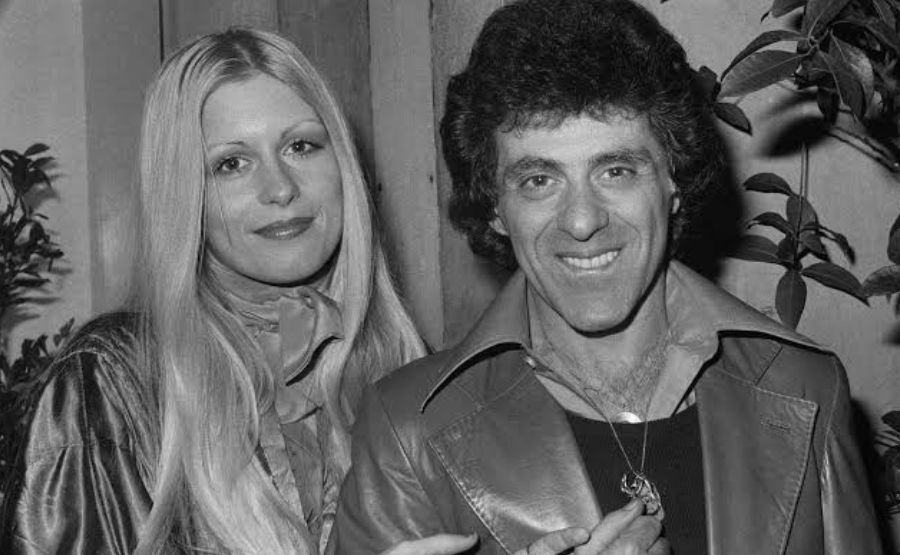
MaryAnn Hannigan: The Woman Behind the Spotlight
A careful biography of the woman who chose privacy over fame, and what that choice reveals about the human cost of celebrity adjacency.
Quick Bio
| Detail | Information |
| Full Name | MaryAnn Hannigan (also written Mary Ann Hannigan) |
| Born | c. 1950, United States (exact location not publicly recorded) |
| Nationality | American |
| Known For | Second wife of singer Frankie Valli |
| Marriage | Married Frankie Valli, June 1974 |
| Divorce | 1982 |
| Children | No children confirmed from the Valli marriage |
| Public Career | No verified public professional identity (some unconfirmed sources reference a banking career) |
| Current Status | Private life; location and activities unconfirmed |
| Notable Appearance | New York City Grease premiere, June 13, 1978 |
| Age (estimated) | Approximately 75–76 years old as of 2026 |
The Problem with Biographical Silence
Some biographies are defined by what their subjects did. MaryAnn Hannigan’s is defined — at least in public — by what she did not do.
She never sought interviews. She never cultivated a media presence. She never attempted to leverage her proximity to one of American pop music’s most recognizable voices into a platform of her own.
That restraint is itself a kind of story. In an era when celebrity marriages generated magazine covers and society-page inches, Hannigan appeared just often enough to confirm she existed, then retreated into a life that, by every available measure, she preferred to keep her own.
See also “Jane Benyo: The Woman Who Shaped a Rock Legend’s World Before the World Knew His Name“
Who MaryAnn Hannigan Actually Is — and What We Can Verify
Before writing a single embellished sentence about MaryAnn Hannigan, a responsible biographer must acknowledge the limits of the record.
Born around 1950 in the United States, Hannigan entered the public consciousness not because of anything she accomplished independently, but because of the man she married in June 1974. She is, in the language of celebrity journalism, a “notable adjacent” — a real person whose story has been compressed into a footnote in someone else’s biography, and whose details have been distorted by years of recycled speculation dressed up as fact.
Several sources that purport to profile her contain internal contradictions: one claims she had two children with Frankie Valli; a more authoritative account, confirmed by Valli himself and supported by Wikipedia’s cited sources, states the couple had no children together. Some sources claim a banking career that appears to belong to a different woman sharing the same name. A careful reader must hold these discrepancies in mind.
What can be said with confidence is this: MaryAnn Hannigan was born approximately in 1950, met Frankie Valli in 1970, married him in June 1974, moved with him to New Jersey, attended public events at his side during the mid-to-late 1970s, and divorced him in 1982. Everything beyond those facts exists on a spectrum from plausible inference to outright invention.
The Context That Shaped Her Story: New Jersey, 1970
To understand MaryAnn Hannigan’s place in history, it helps to understand the moment she entered Frankie Valli’s life.
The year was 1970. Valli had just come through a turbulent decade — The Four Seasons had racked up an extraordinary string of hits, including “Sherry” (1962), “Big Girls Don’t Cry” (1962), “Walk Like a Man” (1963), and “Rag Doll” (1964). He was already 36 years old, by some accounts hardened by years of touring, the pressures of fame, and a marriage to his first wife, Mary Mandel, that had just ended after approximately fourteen years.
Hannigan was twenty. The sixteen-year age gap was real and documented, and Valli later discussed it with unusual candor in an April 1975 interview with People magazine.
The two met as the Four Seasons era was giving way to an uncertain new chapter. Valli was preparing to reinvent himself as a solo artist. He was also, by his own account, guarded.
A Friendship That Grew Slowly — In Valli’s Own Words
MaryAnn Hannigan is the subject of one direct, documented remark from a primary source that merits serious consideration.
In April 1975, Valli told People magazine: “She was a pal when I needed one but because I’d been hurt before, I resisted what I was feeling about her.”
That sentence is one of very few windows into the emotional architecture of their relationship. It tells us several things simultaneously: Hannigan was present during a period of Valli’s personal vulnerability; she offered friendship before romance; and Valli was conscious enough of his own emotional caution to name it explicitly.
The relationship that grew from that friendship eventually led them to marry in June 1974. The four-year gap between meeting and marrying was not indifference — it was, according to Valli himself, the carefully paced evolution of trust between two people who had both known loss.
The Marriage: New Jersey, Stardom, and a Quiet Life Beside the Stage
When MaryAnn Hannigan and Frankie Valli married in 1974, they chose to make their home in New Jersey, specifically so Valli could remain near his daughters from his first marriage — Antonia and Francine Valli.
That decision alone says something about the texture of the marriage. This was not a Hollywood arrangement oriented around image. Valli had children he cared for, a legacy he was tending, and a solo career he was rebuilding. Hannigan stepped into a complex domestic situation and, by all accounts, did so without public complaint.
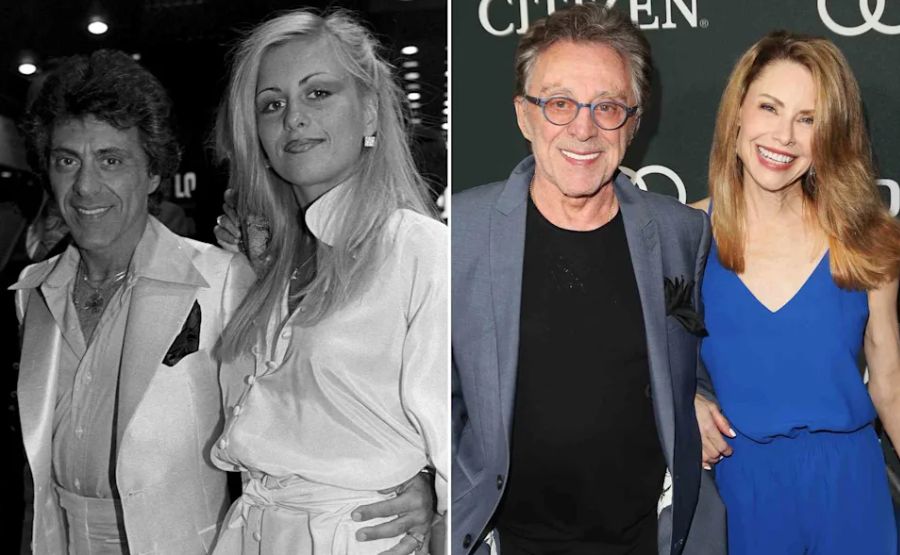
The mid-1970s were productive years for Valli professionally. “My Eyes Adored You” reached number one on the charts in 1975. “December 1963 (Oh, What a Night)” followed as another chart-topper. By 1978, Valli recorded the title theme for the film adaptation of Grease, penned by Barry Gibb of the Bee Gees, and again reached the top of the charts. Through all of it, Hannigan appeared occasionally at his side — photographed at events, present at premieres, documented at the New York City opening of Grease on June 13, 1978 — but never as the story herself.
While the spotlight tracked her husband’s falsetto around the world, she remained, by deliberate choice or natural temperament, beside and slightly behind it.
Personal Life, Private Struggles, and What the Record Cannot Say
Here is what the public record confirms about Hannigan’s personal life during the marriage: she and Valli had no children together. Valli’s three daughters from his first marriage — Antonia, Francine, and his stepdaughter Celia — were part of the household Hannigan entered as a young woman of twenty-four.
What the record cannot say — and what no honest biographer should invent — is how she experienced that role. She stepped into the life of a woman married to a man whose professional obligations were relentless, whose prior marriage had produced children who would have naturally complicated the dynamics of a new household, and who was simultaneously one of the most recognizable voices in American popular music.
The year 1980 brought devastating tragedy to the Valli family. Celia Valli died in February after falling from a fire escape. Francine Valli died of a drug overdose that August. Hannigan, as Valli’s wife during those months, would have experienced that grief from the inside. The public record does not document how she bore it, what support she offered, or what toll it took — and that silence should be respected rather than filled with speculation.
What we do know is that within two years of those deaths, the marriage ended. The divorce was finalized in 1982. No cause was ever publicly offered by either party.
The Divorce and the Afterward
When MaryAnn Hannigan and Frankie Valli parted ways in 1982, she did something unusual for someone who had spent eight years married to a famous man: she disappeared quietly.
There were no interviews. No tell-all memoirs. No media appearances designed to rehabilitate a narrative or leverage a famous name. By every available measure, she walked away from the marriage and resumed a private life with exactly the same privacy she had maintained throughout it.
One notable exception surfaced in accounts of Valli’s fourth wedding. When Valli married Jackie Jacobs in Las Vegas on June 26, 2023, reports indicated that MaryAnn Hannigan was among those present. If accurate, that attendance speaks to the endurance of a genuine bond — the kind of affection that outlasts legal dissolution and the passage of forty years.
What she has done professionally, where she has lived, and what her day-to-day life looks like today are simply unknown. Some sources suggest a career in banking, but that claim cannot be reliably verified and may conflate her with a different individual of the same name.
The Confusion in the Record — and Why It Matters
An honest biography of MaryAnn Hannigan must confront the problem of information pollution.
Because her name is unusual but not unique, multiple women named Maryann or Mary Ann Hannigan appear in professional records, obituaries, and social media profiles. Some of these individuals — including a banking professional and an I-O psychologist — appear to be entirely different people who share her name. Irresponsible writing has blended these profiles together, attributing careers and accomplishments to Valli’s ex-wife that may belong to strangers.
This conflation is not a minor error. It reflects a broader problem in celebrity-adjacent biography: the intense public curiosity about famous people’s partners creates a demand for information that often exceeds the supply of verified fact, and that gap gets filled with what can only be called biographical fiction.
The most intellectually honest position is this: MaryAnn Hannigan, second wife of Frankie Valli, is a private American woman born around 1950 whose documented public life spans approximately the years 1974 to 1982. What she did before and after that window is her own story — one she has never chosen to share.
Legacy and Influence
MaryAnn Hannigan does not have a “legacy” in the conventional biographical sense. She did not found institutions, release albums, lead movements, or leave behind work that shaped culture.
What she leaves, rather, is something quieter and perhaps more instructive: the example of a person who chose ordinary life over the available alternative of celebrity-adjacent notoriety.
In an age that rewarded confessional memoir and television appearances, she declined. In a media landscape that would have accepted — even celebrated — an account of life inside a famous marriage, she offered nothing. She seemed to understand something that many in her position did not: that proximity to fame does not obligate you to inhabit it.
For students of celebrity culture and the people who orbit it, Hannigan’s story is actually a useful corrective. It demonstrates that not every person touched by fame wishes to be defined by it. It also demonstrates how easily the historical record distorts the stories of private individuals once they’ve been brushed by the spotlight.
She stepped in, she lived her life, and she stepped back out. That is, in its own way, a form of integrity.
Final Words
MaryAnn Hannigan entered the public imagination through a side door — as the second wife of a man whose falsetto had already conquered America — and she used that same side door to exit, quietly and with apparent finality, after eight years.
What the record gives us is a woman who was young when she met Valli, patient enough to let a friendship deepen slowly into love, committed enough to relocate to New Jersey and enter a complex family situation, and private enough to leave no trace of her inner life in any publicly available document. It is not a coincidence that there is no trace.
There are people who pursue celebrities like oxygen. Hannigan seems to have found her air elsewhere.
Whether she found happiness, professional fulfillment, lasting relationships, or peace after 1982 is not something the public record can confirm. That’s not a failure of research — it’s a reflection of the very quality that makes her story interesting: she refused to be public property.
In a world that tends to treat the partners of famous people as supporting characters in someone else’s narrative, MaryAnn Hannigan seems to have quietly insisted on being the author of her own.
FAQs
1. Who is MaryAnn Hannigan?
MaryAnn Hannigan is an American woman born around 1950, best known as the second wife of singer Frankie Valli, frontman of The Four Seasons. She is a private individual with no public professional identity of her own.
2. When did MaryAnn Hannigan marry Frankie Valli?
The two married in June 1974, approximately four years after first meeting in 1970.
3. How old was MaryAnn Hannigan when she met Valli?
She was approximately twenty years old when they met in 1970. Valli was thirty-six.
4. Did Hannigan and Valli have children together?
The most reliable sources, including Valli’s own Wikipedia page (citing a People magazine profile) and multiple entertainment news sources, confirm they did not have children together. Although some untrustworthy sources assert otherwise, those reports seem to be false.
5. Why did the marriage end?
The divorce was finalized in 1982 after approximately eight years of marriage. Neither Hannigan nor Valli ever publicly disclosed the reasons for their separation.
6. Did Frankie Valli ever publicly describe his relationship with MaryAnn Hannigan?
Yes — in an April 1975 interview with People magazine, Valli said she had been “a pal when I needed one” but that past hurt had caused him to resist his feelings for her initially. That remains the most direct public statement about their relationship from either party.
7. What did MaryAnn Hannigan do after the divorce?
She stepped entirely out of public life. No interviews, public appearances, or media statements have been attributed to her since the end of the marriage.
8. Is MaryAnn Hannigan still alive?
Based on available reporting as of 2026, there is no public record of her death, and she is believed to be alive at approximately 75–76 years old.
9. Did MaryAnn Hannigan attend Frankie Valli’s most recent wedding?
Some accounts indicate she attended Valli’s June 2023 Las Vegas wedding to Jackie Jacobs, suggesting the two maintained a cordial relationship after their divorce, though this cannot be independently confirmed from primary sources.
10. What was life like for MaryAnn during the marriage?
She and Valli lived in New Jersey to be close to his daughters from his first marriage. She attended public events at his side — including the New York City premiere of Grease in June 1978 — but maintained a low public profile throughout the marriage.
11. Was there tragedy during the years of their marriage?
Yes. In 1980, while Hannigan and Valli were still married, his stepdaughter Celia Valli died after falling from a fire escape in February, and his daughter Francine Valli died of a drug overdose that August. Valli later described 1980 as one of the most devastating periods of his life.
12. Is there a banking executive named MaryAnn Hannigan who is the same person?
This is unclear and likely inaccurate. Professional profiles for banking executives and other professionals named Maryann or Mary Ann Hannigan appear in public records, but these are almost certainly different individuals sharing a common name. Conflating them with Frankie Valli’s ex-wife is an error that numerous websites have made without reliable sourcing.
13. Did MaryAnn Hannigan ever give any interviews?
No verified public interviews exist. She has not spoken to the media at any point in the public record about her marriage, her personal life, or her experiences.
14. How does MaryAnn Hannigan fit into Frankie Valli’s broader marriage history?
She was his second wife. Valli married first wife Mary Mandel in the mid-1950s and divorced in 1971. He married Hannigan in 1974 and divorced in 1982. He then married Randy Clohessy in 1984, with whom he had three sons; they divorced in 2004. He married his fourth wife, Jackie Jacobs, in Las Vegas on June 26, 2023.
15. Why do people still search for MaryAnn Hannigan today?
Primarily because of her connection to Frankie Valli, whose music remains widely celebrated and whose life story was immortalized in the Tony Award-winning Broadway musical Jersey Boys and Clint Eastwood’s 2014 film adaptation. Her deliberate absence from the public record also generates genuine curiosity — the internet tends to become more interested in people who refuse to be found.
Connecting curious minds with stories that educate, inspire, and inform with The Editorial Times.