Emma Nesper: The Quiet Force Behind a Purposeful Life
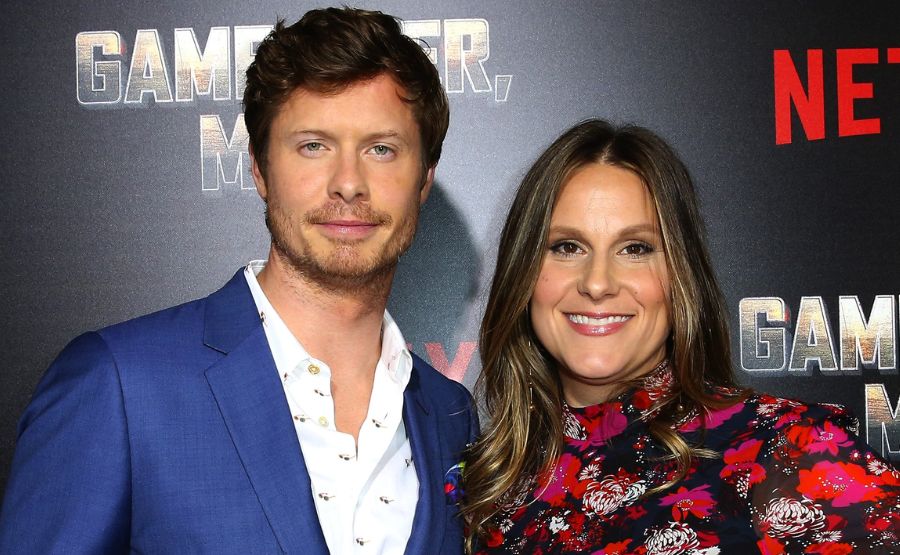
In an era when proximity to celebrity is often mistaken for identity, Emma Nesper stands as a deliberate counterargument — a woman who built a genuine career advancing human rights across four continents while the world spent two decades asking what it was like to be married to a comedian.
Quick Bio
| Detail | Information |
| Full Name | Emma Nesper Holm |
| Date of Birth | January 17, 1982 |
| Birthplace | Evanston, Illinois, USA |
| Nationality | American |
| Ethnicity | Caucasian; Jewish ancestry |
| Zodiac Sign | Capricorn |
| Education | University of Wisconsin–Madison (2004) for a B.A. in journalism, mass communication, and cultural anthropology; UCLA (2008) for an M.A. in African Studies with a focus on history |
| Father | Larry Nesper, Professor of Anthropology & American Indian Studies, UW–Madison |
| Spouse | Anders Holm (married September 3, 2011) |
| Children | Three children (first born December 19, 2013) |
| Residence | Los Angeles, California (South Pasadena neighborhood) |
| Career Focus | Nonprofit development, human rights advocacy, humanitarian fundraising |
| Notable Employers | Venture Strategies Innovations (VSI), American Jewish World Service (AJWS), CARE USA |
| Current Role | Development Chair, Silverlake Independent Jewish Community Center (since April 2023); independent consultant for nonprofit communications and fundraising |
| Estimated Net Worth | ~$500,000 |
| Television | Celebrity Family Feud (2023, as herself) |
Roots in a Town That Valued Thinking
Evanston, Illinois, is located on the shores of Lake Michigan about north of Chicago. It is a city defined as much by Northwestern University and its tree-lined residential blocks as by Chicago’s shadow. For families who chose it in the 1980s, it offered civic seriousness — strong public schools, a culture of community engagement, and an unusual degree of intellectual expectation for young people.
Emma Nesper was born there on January 17, 1982. Her father, Larry Nesper, taught anthropology and American Indian studies at the University of Wisconsin–Madison, a fact that quietly shaped everything that followed. Growing up in a household where cultural inquiry was professional currency meant that curiosity about other people’s worlds was not merely encouraged — it was modeled daily.
She graduated from Evanston Township High School in 2000. The school would later connect her, inadvertently, to the man she would marry. But at the time, her teenage years were characterized by the same disciplined seriousness that would define her adult work — focused, intellectually driven, and uninterested in performance for its own sake.
See also “Xavier Jack Duffy: Growing Up at the Intersection of Politics, Media, and Midwestern Values“
The Making of a Cross-Cultural Scholar
At the University of Wisconsin–Madison, Emma pursued something rare for an undergraduate: genuine intellectual range. She combined journalism, mass communication, and cultural anthropology into a single degree — a configuration that reflected an instinct for how stories and structures shape societies simultaneously.
She graduated with her B.A. in 2004. Her father’s academic base at the same university almost certainly deepened her connection to its scholarly community. The On Wisconsin alumni magazine later referred to her simply as “fellow Badger and human rights activist Emma Nesper Holm BA 2004.”
After two years away from formal education — years that included practical work in the field — she enrolled at UCLA. Between 2006 and 2008, she earned a Master of Arts in African Studies with a historical emphasis. Her graduate work was not abstract. In May 2007, she presented a paper titled “Digital Disciples: Mouride Media in and out of Touba” at UCLA’s “Multi-mediating Africa” symposium, organized by the African Activist Association. That same summer, she interned at Tostan, a Senegal-based human rights organization focused on community-led development across West Africa.
The academic and the practical were, for Emma, never separate tracks. They informed each other from the start.
First Steps Abroad: Teaching and Tostan
Before completing her graduate degree, Emma had already committed herself to direct field engagement. In 2005, shortly after finishing her undergraduate work, she moved to Senegal and taught English at the Université Gaston Berger de Saint-Louis through mid-year. The university, in the ancient city of Saint-Louis near the Mauritanian border, is one of West Africa’s prominent public institutions.
That posting was not incidental tourism. It reflected a specific intellectual commitment to the Francophone African world she was simultaneously studying academically. She would return to that region conceptually — and organizationally — throughout her career.
Her Tostan internship the following summer reinforced this. Tostan was internationally recognized for its community empowerment model, particularly around ending female genital cutting. Working within that organization at the graduate level gave Emma access to real development frameworks at a moment when her thinking about humanitarian practice was still forming.
While the public would later frame her simply as someone who “works in nonprofits,” these early experiences reveal something more specific: a practitioner whose knowledge of West African development was built from the ground up, not adopted secondhand from an American boardroom.
VSI: Where Advocacy Met Maternal Health
Emma’s formal nonprofit career launched in September 2008 when she joined Venture Strategies Innovations, a California-based private foundation dedicated to expanding access to essential medicines for women in developing countries. VSI’s flagship work involved introducing misoprostol — a WHO-approved, low-cost medicine — to prevent postpartum hemorrhage in sub-Saharan Africa and elsewhere.
She entered as a communications specialist. Within roughly two years, she had moved into a communications manager role. By January 2012, she held the title of communications director. The organization closed its operations in March 2015, but Emma had already moved on by May 2013.
The significance of VSI in her biography is often underappreciated. The organization worked at the intersection of regulatory advocacy, supply chain development, and community-level health delivery — precisely the kind of multi-layered systems work that separates serious development professionals from well-meaning generalists. Emma co-authored technical publications on maternal mortality and postpartum hemorrhage during this period, suggesting engagement that went beyond messaging and into substantive program content.
She was also, during these years, building a life in Los Angeles with Anders Holm, whose career was simultaneously accelerating. She married him in September 2011, midway through her VSI tenure. The two trajectories — his rising public career, her deepening institutional one — ran in parallel, almost entirely without collision.
American Jewish World Service: Five Years in Global Human Rights
In June 2013, Emma joined American Jewish World Service (AJWS), one of the most respected human rights grantmaking organizations in the United States. AJWS funds grassroots organizations across the Global South working on issues from land rights to LGBTQ+ protections to women’s health.
She began as a senior development officer based in Los Angeles, building donor communities and raising funds for AJWS’s global human rights grantmaking. By 2016, she had risen to acting associate director for Southern California. In February 2017, she was formally promoted to director.
She left AJWS in August 2018, after five years and two months. The progression — from specialist to director — followed the same arc as her VSI tenure: steady upward movement driven by demonstrated competence rather than rapid repositioning.
Her five years at AJWS placed her inside a specifically Jewish humanitarian tradition, one that connects philanthropic obligation to a global conception of justice. Given her own Jewish ancestry and her father’s academic focus on identity, community, and cultural continuity, the fit was not accidental.

CARE USA: Senior Director in a Pandemic World
From October 2018 to June 2022, Emma served as Senior Director of Development and Partnerships at CARE USA’s Los Angeles office. CARE is one of the world’s largest international humanitarian organizations, operating in more than 100 countries with a particular focus on women and girls in crisis contexts.
Her role involved revitalizing CARE’s regional presence in Southern California, re-engaging lapsed donors, securing major institutional commitments, and building new corporate and foundation partnerships. In practical terms, she was the primary architect of a multimillion-dollar fundraising operation at the regional level.
The timing was extraordinary. Emma’s tenure at CARE coincided almost precisely with the COVID-19 pandemic. She later reflected — in a manner unusual for someone who otherwise kept so private — that the pandemic years deepened her understanding of global humanitarian response. CARE’s simultaneous work on COVID relief and on the documented surge of domestic violence against women during lockdowns made the work both urgent and clarifying. The pandemic forced CARE staff, including Emma, to reckon openly with structural racism and inequality in ways that reshaped internal organizational culture.
She left CARE in June 2022. In some ways, her career’s most important institutional chapter came to an end with that departure.
After CARE: Freelance Work and Community Leadership
Following her departure from CARE, Emma did not immediately move into another senior organizational role. She transitioned into freelance nonprofit communications and fundraising consulting — work that allowed her to apply her expertise across multiple organizations while maintaining the flexibility that comes with three children in school.
In April 2023, she accepted a board position as Development Chair at the Silverlake Independent Jewish Community Center in Los Angeles. The role represents a different kind of commitment: not the global scale of CARE or AJWS, but the kind of community-embedded leadership that sustains civic life from within a neighborhood.
That same year, she appeared alongside Anders on Celebrity Family Feud, competing to raise funds for the USA Swimming Foundation. It was her only credited television appearance — a single data point on IMDb marked simply “Self.” The irony is precise: a woman who spent years raising millions of dollars for humanitarian reasons momentarily appeared in front of the cameras to solicit donations for a sports charity that her husband was passionate about.
A Love Story Built on Patience and Wit
Anders Holm has told the origin story of his relationship with Emma in multiple interviews, and the details have become almost legendary in entertainment media — partly because Anders is truly humorous, in part because the narrative accurately depicts the course of their relationship.
They met at summer camp around age twelve. Anders was eleven, Emma was nearly twelve. The encounter registered, then faded. Years later, they attended the same high school. It was at a cosmic bowling night — the pre-smartphone ritual of darkened lanes and fluorescent clothing — that the attraction clarified for Anders. He has recalled noticing Emma across the lane, and following up with months of what he self-deprecatingly calls stalking. In an interview with Harper’s Bazaar to promote his NBC series Champions, he described the moment with characteristic precision: he saw her across the black-lit alley, noted the white shorts she was wearing, told himself she seemed interesting, and then spent months discovering she possessed — in his words — a “totally respectable, super smart human with a giant brain.”
They attended the University of Wisconsin–Madison together. They began dating seriously after graduation, when the logistics became more deliberate. Anders moved to Los Angeles to pursue comedy writing. Emma followed, enrolling at UCLA for her master’s degree.
On September 3, 2011, they tied the knot in a private ceremony at Illinois’ Bluestem Farm. The setting was deliberate — away from Hollywood, back in the Midwest where both of them came from, among family and close friends. Their first child, a son, arrived on December 19, 2013. Two more children followed. All three have been kept almost entirely out of public view.
While Anders has been an active social media presence, Emma keeps her accounts private. She does not give interviews. She does not publish personal updates. The asymmetry is notable in a world where celebrity adjacency typically generates its own gravitational field toward exposure.
The Tension of Invisibility
There is a productive tension at the center of Emma Nesper’s public existence. She has spent her adult life working on causes that depend on visibility — fundraising, advocacy, storytelling for change. Yet she has deliberately refused the personal visibility that her marriage could easily have provided.
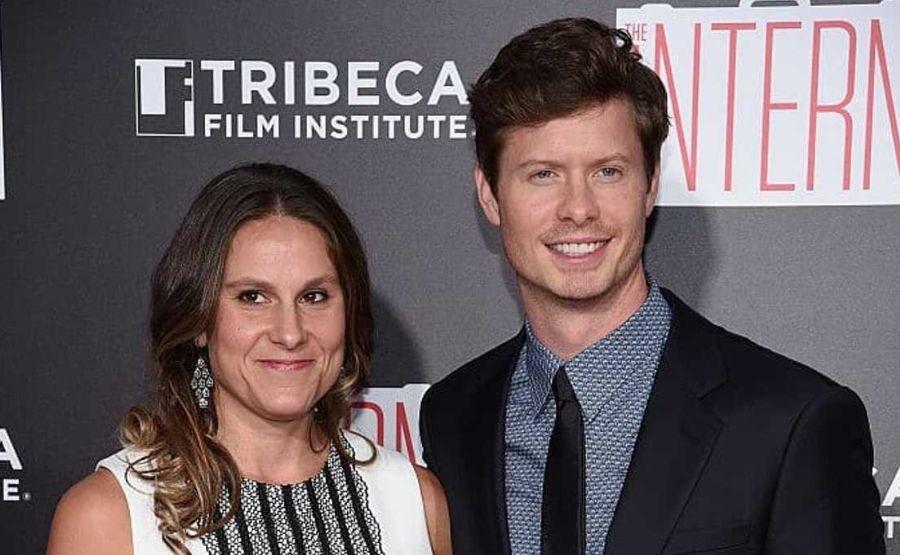
This is not unusual for people in development work, where the professional norm is to center affected communities rather than practitioners. But Emma’s commitment to privacy goes beyond professional convention. She has maintained it at red carpet events, at television appearances, at public moments where other spouses of public figures routinely leverage the attention.
Whether this represents a philosophically coherent commitment to separating personal identity from professional proximity to fame, or simply a temperamental preference for quiet — or both — is not something she has publicly explained. That absence of explanation is itself a kind of statement.
Some celebrity-adjacent figures maintain privacy as a strategy, controlling narrative by limiting access. Others simply prefer ordinary life. Emma gives no indication of which category she occupies. The silence is consistent enough to suggest it is genuine.
Legacy: What a Quiet Career Actually Builds
Emma Nesper’s legacy is not the kind measured in headlines or keynote invitations. It accumulates differently.
Through VSI, her communications work supported an organization that expanded access to a medicine that costs less than a dollar per dose but prevents a leading cause of maternal death in sub-Saharan Africa. Through AJWS, her fundraising supported grassroots organizations across the Global South fighting for rights that have no other institutional champion. Through CARE, her regional leadership helped sustain a global organization’s capacity to respond to crises from Yemen to Haiti during a period of enormous strain.
She also presented original academic research on Mouride media and digital culture in West Africa — a contribution to African studies scholarship that predates and informs the broader contemporary conversation about religion, technology, and community formation in Senegal.
Her board role at Silverlake IJCC connects her to a local Jewish community institution at a moment when such institutions across the country are navigating identity, purpose, and relevance. It is quiet, civic work. It is also the kind of work that keeps institutions alive.
In 2020, she and Anders relocated from their previous Los Angeles home to a Mediterranean-style residence in South Pasadena — a neighborhood whose pace and character aligns with everything observable about how Emma has chosen to live.
Final Words
Emma Nesper occupies an uncomfortable space in biographical writing: she is consequential enough to document and private enough to resist documentation. The facts available are genuine, well-sourced, and consistent across credible records. But they describe a career more than they illuminate a person.
What is visible is this: a woman from Evanston who grew up in an academically serious household, pursued interdisciplinary education across two major research universities, developed genuine field experience in West Africa, and then spent fifteen-plus years rising through institutions that work on some of the most intractable problems in global development — maternal mortality, human rights violations, humanitarian crises, gender inequality.
She did all of this while married to someone whose professional identity is almost entirely public, whose comedic persona is performed for millions, and whose career places him in precisely the kind of attention-saturated environment Emma has spent her adult life declining to inhabit.
Whether that contrast is a source of tension, of complementarity, or simply of benign coexistence, neither of them has been publicly addressed. Anders has spoken about Emma warmly and specifically in interviews. Emma has not spoken about herself at all — or at least not in any publicly accessible forum.
That restraint is, in the end, one of the most defining things about her. In a media environment that continuously offers platforms to people near fame, Emma Nesper has declined every invitation. She shows up where the work is. She raises the money. She builds the programs. She sits on the board.
Then she goes home.
FAQs
1. Who is Emma Nesper?
Emma Nesper is an American nonprofit development professional specializing in human rights, humanitarian fundraising, and global advocacy. She is also married to comedian and actor Anders Holm.
2. When and where was Emma Nesper born?
She was born on January 17, 1982, in Evanston, Illinois, a residential community north of Chicago.
3. What is Emma Nesper’s educational background?
She holds a B.A. in Journalism, Mass Communication, and Cultural Anthropology from the University of Wisconsin–Madison (2004) and an M.A. in African Studies with a historical emphasis from UCLA (2008).
4. Who is Emma Nesper’s father?
Her father is Larry Nesper, a professor of anthropology and American Indian studies at the University of Wisconsin–Madison.
5. How did Emma Nesper meet Anders Holm?
Around the age of twelve, they first met at summer camp.The romantic relationship developed years later, after they attended the same high school and the same university.
6. When did Emma Nesper and Anders Holm get married?
They married on September 3, 2011, in a private ceremony held at Bluestem Farm in Illinois.
7. How many children do Emma Nesper and Anders Holm have?
Three children. On December 19, 2013, their first child, a son, was born. The names and details of all three have been kept private.
8. What organizations has Emma Nesper worked for?
Her major employers include Venture Strategies Innovations (VSI), American Jewish World Service (AJWS), and CARE USA. She currently consults freelance and chairs development at Silverlake Independent Jewish Community Center.
9. What was Emma Nesper’s role at CARE USA?
She served as Senior Director of Development and Partnerships at CARE’s Los Angeles office from October 2018 to June 2022, overseeing regional fundraising and partnership strategy.
10. What did Emma Nesper do at American Jewish World Service?
She joined AJWS in June 2013, rose to director of Southern California fundraising by early 2017, and left in August 2018 after more than five years in the organization.
11. Has Emma Nesper appeared on television?
Her only credited television appearance is a 2023 episode of Celebrity Family Feud, where she and Anders Holm competed to raise money for the USA Swimming Foundation.
12. Where does Emma Nesper currently live?
She lives with her family in the South Pasadena area of Los Angeles, California.
13. What is Emma Nesper’s estimated net worth?
Her net worth is estimated at approximately $500,000, accumulated through her senior roles in nonprofit development and fundraising.
14. Why does Emma Nesper maintain such a private public profile?
She has not publicly explained her preference for privacy. It is consistent with professional norms in the development sector, where focus typically centers on affected communities rather than practitioners.
15. What is Emma Nesper’s lasting significance?
Her career represents a serious, sustained contribution to global humanitarian work — spanning maternal health access in West Africa, human rights grantmaking, and crisis-era fundraising for one of the world’s largest aid organizations. Her significance lies in the substance of that work, not in its visibility.
Connecting curious minds with stories that educate, inspire, and inform with The Editorial Times.