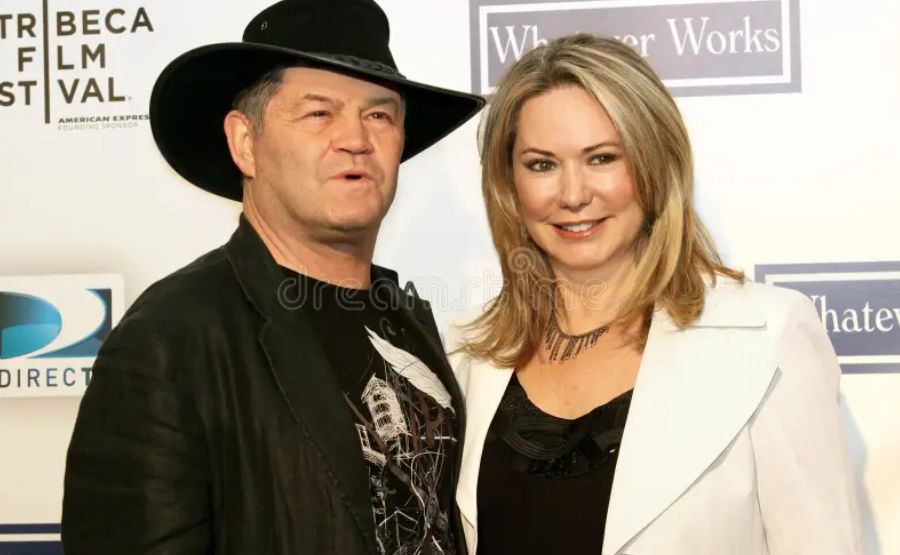
Donna Quinter: The Private Woman Who Chose Her Own Canvas
A biography of Donna Quinter-Dolenz — former flight attendant, convicted housing fraudster, practicing visual artist, and the woman behind the longest marriage in Micky Dolenz‘s life — whose story raises persistent and sincere inquiries concerning money, privacy, responsibility, and reinvention.
Quick Bio
| Detail | Information |
| Full Name | Donna Quinter (also known as Donna Quinter-Dolenz and Donna Dolenz) |
| Born | Approximately 1954–1955, United States |
| Age (as of 2026) | Approximately 70–71 |
| Nationality | American |
| Birth Location | United States (specific city not publicly confirmed) |
| Early Career | Flight attendant |
| Artistic Career | Visual artist, painter (watercolors; later acrylics); operates under the name Donna Dolenz |
| Art Website | donnadolenz.com |
| Art Platform | Fine Art America (profile: Donna Quinter) |
| @donnadolenz | |
| Spouse | Micky Dolenz (married September 20, 2002, Calabasas, California) |
| Marriage Duration | Over 23 years (as of 2026) — Micky’s longest marriage |
| How They Met | Blind date arranged by radio personality Jim Kerr, Atlantic City, 1991 |
| Engagement | Weeks after the September 11, 2001 attacks |
| Residence | Bell Canyon, California (private gated community near Los Angeles) |
| Children | No publicly confirmed biological children; stepmother figure to Micky’s four daughters |
| Micky’s Daughters | Ami Bluebell Dolenz (b. 1969, mother: Samantha Juste); Charlotte Janelle Dolenz (b. 1981), Emily Claire Dolenz (b. 1983), Georgia Rose Dolenz (b. 1984) (mother: Trina Dow) |
| Legal Record | Pleaded guilty to misdemeanor larceny, August 2009; repaid $136,866; sentenced to five days community service |
| Public Appearances | Rock and Roll Hall of Fame Induction Ceremony, Brooklyn (April 8, 2016); Mama Cass Elliot Hollywood Walk of Fame ceremony, Los Angeles (October 3, 2022) |
| Notable Art Series | Angel series — acrylic paintings with spiritual themes |
| Net Worth | Not publicly confirmed |
Why Donna Quinter Deserves a Careful Look
Donna Quinter matters not because fame found her, but because of what she did with the proximity to fame that marriage gave her — and what she did when no one was watching.
She is the third and longest-standing wife of Micky Dolenz, the last surviving member of The Monkees, the 1960s pop band that left an outsized mark on American music and television. But the biographical interest in Donna Quinter runs deeper than that relational fact. She is a woman who committed housing fraud while married to a wealthy entertainer, repaid nearly $137,000 in a single check, performed five days of community service, and then quietly pivoted to a career as a visual artist during a global pandemic. That arc — from flight attendant to fraudster to painter — is more interesting than most celebrity-adjacent biographies manage to be.
She has never spoken about any of it publicly. That silence is itself a kind of statement.
See also “Marge Cooney: The Woman America Never Watched“
Origins and Early Life: The Blank Slate She Prefers
Almost nothing on public record describes Donna Quinter’s childhood, and the scarcity is not accidental. She grew up somewhere in the United States — the specific town or state has never entered the public record. Her birth year, calculated backward from her confirmed age of 54 in 2009, places her arrival in approximately 1954 or 1955. No educational history has ever been published.
What is documented is that she grew up a fan of The Monkees. Reports from people close to the couple describe her as a devoted admirer of the band from childhood — part of the vast American audience that the show and its music captured in the late 1960s. Some accounts suggest she harbored, at some point in her girlhood, the kind of half-serious wish that young fans sometimes allow themselves: that she might one day marry a member of the group.
The improbability of that wish coming true four decades later is part of what makes the meeting story so striking. Most people who wished such things grew up and let the wish dissolve. Donna Quinter did not.
Before that outcome arrived, however, she built an independent professional life. She worked as a flight attendant — a career that demands physical endurance, geographic mobility, and the management of hundreds of strangers in compressed spaces. It is not a passive occupation. It suggests a woman comfortable with travel, with service, and with the management of difficult circumstances under pressure. Those qualities would surface again, in very different form, in 2009.

The Blind Date That Changed Everything: Atlantic City, 1991
In 1991, Micky Dolenz was performing in Atlantic City, New Jersey. He was forty-six years old, recently divorced from his second wife Trina Dow, and still carrying the considerable weight of being a surviving Monkee in a culture that had both revered and mocked that status.
A radio personality named Jim Kerr arranged a blind date.
The woman on the other side of that arrangement was Donna Quinter — a flight attendant who had admired Dolenz and his band since she was a child. The meeting took place. Something held. Accounts describe the connection as gradual rather than explosive, the kind that builds through repeated contact rather than a single electric moment.
What followed was eleven years of relationship before marriage. That timeline is worth noting. Donna Quinter did not rush toward the famous man or his considerable resources. The couple moved carefully, building something that proved durable in ways his previous marriages had not.
Micky Dolenz had married twice before. His first wife, Samantha Juste, was a co-presenter on BBC’s Top of the Pops whom he met while touring the UK with The Monkees in 1967. They married in 1968, had one daughter — Ami Bluebell, born January 8, 1969 — and divorced in 1975. Dolenz later wrote that the demands and excesses of the Monkees era had taken their toll on that marriage. His second wife, Trina Dow, entered the picture in 1977. They had three daughters — Charlotte Janelle (August 8, 1981), Emily Claire (July 25, 1983), and Georgia Rose (September 3, 1984) — and divorced in 1991, the same year he met Donna.
Donna Quinter entered a family with four daughters, a complex personal history, and a husband whose celebrity carried both opportunity and complication.
The Wedding: Calabasas, September 2002
Micky Dolenz proposed to Donna Quinter in the weeks immediately following the September 11, 2001 attacks on New York City and Washington. The timing — a proposal made during a national crisis, when the ordinary calculus of life and its brevity sharpened for everyone — gives the engagement an emotional texture that is easy to overlook.
They married on September 20, 2002, in an outdoor ceremony in Calabasas, California, with the Malibu Mountains rising in the background. The event was small and private. All four of Micky’s daughters attended. Even Samantha Juste, his first wife, was present — she had been photographed with Dolenz at daughter Ami’s wedding to actor Jerry Trimble in Beverly Hills earlier that year, and attended the Calabasas wedding as well, a testament to the unusual warmth with which Dolenz’s extended family maintained its connections.
Donna took the name Donna Dolenz, or more precisely, Donna Quinter-Dolenz. She and Micky settled in Bell Canyon, California — a private, gated residential community tucked into the hills outside Los Angeles, notable for its bird sounds and its distance from the city’s celebrity apparatus.
As of 2026, the marriage has lasted twenty-three years. It is the longest of Micky Dolenz’s three marriages by a significant margin. Whatever the private mechanics that sustain it, the public record shows a couple that attends meaningful occasions together, maintains a shared home, and continues to build a life without manufacturing spectacle.
The 2009 Fraud Case: The Crisis No One Can Overlook
In August 2009, the New York City Department of Investigation announced that Donna Quinter, age 54, had illegally collected $136,866 in government rental subsidies for an apartment at Ruppert Yorkville Towers on Manhattan’s Upper East Side.
The apartment sat in a rent-regulated building undergoing conversion to luxury condominiums. New York City maintains programs designed to protect middle-income tenants from displacement in exactly these circumstances — families of limited means who face losing their homes to gentrification. Those subsidies, worth approximately $2,800 per month, were intended for people in genuine need.
Donna Quinter was not in genuine need. She had been living in Bell Canyon, California, with her husband since their 2002 marriage. She kept the Manhattan apartment, continued collecting the city subsidy, and concealed two disqualifying facts: she had a friend living in the apartment who paid rent, and the Upper East Side apartment was not her primary residence.
The Department of Investigation uncovered her eligibility problems in 2008 while auditing the building. Commissioner Rose Gill Hearn released a pointed public statement: law-abiding New Yorkers struggling to pay their rents and mortgages, she said, could not afford to subsidize people who exploited public housing resources to support privileged lifestyles.
Investigators initially charged Quinter with grand larceny — a felony that carried up to fifteen years in prison.
She surrendered to authorities in New York on August 7, 2009. In the plea agreement, the charge was reduced to misdemeanor larceny. She wrote a single check to the city for the full $136,866. A Manhattan judge sentenced her to five days of community service. No jail time.
Micky Dolenz was explicitly cleared of any involvement or wrongdoing.
The outcome produced its own irony. The wife of a man whose band’s name had been turned into countless puns by tabloid writers — “Monkees around,” “makes a Monkee out of the city” — received a sentence that amounted to a week of volunteer work for a fraud that had cost public housing resources nearly $140,000 over several years.
No one from the Dolenz household ever publicly addressed the case. No statement. No interview. No accounting.
Personal Life: A Marriage Built on Privacy and Selective Visibility
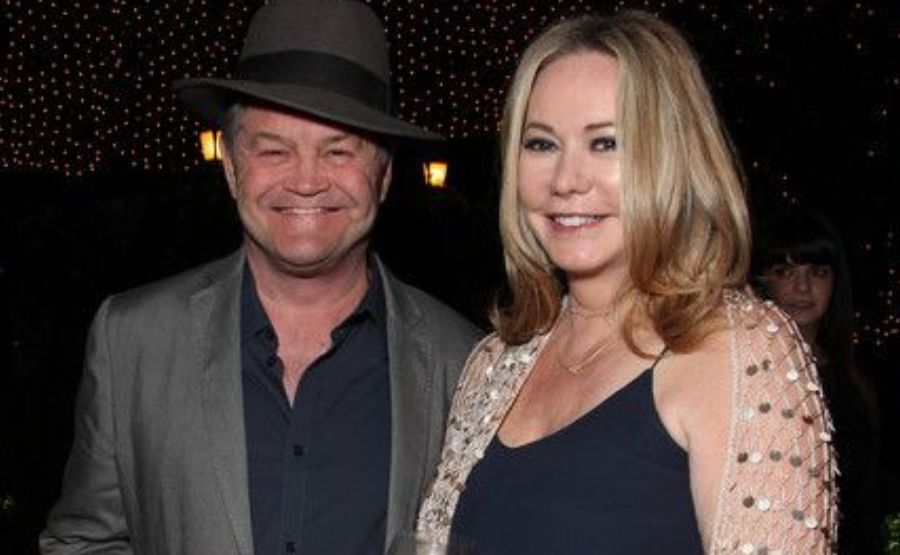
While the public knows Donna Quinter primarily through two data points — her marriage to Micky Dolenz and her 2009 guilty plea — those closest to the couple describe a relationship built on deliberate mutual privacy.
Donna does not maintain a prominent public presence. Her Instagram account, @donnadolenz, exists and accumulates posts, but it is an artist’s account, not a celebrity spouse’s performance. She appears at events that matter: the 31st Annual Rock and Roll Hall of Fame Induction Ceremony at Barclays Center in Brooklyn on April 8, 2016; the Hollywood Walk of Fame ceremony honoring Mama Cass Elliot on October 3, 2022, in Los Angeles. These are appearances of genuine participation, not image management.
There are no publicly confirmed biological children from this marriage. The four daughters Micky fathered with Samantha Juste and Trina Dow have become part of Donna’s extended world. One gesture illuminates that family dynamic with unusual warmth: among the paintings Donna has produced and made available for purchase is a work titled The Girl in Yellow Dress, described on her website as “lovingly inspired by Samantha Juste” — the first wife, who died on February 5, 2014, following a stroke. Whatever Donna Quinter’s private feelings about her husband’s first marriage and its enduring legacy, that painting represents something measured and generous: an acknowledgment of the woman who preceded her, rendered in color on canvas.
The grief that accompanied Samantha Juste’s death touched a family that Donna had been part of for twelve years by that point. Ami Bluebell Dolenz lost her mother. Micky lost someone he had remained close friends with since their 1975 divorce. Donna watched both of them grieve something she had not shared.
Her response was a painting.
The Artist: Pandemic, Acrylics, and the Angel Series
The return to painting did not happen in a moment of inspiration. It happened because a pandemic took away every other option.
Donna Quinter had painted in high school, experimenting with watercolors and demonstrating, by her own account, a natural facility for the medium. Life then did what it typically does: it accelerated past the things that mattered in quiet moments. The flight attendant career, the years of relationship, the marriage, the controversy — none of it left room for an easel.
She has said it plainly: “I never stopped thinking about it, but I got sidetracked.”
The COVID-19 pandemic, which began in earnest in early 2020, forced a stillness she had not experienced in decades. She picked up brushes again. Instead of using watercolors this time, she used acrylics, which have more body, more depth and opacity, and a greater willingness to be altered. She describes the shift as a refinement of approach. The watercolors of her youth gave way to something more controlled, more intentional, more her own.
Her first major series centered on angels. The figures she produced carry a deliberately open spiritual quality. They are not anchored to any specific religious tradition. She described them as “whoever you want them to be — spirit guides if you will.” The Angel of Healing. The Angel of Joy. The Angel of Hope. Each piece comes with a short description that frames the figure’s symbolic function. The Angel of Hope “sends the message that there is always a helper by your side.”
The work attracted immediate interest when she launched the website donnadolenz.com and established a Fine Art America storefront. She sells canvas wrap Giclée prints, allowing buyers to own reproductions of the work at accessible price points. The enterprise is modest in scale but coherent in vision.
The angel series carries a particular resonance when set against the full arc of her biography. A woman who had, in 2009, taken money from a program designed to protect vulnerable people now spent her pandemic painting figures meant to comfort them. Whether that juxtaposition is ironic, redemptive, or simply coincidental is a question the biography cannot answer. The facts simply sit there, next to each other.
The Complexity of Donna Quinter’s Public Record
Reducing Donna Quinter to either villain or victim would be dishonest. The 2009 fraud was real. The $136,866 she collected from New York City’s middle-income housing protection program came from a public resource meant for families at risk of displacement. The city’s commissioner did not exaggerate when she pointed out that real people struggling to afford New York City rents were subsidizing someone who lived comfortably in a gated California community.
At the same time, the legal outcome — full repayment plus five days of community service — represents the resolution the justice system imposed. The case closed in 2009. She has lived sixteen years since then without a public misstep.
The contradiction that makes Donna Quinter genuinely interesting is not the fraud itself but the distance between the life she was living and the resource she was collecting. She had married a man with significant financial resources. She was living in Bell Canyon, one of Los Angeles County’s more exclusive private communities. The $2,800 monthly subsidy was not keeping her housed; it was keeping her from giving up an apartment she was no longer using. That gap — between need and collection — is what the prosecution captured, and what the commissioner’s statement made explicit.
Her silence since 2009 on the matter is total. She has not commented in interviews because she does not give interviews. She has not addressed it on social media because her social media concerns itself with art. Whether the silence represents remorse, indifference, embarrassment, or simply the operational preference of a fundamentally private person is impossible to determine from the outside.
Legacy and Influence: What Donna Quinter Represents
Donna Quinter will not be remembered as a cultural icon or a public figure of historical consequence. She has not sought to be.
What she represents, in miniature, is something more broadly instructive. She demonstrates the particular position of a woman in a celebrity marriage who possesses genuine interests and private capabilities entirely separate from the famous spouse — and who, after decades of living in that spouse’s orbit, eventually acts on them. The pandemic forced many people to confront what they had been putting off. For Donna Quinter, it forced a return to a creative practice she had carried dormant for decades. The result was a functioning artist’s career, however modest, built on her own terms.
The tribute painting for Samantha Juste stands as a small legacy of its own kind — an act of generosity toward a woman she never needed to acknowledge, painted by a woman who keeps most of her interior life entirely to herself.
Her marriage to Micky Dolenz outlasted both his previous marriages. Twenty-three plus years in a gated neighborhood without a single recorded marriage problem is a kind of accomplishment in a field where celebrity relationships end in public and frequently catastrophically. It does not announce itself.
The art enterprise, donnadolenz.com and its Fine Art America counterpart, represents a second act that most people close to fame never manage — a creative identity constructed around something real, something practiced, something authentically hers. Whether the angel series eventually expands beyond its current scope remains to be seen.
Final Words
Donna Quinter-Dolenz is a genuinely complicated biographical subject, and the complexity is not flattering in every direction. She collected nearly $140,000 in housing subsidies she had no right to receive, while living with a famous husband in a gated California community. The city of New York, after catching her in 2008 and prosecuting her in 2009, let her write a check and do a week of volunteer work. That resolution was the legal one. Whether it was the moral one is a separate question.
What complicates the picture is everything else. She spent eleven years in a relationship before marrying, suggesting patience rather than opportunism. She built a marriage that has lasted where his previous two did not. She returned, in her late sixties, to an art practice she had set aside decades earlier, and she built an actual commercial enterprise around it rather than simply decorating a studio. She painted a tribute to her husband’s first wife after that woman’s death. None of these details erase the fraud. None of them are erased by it either.
She is a woman who has kept almost everything about herself private for her entire public-adjacent life, and the scarcity of records makes it genuinely difficult to know her — as it does for anyone who declines to be known. The bio-pages about her across the internet are largely confabulated, filled with generic praise or empty filler where verifiable facts do not exist. What remains after stripping all of that away is a small cluster of confirmed realities: a flight attendant who married a rock musician, committed fraud, repaid it, and picked up a paintbrush during a pandemic.
That is enough for a real story. It is not a comfortable one. But being comfortable is not the same as being honest.
FAQs
1. Who is Donna Quinter?
Donna Quinter, also known as Donna Quinter-Dolenz and Donna Dolenz, is an American woman born approximately 1954–1955. She is known as the third and current wife of Micky Dolenz, the last surviving member of The Monkees, and as a practicing visual artist who sells work under the name Donna Dolenz.
2. How did Donna Quinter meet Micky Dolenz?
They met in 1991 in Atlantic City, New Jersey, on a blind date arranged by radio personality Jim Kerr while Micky was performing there. Donna had been a Monkees fan since childhood.
3. When did Donna Quinter and Micky Dolenz marry?
They married on September 20, 2002, at an outdoor ceremony in Calabasas, California, with the Malibu Mountains as backdrop. The event was small and private, attended by close family including Micky’s four daughters.
4. When did Micky Dolenz propose to Donna Quinter?
He proposed in the weeks following the September 11, 2001 terrorist attacks — roughly a year before their 2002 wedding.
5. What was Donna Quinter’s career before marriage?
She worked as a flight attendant prior to meeting Micky Dolenz.
6. What was the 2009 fraud case against Donna Quinter?
New York City’s Department of Investigation found that Donna Quinter had illegally collected $136,866 in government rental subsidies for an apartment at Ruppert Yorkville Towers on Manhattan’s Upper East Side. The subsidies were designed for middle-income families facing displacement. She had concealed that she was no longer a primary resident (living in Bell Canyon, California, with Micky) and had a friend paying rent in the apartment. She pleaded guilty to misdemeanor larceny, repaid the full amount, and received a sentence of five days of community service.
7. Was Micky Dolenz involved in the 2009 fraud?
No. Official statements from prosecutors and investigators made clear he was not accused of any wrongdoing.
8. Where do Donna Quinter and Micky Dolenz live?
They live in Bell Canyon, California, a private gated community outside Los Angeles.
9. Does Donna Quinter have children?
No publicly confirmed biological children. She is a stepmother to Micky Dolenz’s four daughters — Ami Bluebell Dolenz (from his marriage to Samantha Juste) and Charlotte Janelle, Emily Claire, and Georgia Rose Dolenz (from his marriage to Trina Dow).
10. What kind of art does Donna Quinter create?
She paints in acrylics under the name Donna Dolenz. Her most prominent series features angel figures with spiritual themes — the Angel of Healing, the Angel of Joy, the Angel of Hope, and others. She sells canvas wrap Giclée prints through her website donnadolenz.com and Fine Art America. She first painted watercolors in high school before returning to art during the COVID-19 pandemic.
11. What is the painting The Girl in Yellow Dress?
It is one of Donna’s acrylic works, described on her website as “lovingly inspired by Samantha Juste” — Micky Dolenz’s first wife and the mother of his daughter Ami Bluebell. Samantha Juste died on February 5, 2014, following a stroke.
12. How long have Donna Quinter and Micky Dolenz been married?
As of 2026, they have been married for approximately twenty-three years — the longest of Micky Dolenz’s three marriages.
13. What are some public events where Donna Quinter appeared alongside Micky Dolenz?
They attended the 31st Annual Rock and Roll Hall of Fame Induction Ceremony at Barclays Center in Brooklyn on April 8, 2016, and the Hollywood Walk of Fame ceremony for Mama Cass Elliot in Los Angeles on October 3, 2022.
14. Has Donna Quinter ever spoken publicly about the 2009 fraud case?
No. She has given no interviews and made no public statements addressing the case before, during, or after the guilty plea.
15. Who are Micky Dolenz’s previous wives?
His first wife was Samantha Juste, a BBC Top of the Pops presenter (married 1968, divorced 1975; Samantha died February 5, 2014). His second wife was Trina Dow (married 1977, divorced 1991). Donna Quinter is his third wife, married in 2002.
Connecting curious minds with stories that educate, inspire, and inform with The Editorial Times.