Rebecca Packer Burrell: The Art Director, Philanthropist, and Quiet Architect Behind a Global Music Legacy
Rebecca Packer Burrell matters in 2026 not because of who she married, but because of what she built alongside him — a philanthropic infrastructure that has channeled more than J$400 million toward Jamaica’s only children’s hospital, while maintaining an artistic career, a blended family, and a private identity that resists every invitation to dissolve into celebrity orbit.
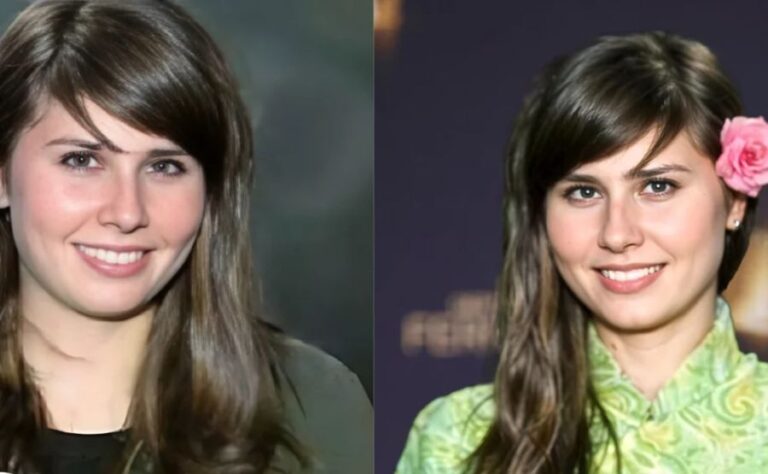
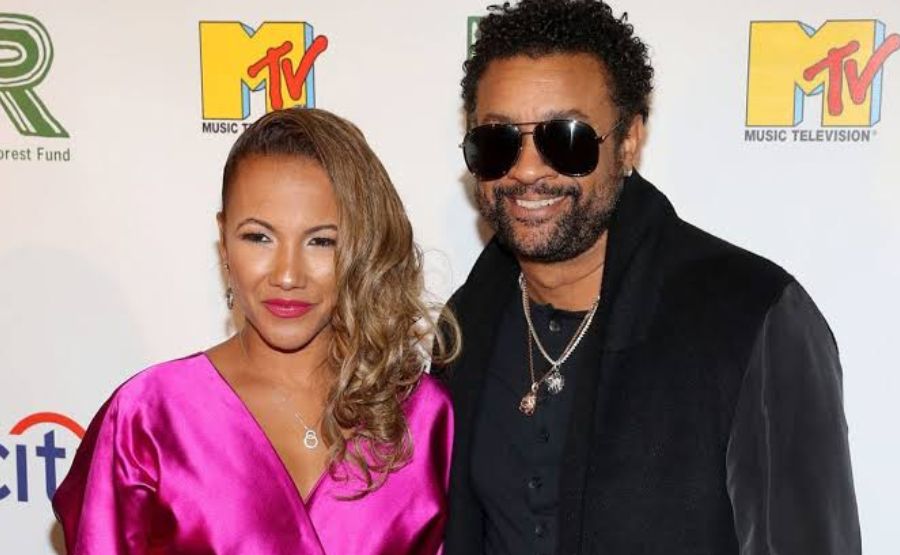
She is the wife of Orville Richard Burrell, known globally as Shaggy, the Grammy Award-winning reggae and dancehall artist from Kingston, Jamaica. But to reduce Rebecca Packer to that framing is to misread the actual record. She is a professional art director who shaped the visual identity of her husband’s music videos before most people knew her name. She is the co-director of the Shaggy Make a Difference Foundation, which she runs with the kind of operational precision that resists government pressure without losing charitable mission. She is half-Irish, half-Jamaican, raised between two cultures that prepared her, perhaps without either of them intending to, for a life at the intersection of creative work, civic responsibility, and deliberate privacy.
Quick Bio
| Detail | Information |
| Full Name | Rebecca Packer Burrell (née Rebecca Packer) |
| Birthday | August 31 (exact year not publicly confirmed) |
| Heritage | Half-Irish (from Dundalk, County Louth, Ireland), half-Jamaican |
| Nationality | American |
| Mother | Dr. Veronica Salter (emigrated from Ireland to Jamaica in the 1970s) |
| Husband | Orville Richard Burrell (“Shaggy”), married July 12, 2014 |
| Wedding Venue | Goldeneye resort, Oracabessa, St. Mary, Jamaica (formerly Ian Fleming’s retreat) |
| Years Together Before Marriage | Approximately 16 years (couple since late 1990s/early 2000s) |
| Children Together | Sydney Burrell (oldest); Madison Burrell and Kelsey Burrell (twins, born 2008) |
| Stepchildren | Richard Burrell Jr. (rap artist Robb Bank$) and Tyler Burrell (Shaggy’s sons with Carol Johnson) |
| Family Residence | Broward County, Florida, USA |
| Career | Art director for film and music videos; co-director, Shaggy Make a Difference Foundation (SMADF); co-producer, Shaggy and Friends charity concert |
| Notable Award | Ambassador For The Poor Award, Food For The Poor’s 24th Annual Building Hope Gala, February 2, 2019, Boca Raton Resort & Club, Florida |
| Foundation Contributions | SMADF has donated and repaired more than 450 pieces of medical equipment worth over USD $1.6 million to Bustamante Hospital for Children since 2009; raised J$100 million at the 2018 Shaggy and Friends Concert |
| Social Media | Private; no verified public accounts |
Two Cultures, One Foundation: Heritage and Origin
Rebecca Packer did not arrive in Jamaica by accident. Her mother, Dr. Veronica Salter, had emigrated from Dundalk, County Louth, Ireland, to Jamaica in the 1970s, establishing the family’s Caribbean chapter long before Rebecca met the man she would one day marry. That migration gave Rebecca something rare: a dual citizenship of culture, not just a passport.
She grew up half-Irish, half-Jamaican, holding both identities not as contradictions but as complementary inheritances. The Irish dimension connects her to a historically migrant culture, one that built identity through community and faith. The Jamaican dimension immersed her in the island’s creative and social landscape during decades when Kingston was producing some of the most globally influential music in the world.
This multicultural formation shows up in everything she has subsequently done. Her charity work focuses on Jamaica’s children. Her professional work synthesizes visual art with Caribbean music. Her family holds Irish passports alongside American ones — her daughters Sydney, Madison, and Kelsey each carry the documentation of their Irish heritage, a deliberate choice that reflects Rebecca’s insistence on preserving cultural multiplicity even while raising children in Broward County, Florida.
See also “Melissa Lee Gatlin: The Woman Who Witnessed the Beginning — and Endured the Aftermath“
The Art Director: A Career Built Behind the Camera
Long before the Shaggy Make a Difference Foundation generated headlines, Rebecca Packer was doing something quieter and more technically demanding: she was building a career as an art director for film and music videos in Jamaica.
Art direction is an exacting discipline. Determining the colors, set design, textures, and spatial arrangements that viewers encounter is necessary to translate a director’s or artist’s creative vision into precise, replicable visual worlds. as the natural background of a scene. In music video production, where budgets are compressed and shooting windows narrow, an art director works at speed without sacrificing coherence.
Rebecca applied that discipline directly to her eventual husband’s music. She worked on several of Shaggy’s music videos, placing her creative instincts inside projects that received global distribution. This working relationship gave their partnership an early professional dimension that predated any public romantic story. She was not simply the girlfriend of a famous musician. She was a collaborator inside his creative process, one whose contributions shaped how his work appeared to the world’s audiences.
She also served as co-producer of the Shaggy and Friends charity concert — the annual event that became the foundation’s flagship fundraising instrument. Co-producing a major live event combines logistics management, creative oversight, and donor relations into a single, high-pressure role. Rebecca’s background in production made her effective in that capacity. Her name appears on the foundation’s co-directorship alongside Shaggy’s, a formal attribution that the Jamaica Observer, the Jamaica Gleaner, and Food For The Poor have all confirmed in their coverage of the foundation’s work.
Sixteen Years Before the Wedding: A Partnership Built on Friendship
The timeline of Rebecca Packer’s relationship with Shaggy challenges the dominant narrative of celebrity romance. They did not meet at an awards ceremony or through a mutual publicist. They met in Jamaica in the late 1990s — the exact circumstances are not documented in the public record, which itself reflects their tendency to guard the personal details of their shared history.
What is documented is the duration. By the time they married on July 12, 2014, they had been together for approximately sixteen years. That span covers the period when Shaggy released Hot Shot in 2000, watched “It Wasn’t Me” and “Angel” dominate radio across the globe, toured constantly, and navigated the particular instability of musical celebrity. Rebecca was present through all of it — not as a trailing partner, but as someone with her own professional work and her own rooted relationship to the island where they made their home.
Shaggy has described this foundation repeatedly in public interviews. He told The Sun that he married his friend, his best friend — “an Irish Catholic girl, and she’s all about the long-haul.” He told the Jamaica Observer that Rebecca challenges him constantly, that she is “very opinionated,” and that the friction between them has, over time, produced something smooth. His metaphor was precise: two rough stones beating against each other until the edges wear away. That kind of honest appraisal of a relationship — acknowledging the arguments, the strong personalities, the difficulty — is rare in celebrity discourse. It suggests a partnership grounded in real mutual knowledge rather than performed compatibility.
The separation that his touring schedule enforces has, paradoxically, sustained some of the relationship’s vitality. He has said that returning home after time away recreates the feeling of falling in love. That observation carries more weight against the backdrop of sixteen years before formalization — a period long enough to have made permanent distance easy.
The Wedding: Goldeneye and the Song Nobody Had Heard
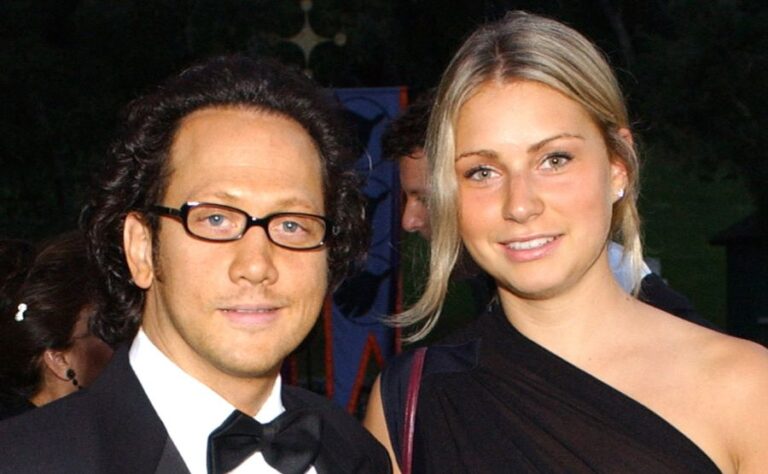
On July 12, 2014, Rebecca Packer and Shaggy married in Oracabessa, St. Mary, Jamaica, at Goldeneye — the estate built by Ian Fleming, author of the James Bond novels, and the place where Fleming wrote every one of those novels. The site carries its own history beyond literary biography: Sting recorded “Every Breath You Take” at Goldeneye’s studio in 1983. The ceremony took place beneath the property’s almond trees.
The event coordinator was Jacqui Tyson of Signature Weddings, a Kingston-based specialist in high-end private events. The ceremony itself was private. The guest list was shaped by closeness rather than industry connection.
Shaggy planned a surprise for his bride. He had written a song that Rebecca loved — a song he had never released, known only between them. For the wedding, he flew in singer Jimmy Cozier — with whom he had originally recorded the track — to perform it live as Rebecca walked out. She did not know Cozier was coming. The spontaneity of the moment, in the middle of a carefully planned ceremony, reflects something about how both of them approach intimacy: with creative investment, and with the element of surprise preserved even inside formal occasions.
The choice of Goldeneye as a venue was not accidental. Rebecca had spent more than twenty years deeply connected to Jamaica. The island was not a backdrop to her life; it was its setting. Choosing to marry there, at one of its most storied locations, was a declaration about where she belonged.
Family Life: A Blended Household by Design, Not Default
Rebecca Packer entered her marriage to Shaggy with full knowledge of his existing family. Shaggy has two sons from his previous relationship with Carol Johnson: Richard Burrell Jr., who records and performs as the rapper Robb Bank$, and Tyler Burrell. Rebecca’s relationship with those sons has never been publicly described as contentious. By multiple accounts, she has worked actively to maintain the coherence of the larger family unit.
Together, Rebecca and Shaggy have three daughters. Sydney, the oldest, has shown early that she inherited her mother’s instinct for boundaries: Sydney reportedly talks to her parents about which photographs of her they post on social media. In a household where one parent commands international celebrity and enormous online following, that conversation is not trivial. Rebecca supports and enforces it.
The twin daughters, Madison and Kelsey, were born in 2008 — six years before the wedding, during the long pre-marital chapter of their parents’ relationship. The family’s primary residence is in Broward County, Florida, a choice that places the girls in the American educational system while maintaining proximity to Jamaica through regular return.
Rebecca’s decision to remain in Jamaica for the first two decades of her relationship with Shaggy — even when he wanted her to relocate to the United States to reduce the physical distance his touring created — speaks to the weight she gives to rootedness. She stayed. The island had been her home since her mother emigrated there in the 1970s, and she was not prepared to exchange that anchor for the convenience of proximity to her husband’s touring schedule.
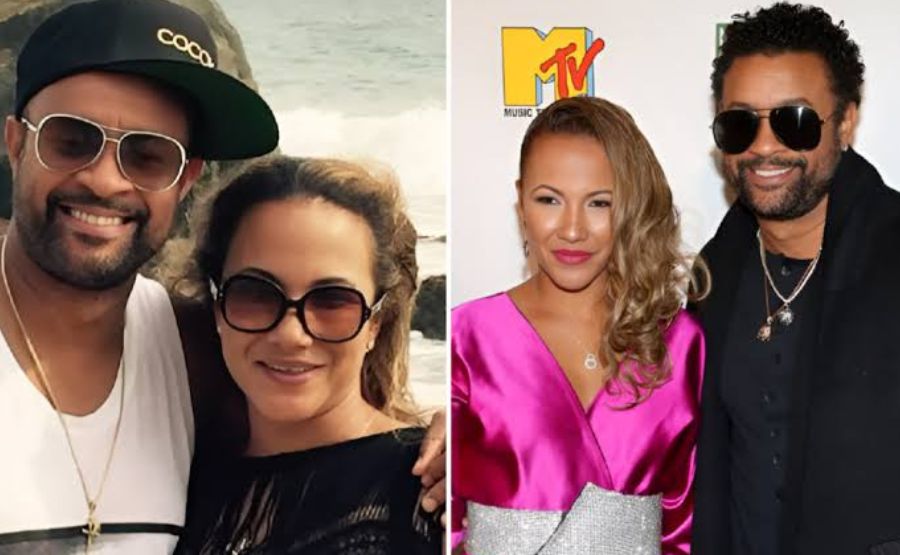
The Shaggy Make a Difference Foundation: A Decade and a Half of Children’s Medicine
In 2001, Shaggy began donating personally to the Bustamante Hospital for Children in Kingston — Jamaica’s only specialist children’s hospital and the sole such facility in the English-speaking Caribbean. The relationship between the foundation and the hospital has, over the subsequent two and a half decades, become one of the most consequential private-sector commitments to Jamaican public health of the modern era.
Rebecca co-directs that foundation. She is not an honorary figurehead. The Jamaica Gleaner, in its November 2019 investigation of the J$100 million controversy, identified her formally as “co-director” and spoke to her directly as the foundation’s operational voice. She explained the legal constraints, clarified the charitable mandate, and defended the decision to hold the funds in an interest-generating account rather than divert them to a different use than the one for which they had been raised.
Since 2009, when the biennial Shaggy and Friends concert launched as the foundation’s primary fundraising mechanism, the SMADF has donated and repaired more than 450 pieces of medical equipment worth over USD $1.6 million. The concert’s roster has included Lauryn Hill, Sting, Wyclef Jean, Doug E Fresh, Bunji Garlin, and Fay-Ann Lyons. The 2018 staging — the last major concert before the COVID-19 pandemic disrupted the calendar — raised J$100 million, designated specifically for new ICU beds at the hospital.
The foundation’s model is specific: it does not hand over cash to the hospital or to the government. It procures the equipment itself, flies in technicians to maintain it, and takes responsibility for keeping the machinery operational after delivery. That model is both a protection against misappropriation and a practical expression of Rebecca and Shaggy’s view that charitable giving requires stewardship, not just donation.
The Controversy: Defending the Foundation’s Integrity
In November 2019, the Jamaica Gleaner published a report titled “Busta’ Still Waiting,” which raised questions about why the J$100 million raised at the 2018 concert had not yet been delivered to the Bustamante Hospital for Children. The article implied dysfunction, or worse, in the foundation’s management of the funds.
Rebecca Packer Burrell responded directly. She spoke to the Gleaner and explained the legal and logistical situation in precise terms. The hospital’s existing ICU facility lacked the physical space to accommodate additional beds. The money had been raised for a specific purpose — ICU expansion — and Jamaica’s Charity Act prohibits applying designated charitable funds to other uses. The funds sat in a bank account, untouched, earning interest, awaiting the infrastructure expansion that would make their deployment meaningful.
The foundation also faced a related problem: its registration as a charitable organization had lapsed when it failed to renew before the February 17, 2022 expiration date. The Gleaner reported this as a potential legal crisis. Shaggy publicly described his anguish when his then-nine-year-old daughter came to him and said she knew he was going to the Bustamante press conference “to tell them that you didn’t steal the money.” That image — a child processing the public accusation against her father — captures the human cost of institutional controversy in a way that balance sheets cannot.
Rebecca stood at the center of the operational defense. She did not recede from the difficulty. She went on record, clarified the legal framework, and held the foundation’s position against both the hospital’s request to redirect the funds and the government’s pressure to release them. In April 2023, the impasse was resolved. The J$100 million was released, the ICU extension began, and architects and engineers commenced work on the expansion.
The foundation’s integrity emerged from the episode intact. Rebecca’s conduct during the controversy — direct, legally precise, resistant to pressure — demonstrated that her role in the foundation was substantive rather than nominal.
Personal Life: Opinions, Boundaries, and the Architecture of Privacy
The most complete picture of Rebecca Packer that the public record provides comes, paradoxically, through her husband’s descriptions of her character rather than through her own public statements. Shaggy has described her as highly opinionated, someone who challenges him consistently, someone who keeps him intellectually and emotionally engaged. He told DancehallMag that he has never fallen out of love with her, that her constant impressiveness sustains his interest.
Those descriptors — opinionated, challenging, impressive — paint a portrait of a woman who does not perform submissiveness inside her marriage any more than she performs celebrity outside it. She maintains a private social media presence. She has not sought television appearances or magazine profiles. She holds her children to the same standard: her daughter Sydney has told her parents which photographs are acceptable for public sharing, and Rebecca respects that boundary.
While the public sees a partner who stands beside Shaggy at galas and accepts awards, those inside their household experience a woman managing the complex logistics of a blended family across two countries, running a foundation, maintaining a professional career in art direction, and setting the terms of her children’s relationship with their father’s fame. These are not complementary roles. They are competing demands, and Rebecca navigates them without visible acknowledgment of the difficulty.
Her heritage — Irish Catholic through her mother, Jamaican through her upbringing — has shaped a moral framework that values community, duty, and discretion. Shaggy’s specific description of her as “an Irish Catholic girl who’s all about the long-haul” tells you something about how she understands commitment. She entered a sixteen-year relationship before formalizing it. She stayed in Jamaica when relocation would have been easier. She held the foundation’s position when yielding would have been quieter. These are the patterns of someone who treats duration and integrity as the same value.
Legacy and Influence: Quiet Infrastructure, Lasting Impact
Rebecca Packer Burrell’s legacy operates in the register of infrastructure rather than spectacle. The Bustamante Hospital for Children’s more than 450 medical devices make a distinct, quantifiable difference in the health of ill Jamaican children—children whose names are unknown to anyone beyond their families and the hospital staff who treated them. That is not a limitation of the legacy. That is its point.
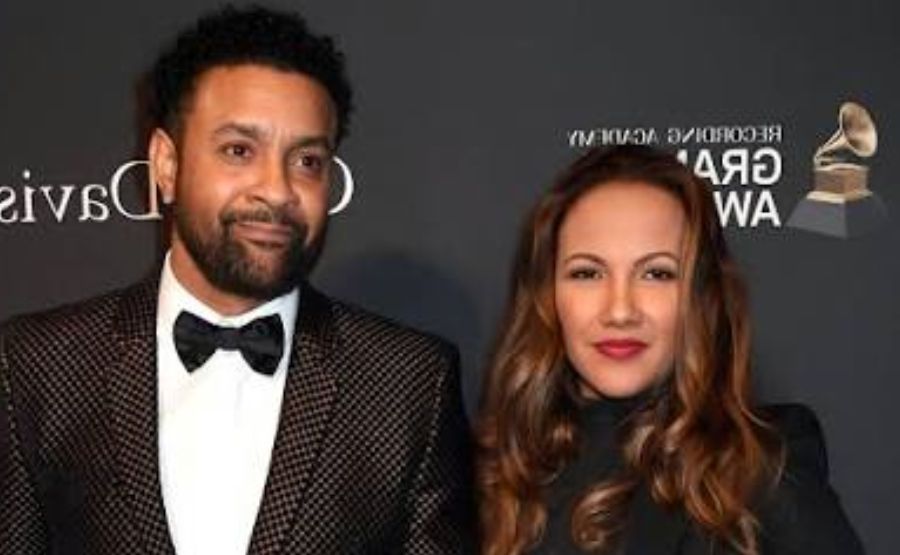
On February 2, 2019, Food For The Poor gave Shaggy and Rebecca the Ambassador For The Poor Award at the Boca Raton Resort & Club. most formal public recognition of what the foundation had accomplished. Food For The Poor President and CEO Robin Mahfood described them as “true friends of our charity” and said they had “shown that charity exists in their hearts.” The award placed Rebecca alongside her husband as a co-architect of the philanthropic work rather than its supporting player.
Her professional legacy in art direction is harder to quantify, because art directors’ contributions are by definition absorbed into the productions they serve. The visual coherence of Shaggy’s music videos across the period of their professional collaboration reflects work that shaped how one of reggae’s most global figures presented himself to the world — but that work carries no byline that most audiences notice.
What she has built, across twenty-five-plus years of commitment to Jamaica, its children, and its creative landscape, is the kind of influence that the biographer’s instinct to find drama tends to overlook. The foundation’s J$100 million sits inside expanded ICU capacity at Bustamante Hospital. The art direction she provided shaped how audiences in dozens of countries received Shaggy’s visual identity. The three daughters she is raising in Broward County hold Irish passports and know both sides of their heritage. These are not spectacular outcomes. They are, instead, durable ones.
Final Words
Rebecca Packer Burrell represents a particular kind of biographical subject — one who has exercised genuine influence through the consistent application of professional discipline, moral clarity, and deliberate privacy. The public record captures her at its edges: at award ceremonies, in foundation press statements, in a husband’s repeated expressions of admiration for her opinionated intelligence and her long-haul commitment.
What the record does not capture — and cannot, given her choices — is the full texture of a life lived at the intersection of Irish Catholic roots, Jamaican cultural immersion, American residence, creative professional work, maternal stewardship, and charitable management. Those dimensions coexist inside a single person who has, with apparent intention, declined to make herself legible to the audience that surrounds her husband.
The J$100 million controversy provided the most telling test of her character. She could have stepped back and let the media cycle play out. She did not. She went on record, in the Jamaica Gleaner, and explained in precise legal terms why the foundation had acted correctly. That willingness to engage institutionally while maintaining personal privacy is the defining feature of Rebecca Packer Burrell’s public presence.
Her story is worth telling not because of the celebrity orbit she inhabits, but because it demonstrates what sustained commitment to a place, a family, and a charitable purpose looks like over decades. She met Shaggy when he was already famous but before the peak of his global reach. She stayed in Jamaica when proximity argued against it. She co-directed a foundation that improved pediatric medicine for one of the Caribbean’s most underserved hospitals. She raised three daughters with Irish passports and Jamaican hearts in Broward County, Florida.
That is a biography. It is quieter than most celebrity adjacent profiles allow for. It is, for that reason, more interesting.
FAQs
1. Who is Rebecca Packer?
Rebecca Packer Burrell is an American art director, philanthropist, and co-director of the Shaggy Make a Difference Foundation. She is the wife of Grammy Award-winning reggae artist Shaggy (Orville Richard Burrell), whom she married on July 12, 2014. She holds half-Irish and half-Jamaican heritage and has lived and worked primarily in Jamaica and the United States.
2. Where is Rebecca Packer from?
Her family roots trace to Dundalk, County Louth, Ireland, through her mother, Dr. Veronica Salter, who emigrated to Jamaica in the 1970s. Rebecca was raised in Jamaica but holds American nationality. She is half-Irish and half-Jamaican. Her daughters hold Irish passports alongside their American citizenship.
3. When did Rebecca Packer and Shaggy get married?
They married on July 12, 2014, at Goldeneye resort in Oracabessa, St. The former home of James Bond writer Ian Fleming is Mary, Jamaica.The ceremony took place under almond trees, with event coordination handled by Jacqui Tyson of Signature Weddings.
4. How long were Rebecca Packer and Shaggy together before marriage?
Approximately sixteen years. They met in Jamaica in the late 1990s and began their relationship in the early 2000s, formalizing it with marriage in 2014. Shaggy has described it as marrying his best friend after more than two decades together.
5. How many children do Rebecca Packer and Shaggy have?
They share three daughters: Sydney (the oldest) and twins Madison and Kelsey, born in 2008. Shaggy also has two sons, Richard Burrell Jr. (known as rapper Robb Bank$) and Tyler Burrell, from his previous relationship with Carol Johnson. Rebecca helps maintain the extended family’s cohesion.
6. What is Rebecca Packer’s career?
She works as an art director for film and music videos, including several of Shaggy’s music videos. She also co-produces the Shaggy and Friends charity concert and serves as co-director of the Shaggy Make a Difference Foundation alongside her husband.
7. What is the Shaggy Make a Difference Foundation?
The Shaggy Make a Difference Foundation (SMADF) is a charitable organization co-directed by Shaggy and Rebecca Packer Burrell. Since 2009, it has hosted the biennial Shaggy and Friends benefit concert and has donated and repaired more than 450 pieces of medical equipment worth over USD $1.6 million to the Bustamante Hospital for Children in Kingston, Jamaica — the only specialist children’s hospital in the English-speaking Caribbean.
8. What was the J$100 million controversy about?
Following the 2018 Shaggy and Friends concert, which raised J$100 million designated for new ICU beds at Bustamante Hospital, the Jamaica Gleaner reported in November 2019 that the funds had not been transferred. Rebecca Packer Burrell clarified that the money was legally restricted to its designated purpose under the Charity Act, that the hospital lacked physical space for the new beds, and that the funds were secure and earning interest. In April 2023, the impasse was resolved and the funds were released for the ICU expansion.
9. What award did Rebecca Packer receive?
She and Shaggy received the Ambassador For The Poor Award from Food For The Poor at its 24th Annual Building Hope Gala on February 2, 2019, at the Boca Raton Resort & Club in Florida. The award recognized their sustained charitable work through the Shaggy Make a Difference Foundation.
10. Why does Rebecca Packer maintain such privacy?
She has consistently chosen to keep her personal life, social media, and public presence private. Multiple sources describe this as a deliberate preference rather than a constraint. She has built an independent career and philanthropic identity without seeking press coverage, and she enforces similar privacy standards for her daughters.
11. Where do Rebecca Packer and Shaggy live?
The family’s primary residence is in Broward County, Florida. Rebecca maintained her connection to Jamaica for over twenty years before the family relocated, and she chose to remain in Jamaica even when Shaggy wished she would move to the United States to reduce the distance his touring created.
12. What is her connection to Ireland?
Her mother, Dr. Veronica Salter, emigrated from Dundalk, County Louth, Ireland, to Jamaica in the 1970s. Rebecca’s Irish heritage is half of her identity; Shaggy has described marrying “an Irish Catholic girl who’s all about the long-haul.” Their daughters hold Irish passports as a direct expression of that heritage.
13. Did Rebecca Packer work with Shaggy professionally before they married?
Indeed. During their lengthy premarital relationship, she co-produced the Shaggy and Friends charity concert and served as art director for a number of Shaggy’s music videos. Her professional and personal relationship with Shaggy developed in parallel from the beginning.
14. How has Rebecca Packer handled her husband’s fame?
By maintaining her own career, restricting her public presence, setting family boundaries around social media exposure of her children, and engaging publicly only when institutional or charitable matters require it — as in the 2019 Gleaner controversy. Shaggy has consistently described her as intellectually challenging and opinionated, suggesting a relationship of equals rather than a supportive-partner dynamic.
15. What is Rebecca Packer’s lasting contribution to Jamaican children’s healthcare?
Through the SMADF, she has co-directed a foundation that has donated and maintained over 450 pieces of medical equipment at the Bustamante Hospital for Children, raised J$100 million in 2018 for ICU expansion, and maintained a decade-and-a-half-long operational commitment to the island’s most important pediatric facility. The foundation’s cumulative charitable contribution to the hospital since 2009 exceeds J$400 million.
Connecting curious minds with stories that educate, inspire, and inform with The Editorial Times.