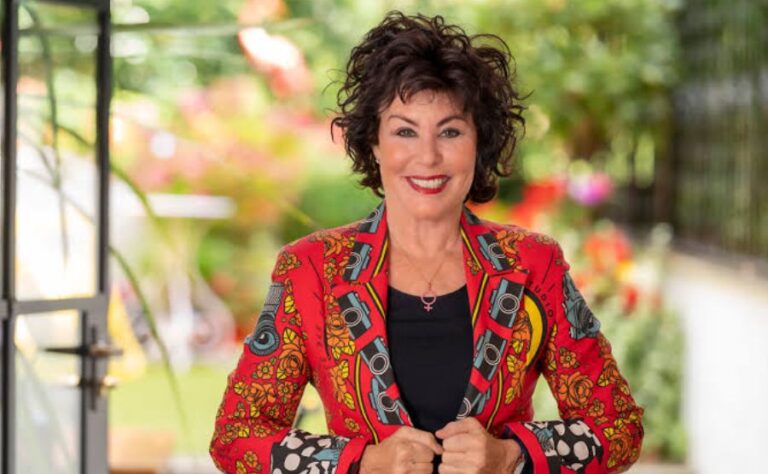
Ana Luz Rodriguez-Paz: The Bilingual Therapist Who Built a Practice, a Legacy, and a Life Entirely on Her Own Terms
In an era when mental health care remains chronically inaccessible to Spanish-speaking communities across America, Ana Luz Rodriguez-Paz has spent more than a decade doing something deceptively simple and structurally important. She built a practice where Hispanic families can speak about their pain in the language in which they feel it.
She is a licensed clinical social worker holding a PhD in couples and family therapy from Nova Southeastern University. She is the founder of ALRP Therapy — also known as Paz Mental Health — with offices in Boca Raton and Jupiter, Florida. She has worked across the full spectrum of clinical mental health, from play therapy with children to trauma-informed couples counseling to family systems intervention. She completed over 1,500 supervised clinical hours before establishing her practice in 2014. She trained at Boston University and New York University before earning her doctorate in Davie, Florida. And she has, since April 30, 2016, been married to Ahmad Rashad — former NFL wide receiver, four-time Pro Bowler, and longtime network sportscaster — a connection that brought her name into headlines she neither sought nor required.
The biography of Ana Luz Rodriguez-Paz is a story about professional building, cultural purpose, and the particular challenge of maintaining a distinct identity when proximity to fame recasts you as a supporting character in someone else’s story.
Quick Bio
| Detail | Information |
| Full Name | Ana Luz Rodriguez-Paz (professionally also: Ana Luz Rashad, PhD) |
| Date of Birth | Approximately 1981–1982 (precise date not publicly confirmed; age approximately 34 at time of 2016 marriage) |
| Heritage | Cuban-American and/or Hispanic; possible Puerto Rican roots (conflicting reports; not definitively confirmed) |
| Nationality | American |
| Raised | South Florida (Cuban-American household; bilingual English/Spanish upbringing) |
| Education | Boston University (undergraduate); New York University (MA-level training); Nova Southeastern University, Davie, Florida (PhD in Couples and Family Therapy) |
| Licensure | Licensed Clinical Social Worker, Florida (License No. SW11288); verified credential is LCSW with PhD, not licensed psychologist per Florida public records |
| Practice Founded | ALRP Therapy / Paz Mental Health — founded 2014; offices in Boca Raton and Jupiter, Florida; statewide telehealth |
| Clinical Specialties | Family therapy; play therapy (children); couples counseling; individual therapy; trauma-informed care; Emotionally Focused Therapy (EFT); Gottman Method; CBT; bilingual (English/Spanish) services |
| Certifications | Certified Play Therapist (2016); Family Systems Therapy accreditation (2018) |
| Healthcare Administration | Office Manager, Cardiovascular Consultants, P.A., Fort Lauderdale (since 2018) — manages team of 15; USD $1.2M annual budget |
| Acting Credit | Lead role, Consensual Injustice (2007 indie film; drama based on the 1937 Ponce Massacre, Puerto Rico) |
| Research | Presented two bilingual studies on treatment outcomes at Florida Psychological Association annual conference (2012 and 2013) |
| Marriage | Ahmad Rashad (married April 30, 2016, Palm Beach Gardens, Florida) |
| Stepchildren | Six, including actress Condola Rashad; also step-grandmother to Ava-Monroe Johnson |
| Shared Children | One daughter with Ahmad Rashad |
| Residence | South Florida (Broward County area) |
| Social Media | @alrptherapy (professional); @analuzrodrigue (personal) |
A Note on the Public Record
Before proceeding with Ana Luz Rodriguez-Paz’s biography, a preliminary note on sources is necessary — not to undermine the subject, but to serve the reader with the transparency this kind of profile demands.
The majority of online biographical content about her was published after her marriage to Ahmad Rashad in 2016, and much of it originates in celebrity biography aggregators that speculate freely and contradict each other on basic facts. Her birth year appears variously as 1981, 1982, 1989, or 1990 across different sites. Some sources describe her as a licensed psychologist; Florida’s public license database confirms her credential is Licensed Clinical Social Worker (SW11288) with a PhD in family therapy — not a licensed psychologist, a distinction that matters clinically and professionally. Her heritage is described as Cuban-American in some accounts and potentially Puerto Rican by others, the latter informed partly by her lead role in a film about the 1937 Ponce Massacre in Puerto Rico.
What can be confirmed from verifiable sources — Florida state records, the 2016 marriage license in Palm Beach County, press reports from the day the marriage license surfaced, her own practice website, and coverage of her Florida Psychological Association presentations — forms the basis of this biography. Where details remain uncertain, this article says so.
See also “Elizabeth Fogle: The Exit That Said Everything“
The Formation: South Florida, Two Languages, One Direction
Ana Luz Rodriguez-Paz grew up in South Florida inside a bilingual household that treated Spanish and English as equal tools rather than one primary and one secondary language. That linguistic symmetry turned out to be professionally foundational. She understood from childhood that people do not merely translate their emotions between languages — they experience them differently in each one. A person who learned English at school but argued, grieved, and loved in Spanish at home carries two distinct emotional vocabularies. Ana Luz grasped that distinction early.
Her Cuban-American background placed her inside a South Florida community that is simultaneously one of the region’s most culturally dominant forces and one of its most underserved in terms of bilingual mental health access. The stigma around mental health care that persists in many Hispanic communities — the cultural equation of therapy with weakness or family failure — was something she encountered in her own environment before she encountered it in clinical literature. That experiential knowledge shaped the practice she would eventually build.
She arrived at Boston University for her undergraduate training, where she built the psychological and social science foundation her later doctoral work would require. From there, she extended her clinical education at New York University, before ultimately returning to Florida to complete her PhD in Couples and Family Therapy at Nova Southeastern University in Davie — one of the state’s most established institutions for graduate clinical training. In 2013, she finished that degree. One year later, she opened her own practice.
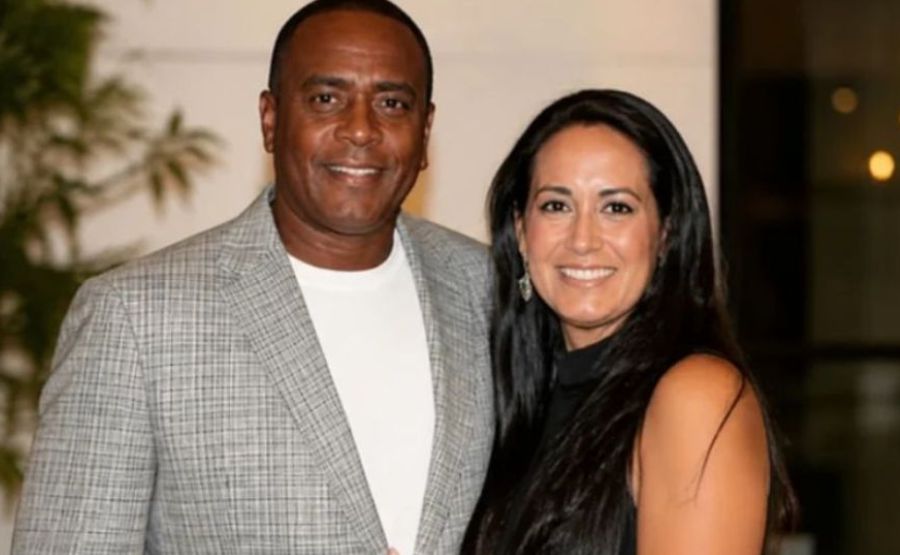
The Researcher Beneath the Clinician
The professional record of Ana Luz Rodriguez-Paz contains a detail that most celebrity biographies of her miss entirely: before she opened her practice, she presented research.
In 2012 and again in 2013, she delivered bilingual studies on treatment outcomes at the annual conference of the Florida Psychological Association. These were not casual presentations. The FPA annual conference is a professional gathering of licensed clinicians, researchers, and educators across Florida’s mental health community. Presenting there — twice, in consecutive years, while still completing her doctoral training — requires both methodological competence and a clear research argument that can withstand peer scrutiny.
The subject of both presentations — bilingual treatment outcomes — placed her work at the intersection of clinical psychology and linguistics at a moment when the literature on language-concordant care was still developing. She was not simply noting that Spanish-speaking clients preferred Spanish-speaking therapists. She was examining measurable differences in treatment outcomes across language settings, which is a fundamentally more rigorous research question. That early academic contribution is the most concrete evidence that Ana Luz Rodriguez-Paz entered her professional life as a trained researcher, not merely a practitioner.
ALRP Therapy: Developing the Approach from the Ground Up
In 2014, one year after completing her doctorate, Ana Luz Rodriguez-Paz founded ALRP Therapy — a name built from her initials, which the practice also operates under the name Paz Mental Health. The word “Paz” carries a dual function: it is her surname, and it means “peace” in Spanish. The naming was neither accidental nor merely stylistic. It announced the practice’s cultural orientation before anyone read a single line of its description.
She opened initial offices in Boca Raton and Palm Beach — communities with large Hispanic populations and documented shortfalls in Spanish-language mental health services. The practice expanded to Jupiter, Florida, and eventually added statewide telehealth capability, allowing Rodriguez-Paz to extend her clinical reach beyond the communities where her offices sat.
Her clinical model draws from multiple therapeutic traditions. She uses Emotionally Focused Therapy, a research-supported approach developed by Sue Johnson that focuses on attachment patterns in couples and families. She incorporates the Gottman Method, another evidence-based couples therapy framework. She practices trauma-informed care across client populations. For children, she uses play therapy — a specialized approach in which young clients process emotional experiences through structured play rather than verbal exchange — and earned her Certified Play Therapist designation in 2016. She received accreditation in Family Systems Therapy in 2018.
The practice does not operate as a boutique clinic. By published accounts, she serves approximately 150 clients per month. That volume — across individual, couples, family, and child sessions in two languages — represents the scale of a serious clinical enterprise, not a side career.
The Administrative Dimension: Leading Beyond the Therapy Room
In 2018, Ana Luz Rodriguez-Paz added a substantively different professional role to her portfolio. She took on the position of Office Manager at Cardiovascular Consultants, P.A., a cardiology practice in Fort Lauderdale. The role placed her in charge of a team of fifteen staff members and a budget of approximately USD $1.2 million annually.
The gap between family therapy and cardiovascular practice management is not as wide as it might appear. Both involve patient-centered care systems, insurance navigation, compliance management, and the human dynamics of healthcare delivery under pressure. Her responsibilities at Cardiovascular Consultants included streamlining insurance processes, reducing patient wait times, and ensuring regulatory compliance — administrative challenges that require operational discipline, not clinical training.
This dual professional identity — practicing therapist and healthcare administrator — reflects something about her that the celebrity biography framing tends to flatten. She is not a person who built a single professional identity and maintained it. She is someone who built one identity, secured it sufficiently, and then took on the challenge of building another.

The Actress: One Film, One Historical Subject, One Open Question
Among the documented details of Ana Luz Rodriguez-Paz’s biography, one stands apart from everything else for its specificity and its historical weight. In 2007, she took the lead role in Consensual Injustice, an independent drama centered on the Ponce Massacre — the 1937 killing of anti-American protesters in Ponce, Puerto Rico, by police acting on orders from the island’s colonial administration.
The Ponce Massacre is one of the defining events of Puerto Rican political history. It took place on Palm Sunday, March 21, 1937, when police opened fire on a peaceful nationalist march organized by the Puerto Rican Nationalist Party, killing nineteen people and wounding more than two hundred. The subsequent investigation by the American Civil Liberties Union concluded that the police had fired without provocation. The event became a touchstone of Puerto Rican collective memory and a central reference point in discussions of American colonial history.
That Ana Luz Rodriguez-Paz chose to anchor her one documented acting role in that specific historical event — not a romance, not a crime thriller, but an examination of anti-colonial violence and its suppression — tells you something about the range of her interests and the depth of her historical consciousness. Whether she pursued additional acting work is not documented in the public record. What is documented is that she led an independent film about one of the most significant political massacres in modern Caribbean history. That is not a typical first credit.
The film also connects to the conflicting accounts of her heritage. Some sources describe her as Cuban-American; others suggest Puerto Rican roots. The Ponce Massacre connection adds weight to the latter possibility. But the honest answer is that her precise national origin within the broader Hispanic tradition has not been confirmed in the available public record, and this biography will not fabricate certainty where none exists.
Personal Life: Marriage, Family, and the Age Gap That Became a Headline
On April 30, 2016, a marriage license surfaced in Palm Beach County records. The document showed that on that date, in Palm Beach Gardens, Florida, Ana Luz Rodriguez-Paz — therapist, then 34 years old — had married Ahmad Rashad, then 66. A member of the bride’s family led the ceremony. The public found out not through a press announcement but because a marriage license is a public document.
Ahmad Rashad is a name that sits at the intersection of two eras of American sports culture. As Bobby Moore, he was a first-round draft pick in the 1971 NFL Draft who played wide receiver for the Buffalo Bills, the St. Louis Cardinals, the Seattle Seahawks, and most memorably the Minnesota Vikings, where his 1980 catch in Minneapolis — a last-second touchdown catch on a Hail Mary pass that put the Vikings in the playoffs — remains one of the most replayed moments in franchise history. After converting to Islam, he changed his name to Ahmad Rashad. After retiring from football, he became a prominent broadcaster on NBC Sports and ESPN, hosting NBA Inside Stuff from 1990 to 2002 and developing a reputation as one of the most personable figures in sports television.
He had been married four times before Ana Luz. His third marriage — to actress Phylicia Rashad in 1985, a union he proposed on national television during a Thanksgiving halftime broadcast — made him one of the most publicly recognized married figures in American entertainment during the late 1980s. That marriage lasted until 2001. His fourth marriage, to Sale Johnson, a former model and multimillionaire ex-wife of New York Jets owner Woody Johnson, ended in 2013.
The 32-year age difference between Ahmad and Ana Luz drew the coverage that large age gaps in high-profile marriages predictably attract. Ana Luz did not respond to that coverage with public statements. She maintained the same privacy she had maintained throughout her clinical career. Rashad himself addressed the relationship with characteristic directness in press interviews, describing Ana as his closest friend and the partnership as built on something deeper than chronology.
Together, they have one daughter. Ana Luz also became stepmother to Ahmad’s six children from his previous relationships — including Condola Rashad, the acclaimed stage actress whose credits include productions of Stick Fly, A Doll’s House, Part 2, and Saint Joan, the latter earning her a Tony Award nomination for Best Actress in a Play, as well as television roles in Billions. Ana Luz also became step-grandmother to Ava-Monroe Johnson, the adopted granddaughter from Ahmad’s fourth marriage who remained under their shared custody after the divorce from Sale Johnson.
The family that Ana Luz entered through marriage was large, accomplished, publicly visible, and — given the stakes involved — potentially complicated to navigate. By every available account, she has done so without drama and without publicity.
The Credential Question: What the Public Record Actually Shows
Because accuracy matters here more than narrative convenience, a specific clarification deserves its own section.
Many online profiles of Ana Luz Rodriguez-Paz describe her as a “licensed clinical psychologist.” That framing is imprecise. Florida’s public professional license database lists her credential as Licensed Clinical Social Worker (LCSW), license number SW11288. Her doctoral degree from Nova Southeastern University is specifically in Couples and Family Therapy, not clinical psychology. The distinction between a licensed clinical social worker and a licensed psychologist is meaningful both legally and professionally: psychologists in Florida hold different licences, complete different training programs, and operate under a different scope of practice.
This does not diminish what she has built. A PhD in couples and family therapy, an LCSW credential, over 1,500 supervised clinical hours, research presentations at state professional conferences, certifications in play therapy and family systems therapy, and a decade-plus of running a bilingual clinical practice constitute a legitimate and substantial professional record. The credential is impressive on its own terms. It does not require embellishment.
WayMagazine, one of the few sources that cross-referenced her actual Florida professional records, specifically noted that she does not appear as a licensed psychologist in public records. That finding is consistent with the pattern of credential inflation that frequently accompanies online celebrity biography profiles, where sources copy each other’s inaccuracies rather than checking primary documents.
Legacy and Influence: The Quiet Infrastructure of Mental Health Access
Ana Luz Rodriguez-Paz’s contribution to South Florida’s mental health landscape is not the kind that generates award ceremonies or newspaper profiles. It is the kind that generates fifty therapy sessions per week, conducted in two languages, inside a practice she designed from scratch, targeting communities whose mental health needs the mainstream clinical market consistently underserves.
The Hispanic community in South Florida faces a specific barrier to mental health care that her practice directly addresses. Cultural stigma — the equation of therapy with personal failure or family weakness — discourages help-seeking in communities where mental toughness is a survival tool, not merely a value. Language access compounds the barrier: a Spanish-dominant speaker navigating an English-language intake form, waiting room, and therapy session loses the emotional precision that the native tongue provides. Rodriguez-Paz built her practice to remove both obstacles simultaneously.
By published estimates, ALRP Therapy / Paz Mental Health serves approximately 150 clients per month. Over a decade, that caseload represents thousands of individual therapeutic encounters — children processing loss through play, couples rebuilding after betrayal, families learning to communicate across generational conflict, individuals managing anxiety and depression in a second language or in their first language for the first time in a clinical setting. That is the specific texture of her legacy.
She also presented bilingual research at the Florida Psychological Association conference in 2012 and 2013 — contributing to the professional literature on language-concordant care at a moment when that literature was still developing. That academic contribution, small in itself, adds to a body of evidence that clinicians and policymakers use when making arguments for bilingual mental health investment.
Final Words
Ana Luz Rodriguez-Paz built what she built before she married Ahmad Rashad, and she has continued to build it since. The practice, the research presentations, the certifications, the administrative leadership at Cardiovascular Consultants — these predate or are independent of the marriage that made her name searchable.
That is the central biographical fact that the celebrity framing of her story consistently obscures: she did not gain professional identity through marriage. She brought professional identity to it. She arrived at the April 30, 2016 ceremony in Palm Beach Gardens as a practicing clinician with two years of her own clinical business, doctoral-level credentials, and a specific research contribution to the literature on bilingual mental health care. She left the ceremony as someone married to a famous man — which is, in strictly biographical terms, a much less interesting fact than what preceded it.
The 32-year age difference between her and Ahmad Rashad is a number that tells you nothing about what the relationship actually contains. His own description of it — two people with shared values and genuine friendship, working through a long partnership with mutual respect — is more informative than any demographic calculation. The marriage appears, by every visible indicator, to be stable, warm, and private.
What distinguishes Ana Luz Rodriguez-Paz from most profiles that bear her name is the specificity of what she has actually done. She identified a structural gap in South Florida mental health care. She earned the credentials to address it. She built a practice designed precisely to fill it. She continues to serve approximately 150 clients monthly. She manages a healthcare team of fifteen people. She presented research while still completing her doctorate. She played the lead in an independent film about one of modern Caribbean history’s most significant political massacres.
That is not a celebrity footnote. That is a biography.
FAQs
1. Who is Ana Luz Rodriguez-Paz?
Ana Luz Rodriguez-Paz (professionally also Ana Luz Rashad, PhD) is a licensed clinical social worker and doctor of couples and family therapy based in South Florida. She founded ALRP Therapy — also known as Paz Mental Health — in 2014, a bilingual clinical practice with offices in Boca Raton and Jupiter, Florida. She is also known as the wife of former NFL player and sportscaster Ahmad Rashad, whom she married on April 30, 2016.
2. What are Ana Luz Rodriguez-Paz’s actual credentials?
Florida’s public license database confirms she holds the Licensed Clinical Social Worker credential (License No. SW11288). Her doctoral degree from Nova Southeastern University in Davie, Florida, is specifically in Couples and Family Therapy. Some online sources incorrectly describe her as a licensed psychologist; that designation is not supported by public records. She is also a Certified Play Therapist (2016) and holds Family Systems Therapy accreditation (2018).
3. Where did Ana Luz Rodriguez-Paz study?
She completed undergraduate study at Boston University, advanced clinical training at New York University, and earned her PhD in Couples and Family Therapy from Nova Southeastern University in Florida, completing her doctoral degree in 2013.
4. What is ALRP Therapy?
ALRP Therapy, also operating under the name Paz Mental Health, is a bilingual mental health practice founded by Ana Luz Rodriguez-Paz in 2014. The practice name uses her initials; “Paz,” meaning “peace” in Spanish, also reflects her surname and the practice’s therapeutic philosophy. It offers individual, couples, family, and children’s therapy in English and Spanish, with locations in Boca Raton and Jupiter, Florida, and statewide telehealth services.
5. What therapeutic approaches does she use?
Her documented therapeutic modalities include Emotionally Focused Therapy (EFT), the Gottman Method, trauma-informed care, Cognitive Behavioral Therapy (CBT), Solution-Focused Therapy, play therapy for children, and family systems therapy. Her bilingual capacity allows her to conduct all of these across both English and Spanish.
6. When and where did Ana Luz Rodriguez-Paz marry Ahmad Rashad?
They married on April 30, 2016, in a private ceremony in Palm Beach Gardens, Florida. A member of the bride’s family conducted the ceremony. The marriage license appeared in Palm Beach County public records within days of the wedding, which is how media outlets initially learned of the marriage.
7. What is the age difference between Ana Luz Rodriguez-Paz and Ahmad Rashad?
At the time of their 2016 wedding, she was 34 and he was 66, creating a 32-year age gap. The couple has addressed public curiosity about their age difference by emphasizing their shared values and friendship rather than responding defensively to outside commentary.
8. Do Ana Luz Rodriguez-Paz and Ahmad Rashad have children?
Yes. They share one daughter together. Through the marriage, Ana Luz became stepmother to Ahmad’s six children from previous relationships, including actress Condola Rashad, and step-grandmother to Ava-Monroe Johnson.
9. Did Ana Luz Rodriguez-Paz have an acting career?
She has one documented acting credit: the lead role in Consensual Injustice (2007), an independent drama based on the 1937 Ponce Massacre in Puerto Rico, in which colonial police killed nineteen anti-American protesters and wounded more than two hundred. There is no documented evidence of further film or television work beyond this credit.
10. What research did Ana Luz Rodriguez-Paz present?
She presented bilingual studies on treatment outcomes at the annual conference of the Florida Psychological Association in both 2012 and 2013, while still completing her doctoral training. Both presentations focused on bilingual mental health care and culturally concordant treatment outcomes.
11. What is her role at Cardiovascular Consultants, P.A.?
Since 2018, she has served as Office Manager at Cardiovascular Consultants, P.A., a cardiology practice in Fort Lauderdale, Florida. In that capacity, she oversees a team of fifteen staff members and manages an annual operations budget of approximately USD $1.2 million. Her responsibilities include insurance process management, patient wait time reduction, and regulatory compliance.
12. What heritage does Ana Luz Rodriguez-Paz come from?
Most sources describe her as Cuban-American, raised in a bilingual South Florida household. Some reports suggest Puerto Rican roots, partly based on her lead acting role in a film about Puerto Rican history. Her precise national origin within the Hispanic tradition has not been publicly confirmed, and available sources contain conflicting information.
13. Is Ana Luz Rodriguez-Paz on social media?
Yes. She maintains two accounts: @alrptherapy (professional, focused on mental health resources and practice updates) and @analuzrodrigue (personal, sharing family moments and values-aligned content). She keeps her social media presence consistent with her overall preference for measured rather than extensive public visibility.
14. How large is her clinical practice?
Published estimates indicate that ALRP Therapy / Paz Mental Health serves approximately 150 clients per month. The practice offers in-person sessions at its Boca Raton and Jupiter locations, as well as telehealth services available statewide across Florida.
15. Why is the accurate framing of her credentials important?
Multiple online profiles describe her as a “licensed clinical psychologist,” which is a specific credential governed by Florida law and distinct from her actual credential as a Licensed Clinical Social Worker with a doctoral degree in family therapy. The distinction matters because it affects how the public understands her scope of practice, and because accurate representation of professional credentials is a basic ethical standard in healthcare communication.
Connecting curious minds with stories that educate, inspire, and inform with The Editorial Times.