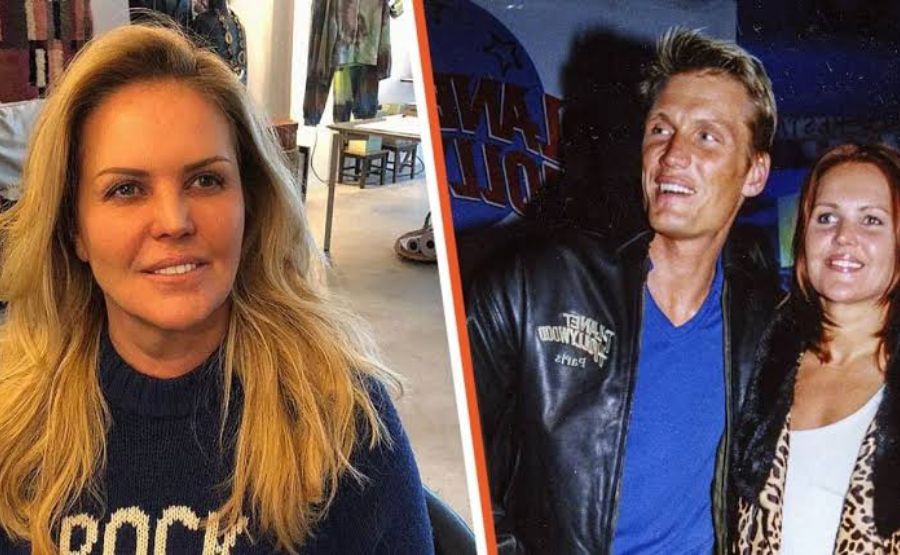
Anette Qviberg: The Designer Who Chose a Life Over a Label
In an era when proximity to fame is treated as currency, Anette Qviberg has spent three decades deliberately spending none of it.
She spent seventeen years married to one of action cinema’s most recognizable faces. She raised two daughters across three countries. She built three distinct creative careers in fashion, jewelry, and interior design. And through all of it, she kept herself almost entirely out of public view — not out of timidity, but by careful, consistent choice.
That discipline is rarer than any award. It is also, in its own way, a kind of achievement.
Quick Bio
| Detail | Information |
| Full Name | Anette Qviberg |
| Date of Birth | Disputed: most credible sources indicate October 21, 1964; some sources list March 10, 1966 |
| Place of Birth | Disputed: Sweden or Tarrant County, Texas, USA |
| Nationality | Swedish (with reported dual Swedish-American roots) |
| Mother | Kari Qviberg (artist) |
| Siblings | Brother Lole; stepfather named Staffan; two sisters named Katarina and Annika cited in some sources |
| Education | Degree in fashion and clothing technology; additional study in jewelry and interior design |
| Career | Fashion stylist, jewelry designer, interior designer |
| Marriage | Dolph Lundgren (February 27, 1994 – divorced 2011) |
| Children | Ida Lundgren (b. April 29, 1996); Greta Lundgren (b. November 30, 2001) |
| Primary Residence | Marbella, Spain (primary); Europe |
| @anetteqviberg (personal, ~5,400 followers); @interiorbyanetteqviberg (design work) | |
| Estimated Net Worth | $1–3 million (estimates vary widely across sources) |
| Post-divorce partner | A man named Carlos, based in Marbella (relationship confirmed through social media, circa 2013 onward) |
A Note on the Public Record
Before anything else, a word of caution is warranted.
Anette Qviberg is not a celebrity in the conventional sense. She has never written a memoir, hosted a podcast, or given a profile interview to a major publication. The public record about her is thin, and much of what circulates online is contradictory.
Her birth date appears variously as October 21, 1964, and March 10, 1966. Her birthplace is listed as Sweden in some sources and Tarrant County, Texas, in others. These discrepancies matter because they signal how little verified primary material actually exists.
What can be stated with confidence: she is Swedish, she trained in fashion and design, she married Dolph Lundgren in 1994, they divorced in 2011, and she has maintained a private but active creative life ever since. Everything else should be held loosely.
Origins: Sweden, Texas, and a Household Built on Art
Anette Qviberg grew up in a home shaped by creativity.
Her mother, Kari Qviberg, is a working artist who has remained active enough on social media to share childhood photographs of Anette into the 2020s. That detail — a mother still archiving the family’s visual memory decades later — tells you something about the household she came from.
Whether Anette was born in Sweden or Texas remains unresolved by public records. What is consistent across sources is that she identified with her Scandinavian roots and eventually settled into a distinctly Swedish aesthetic sensibility: clean lines, muted palettes, function married to beauty.
She earned a degree in fashion and clothing technology. Later on, she branched out into interior design and jewelry creation. That trajectory — from wearable craft to spatial design — suggests someone who thinks about beauty systematically, not decoratively.
She also learned to play drums at some point. That fact, repeated in several biographical accounts, sits awkwardly against the image of soft minimalism that her design work projects. It is a useful reminder that people contain more than their aesthetic output.
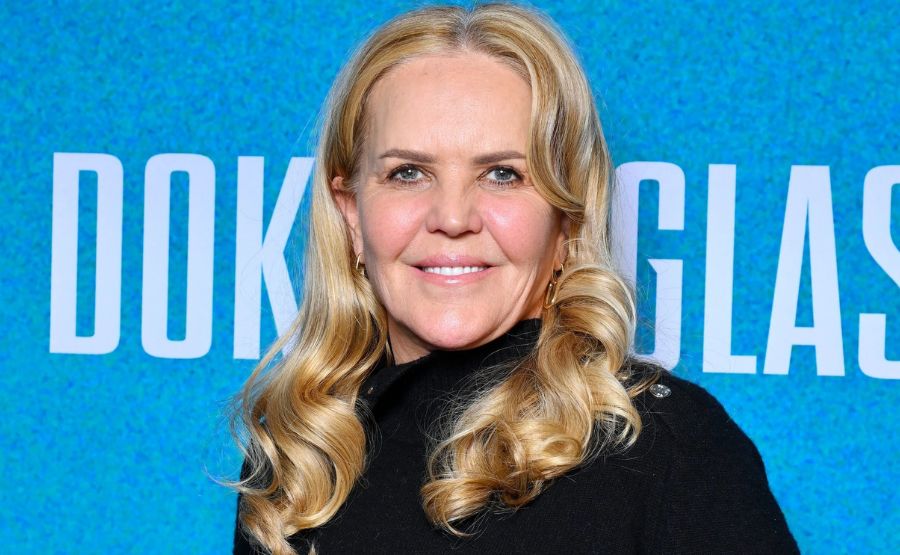
The First Career: Fashion and the Runway
Before Marbella and before Dolph Lundgren, Anette Qviberg built a professional foundation in fashion.
Several sources describe her as having worked in modeling, though the scope and duration of that work remain unspecified in the public record. What is clearer is her work as a fashion stylist — someone who shapes how others present themselves rather than simply presenting herself.
Styling is underrated as a craft. It requires a sharp understanding of how fabric, proportion, and color behave on actual human bodies in actual light. It demands the ability to read a person quickly and translate their identity into a coherent visual statement.
Qviberg’s jewelry designs followed a recognizable thread: precious materials handled with restraint. Gold, silver, pearls, and gemstones, but assembled without excess ornamentation. The aesthetic was Scandinavian in the truest sense — a philosophy of reduction rather than decoration.
She did not build a public fashion brand during this period. Her client work appears to have been largely private, which kept her name out of industry media even as her reputation grew among those who hired her.
Meeting Dolph Lundgren: Hollywood Proximity Without Hollywood Appetite
In the early 1990s, Anette Qviberg met Dolph Lundgren somewhere in Marbella, Spain.
By then, Lundgren was globally recognizable. His role as Ivan Drago in Rocky IV (1985) had made him a villain the world loved to boo. Masters of the Universe (1987) and Universal Soldier (1992) had extended that visibility considerably. He was, by any measure, a famous man.
What is striking about every account of their early relationship is what Anette appears not to have cared about: the fame. Multiple biographical sources note that she was drawn to the person, not the persona. She had her own professional identity, her own aesthetic sensibility, and no apparent need to orbit someone else’s celebrity.
They married on February 27, 1994, in Marbella. The choice of Marbella as both meeting place and wedding location was not accidental. The southern Spanish coast offered warmth, privacy, and a deliberate distance from both Hollywood and Stockholm’s respective social gravitational fields.
The Marbella Years: Building a Life in Deliberate Quiet
After the wedding, they stayed in Marbella.
This was not a default choice. Lundgren was an internationally bankable action star with offers from Los Angeles, and he chose instead to center his family in coastal Spain. He later told Men’s Health in 2012 that he spent roughly ten years in Europe prioritizing fatherhood over career momentum — acknowledging that he made films during that period, but without the same professional intensity.
Qviberg’s role in that decision appears central. The couple bought a villa in Marbella and maintained additional homes in Los Angeles, Stockholm, and London. But Marbella was the anchor.
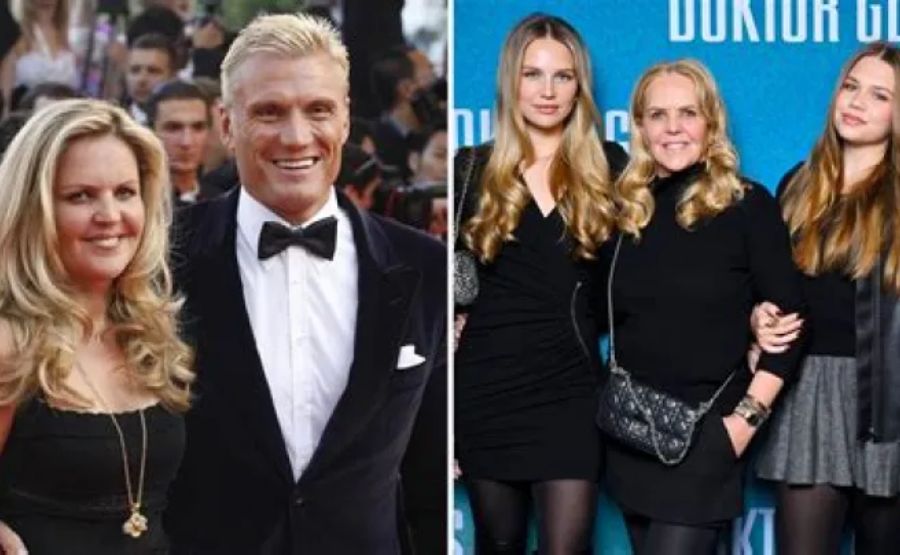
Their first daughter, Ida Sigrid Lundgren, was born on April 29, 1996, in Stockholm. Greta Eveline Lundgren arrived on November 30, 2001. Both daughters spent their formative years in Spain, attending schools abroad and receiving the kind of quietly multilingual, culturally layered upbringing that European-based families can sometimes offer.
During these years, Qviberg continued working — on her homes, on design projects, and on the family’s aesthetic environment. She styled Lundgren for premieres when she appeared with him. She largely did not give interviews.
While the public saw a Hollywood action star’s wife choosing tasteful invisibility, those closest to her saw something more purposeful: a professional woman keeping her craft alive on her own terms, without needing a publicist’s approval.
The 2009 Break-In: A Night That Left Lasting Marks
In May 2009, Anette Qviberg’s Marbella home was invaded by intruders.
Dolph Lundgren was away filming at the time — accounts suggest he was working on The Expendables (2010). Anette was home with their daughters, who were thirteen and seven years old respectively.
Three masked men broke into the property. In what became the incident’s most widely reported detail, the intruders discovered photographs of Dolph Lundgren on the walls. Recognizing whose home they had entered, they returned some of what they had taken and fled.
The physical threat passed. The emotional damage did not.
Reports indicate that Anette was left severely shaken by the experience. Her elder daughter Ida was also present, and multiple sources note that Ida developed post-traumatic stress symptoms in the aftermath. Lundgren later said publicly that the incident affected him deeply, described Anette as his “angel,” and took steps to significantly upgrade the property’s security.
The burglars were never identified or arrested, despite Lundgren reportedly pursuing investigative leads through contacts in Eastern Europe.
What the incident reveals about Qviberg is something often overlooked in the biographical coverage: she faced genuine danger while alone, handled it, and then moved forward without making her trauma a public narrative. She did not give interviews about it. She did not write about it. She simply continued.
Divorce, 2011: Ending Something Without Destroying It
Dolph Lundgren and Anette Qviberg divorced in 2011 after seventeen years of marriage.
No detailed public explanation was ever offered by either party. No legal drama materialized in the press. Irreconcilable differences were cited in some accounts, with speculation that the demands of Lundgren’s renewed career push — which included the Expendables franchise and a return to higher-profile Hollywood work — created a distance that years of geographic rootedness in Marbella had previously managed to prevent.
What happened afterward is, in its own way, more notable than the divorce itself.
They remained friendly. They co-parented without visible conflict. They attended their daughters’ events together. Multiple sources report that they continued to take family trips as a unit even after formally separating. Qviberg retained Marbella as her base; Lundgren relocated to Los Angeles to accelerate his career.
Lundgren remarried in July 2023, to Emma Krokdal, in a private ceremony in Greece. Public accounts suggest Qviberg responded gracefully. She did not use the occasion to become publicly visible.
Interior Design and the Instagram Years
Following the divorce, Qviberg expanded her interior design work into her most public-facing professional identity.
She maintains two Instagram accounts. Her personal account, @anetteqviberg, has accumulated approximately 5,400 followers and offers a curated view of her domestic aesthetic: natural light, clean surfaces, carefully chosen textures. Her design account, @interiorbyanetteqviberg, is smaller — under 500 followers — but more professionally specific, listing a direct contact email for project inquiries.
The bio on her personal account reads, simply: “Love making a home better.”
That sentence is not accidental. It positions her work as service rather than artistry, as collaborative rather than authorial. It reflects the same instinct that kept her out of bylines during the Marbella years: a preference for the effect over the credit.
Her design philosophy, visible through what she chooses to share, is rooted in Scandinavian minimalism. Light colors, organic materials, deliberate negative space. The spaces she shares look inhabited rather than staged — comfortable rather than aspirational in the performed sense.
She does private client work, reportedly in Europe, possibly including Spain and Sweden. The boutique nature of that practice means she has never needed to scale into a public brand.
Motherhood: Two Daughters, Two Creative Paths
Ida Lundgren, now in her late twenties, has pursued both modeling and acting.
She signed with major agencies including Elite and Wilhelmina and has appeared in films alongside her father — including Command Performance (2009) and Castle Falls (2021). In interviews, she has described her parents’ respective parenting styles with candid clarity: Dolph was the stricter presence; Anette was the more relaxed one. She described her father as emotionally sensitive beneath his physical image and said she was “very scared of him” as a child — a statement that reflects the particular dissonance of growing up with a father whose screen persona is relentless menace.
Anette’s influence appears throughout Ida’s aesthetic sensibility. The elder daughter carries a design-aware quality in how she presents herself publicly.
Greta Lundgren, born November 30, 2001, has developed a quieter public presence. She attended boarding school in Sweden, has maintained photography as a creative focus, and contributed behind-the-scenes to her father’s film Wanted Man. She reflects her mother’s disposition more directly: creative, private, and selective about what she shares.
Both daughters appear to have benefited from Anette’s deliberate choice to raise them in Europe rather than Los Angeles. Neither was a child actor. Neither grew up feeding the celebrity press. That outcome does not happen by accident.
Life After the Spotlight: Marbella, Carlos, and Chosen Peace
In 2013, social media traces first connected Anette Qviberg with a man referred to in several sources as Carlos — a Marbella-based individual with ties to hospitality and tennis coaching.
Very little is publicly confirmed about this relationship. What can be said is that Qviberg appears to have found her footing after the divorce in her own time, in her own geography, without making the transition a public event.
She has continued to live largely in or around Marbella, with the ability to move between Spain and other European locations as her work and family require.
Her Instagram posts in recent years show a woman who appears genuinely at ease — not performing contentment, but inhabiting it. Coastal light. Quiet interiors. Occasional family gatherings. The texture of a life built around what actually satisfies rather than what photographs well for a wider audience.
Legacy and Influence: A Different Kind of Model
Anette Qviberg will not appear in any fashion retrospective as a name brand. She has not published a book on Scandinavian design. She has not given the interview that reframes the narrative.
What she represents instead is something more durable and harder to quantify: a model of creative persistence without public performance.
She trained seriously in multiple disciplines. She worked when her husband’s fame could easily have made work optional. She kept her children out of the tabloid machine at a time when celebrity-adjacent parenting increasingly moved in the opposite direction. She navigated divorce without making it a content strategy.
Her influence on her daughters — both of whom are building creative lives without evident fragility — is probably her most concrete legacy. Ida and Greta Lundgren are not cautionary tales of celebrity-adjacent childhoods. That reflects choices Anette made consistently over decades.
Her interior design work, modest in scale, extends a specifically Scandinavian sensibility into private spaces that her clients inhabit daily. That is not a minor thing. The environments people live in shape how they think and feel. Doing that work well, for fewer people, over a long period, is its own form of impact.
Final Thoughts
There is a tendency, in biographical writing about private individuals connected to famous people, to frame privacy as either suspicious or noble. Neither framing serves Anette Qviberg particularly well.
She is not a mysterious figure guarding some dramatic secret. She is also not a saint of quiet virtue. She is a working designer who made consistent choices about visibility and found — over thirty years — that those choices produced a life she appears to find genuinely satisfying.
The contradictions in her story are real. Her birth date and birthplace remain genuinely uncertain — an unusual fact for someone whose name generates significant search traffic in 2026. The details of her professional work are difficult to verify independently. The extent of her current practice is unknown.
What is verifiable is the pattern: she has never needed fame to justify herself. That pattern is noteworthy not because it is heroic but rather because it is consistent and uncommon in a time when public attention is increasingly used as the main indicator of significance.
She built something. It just happened to be mostly private.
FAQs
1. Who is Anette Qviberg?
Anette Qviberg is a Swedish fashion stylist, jewelry designer, and interior designer. She is best known publicly as the former wife of actor Dolph Lundgren, though she established a professional creative identity independent of that connection.
2. When and where was Anette Qviberg born?
Her birth details are disputed across sources. The most frequently cited date is October 21, 1964, with Sweden as her place of birth. Some sources list March 10, 1966, and Tarrant County, Texas. No primary source has officially confirmed either version.
3. Who are Anette Qviberg’s parents?
Her mother is Kari Qviberg, a working artist. Her father’s identity has not been confirmed in public records. She has a stepfather named Staffan and a brother named Lole, along with siblings named Katarina and Annika cited in some sources.
4. What is Anette Qviberg’s professional background?
She holds a degree in fashion and clothing technology and has worked across three creative fields: fashion styling, jewelry design, and interior design. Her jewelry work features precious metals and stones handled with minimalist restraint. Her interior design practice is private and client-based.
5. When did Anette Qviberg marry Dolph Lundgren?
They married on February 27, 1994, in Marbella, Spain, after meeting in the early 1990s.
6. Why did they live in Marbella rather than Hollywood?
Both Qviberg and Lundgren made a deliberate choice to raise their daughters outside the Hollywood environment. Marbella offered privacy, warmth, and geographic distance from the entertainment industry machinery. Lundgren later acknowledged in interviews that this decision came at the cost of some career momentum, which he accepted.
7. Why did Anette Qviberg and Dolph Lundgren divorce?
They divorced in 2011 after seventeen years of marriage. Neither party gave a detailed public explanation. The most common speculation involves Lundgren’s intensifying career schedule and the long-distance pressures that created over time.
8. Who are Anette Qviberg’s daughters?
Ida Lundgren, born April 29, 1996, in Stockholm, is a model and actress who has appeared in films alongside her father. Greta Lundgren, born November 30, 2001, is a photographer and creative who worked behind the scenes on her father’s film Wanted Man and maintains a lower public profile than her sister.
9. What happened during the 2009 Marbella burglary?
In May 2009, three masked intruders broke into the family’s Marbella villa while Dolph Lundgren was away filming. Anette and their daughters were home. The intruders left after discovering family photographs identifying the property as Lundgren’s. Anette was left deeply shaken, and Ida reportedly developed PTSD following the incident. The perpetrators were never identified.
10. Is Anette Qviberg active on social media?
She maintains two Instagram accounts: @anetteqviberg for personal content (approximately 5,400 followers as of available records) and @interiorbyanetteqviberg for her design work (under 500 followers). Her posts reflect her aesthetic interests — interiors, light, quiet domestic moments — rather than personal commentary or celebrity adjacency.
11. Did Anette Qviberg remarry after the divorce?
She has not publicly remarried. Beginning around 2013, her social media suggested a relationship with a man named Carlos, based in Marbella. The relationship has not been formally confirmed in any interview or official statement.
12. What is Anette Qviberg’s net worth?
Estimates vary considerably across sources, ranging from $1 million to $5 million. The spread reflects how little verified financial information is publicly available. Income sources reportedly include design work, private client consulting, and settlement proceeds from the 2011 divorce.
13. Where does Anette Qviberg live now?
She continues to be based primarily in Marbella, Spain, as of available 2025–2026 information. She appears to travel within Europe for work and personal reasons.
14. How did Anette respond to Dolph Lundgren’s 2023 remarriage?
Public accounts suggest she responded without visible hostility. She did not make statements to the press and did not use the occasion to generate media attention for herself. She has maintained a cooperative co-parenting relationship with Lundgren that appears to have survived the transition.
15. What is Anette Qviberg’s lasting significance?
Her significance lies less in any single achievement than in a coherent pattern of choices: building serious creative credentials while remaining deliberately private, raising two daughters without exploiting their father’s fame, and navigating the end of a high-profile marriage with consistent grace. In a media culture that rewards oversharing, her sustained discretion represents an increasingly rare form of dignity.
Connecting curious minds with stories that educate, inspire, and inform with The Editorial Times.