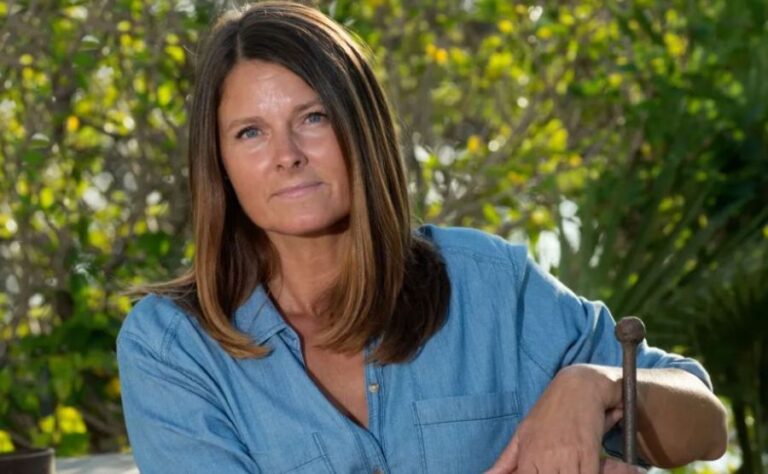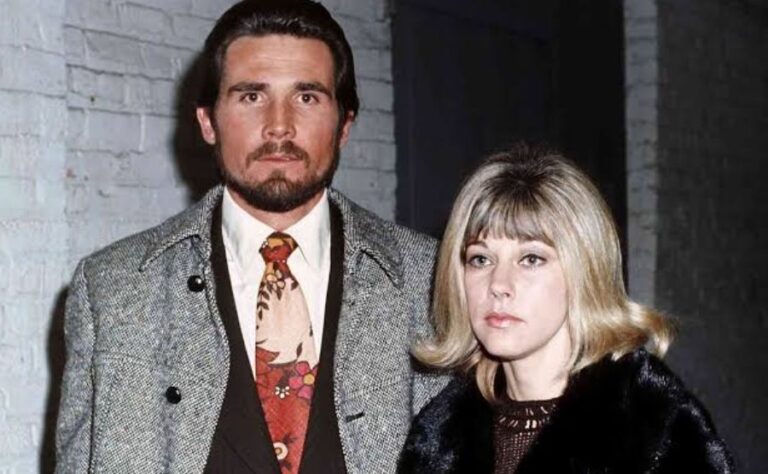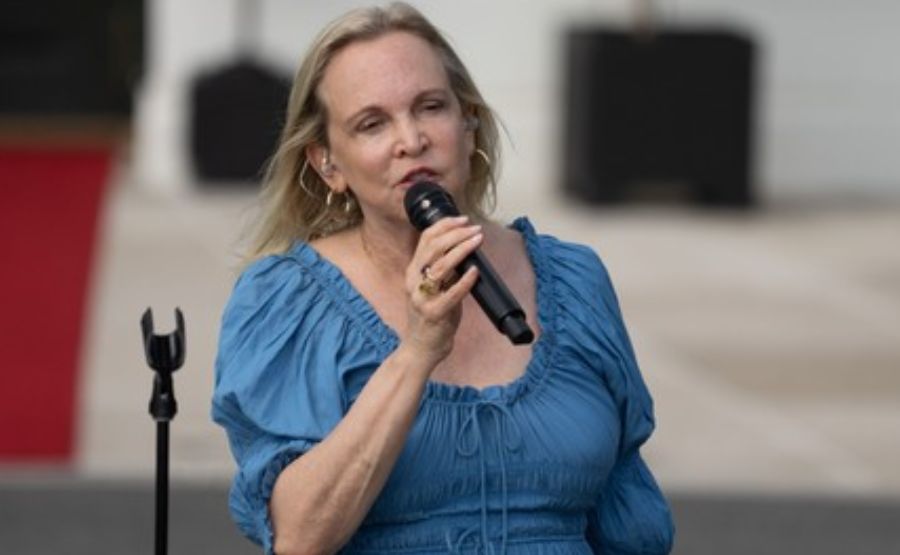
Caroline Smedvig: The Architect of Quiet Influence in American Classical Music
The people who shape cultural institutions most profoundly are almost never the ones who take the stage — and Caroline Smedvig’s twenty-five-year tenure at the Boston Symphony Orchestra stands as one of American classical music’s most consequential examples of that invisible power.
She arrived at the BSO in 1980 as a publicist and built her way, over the next quarter century, to Director of Public Relations and Marketing — a position that placed her at the communication center of one of the world’s great orchestras during an era when classical music was fighting for its relevance against an increasingly fractured entertainment landscape. Along the way, she married a virtuoso trumpeter, fell in love with his colleague’s most famous friend, and ultimately became the stabilizing force behind James Taylor‘s longest and most peaceful chapter of adult life. Her biography is not a celebrity story. It is a professional and personal chronicle that touches nearly every dimension of Boston’s classical music world across four decisive decades.
Quick Bio
| Detail | Information |
| Full Birth Name | Caroline Elisabeth Hessberg |
| Known As | Caroline Smedvig; also “Kim” to close associates and family |
| Date of Birth | May 31, 1953 |
| Birthplace | Albany, New York, USA |
| Nationality | American |
| Father | Albert Hessberg II — prominent Albany attorney; Yale University graduate; senior partner, Hiscock & Barclay; president, Albany County Bar Association |
| Mother | Elisabeth Fitzsimons Goold |
| Siblings | Albert Hessberg III (brother); Philip Hessberg III (brother, later disbarred, June 2019) |
| Education | Albany Academy for Girls (graduated 1971); Smith College, Northampton, Massachusetts (Bachelor’s degree, 1975) |
| Early Career | Reporter, Knickerbocker News (Albany); reporter, Springfield Daily News; stringer, Associated Press; contributor, New York Times |
| BSO Career | Director of Public Relations and Marketing, Boston Symphony Orchestra, 1980–2004 (approx. 25 years) |
| Post-BSO Roles | BSO Trustee (Board of Overseers member from 2007; Trustee from September 2007); Tanglewood Festival Chorus singer |
| Published Work | Co-authored Seiji: An Intimate Portrait of Seiji Ozawa (Houghton Mifflin, 1998) with photographer Lincoln Russell |
| First Marriage | Rolf Thorstein Smedvig (December 1980 – divorce; marriage ended before 2001; Rolf died April 27, 2015, age 62) |
| Second Marriage | James Taylor (February 18, 2001, Lindsey Chapel, Emmanuel Episcopal Church, Boston) |
| Children | Twin sons Rufus Taylor and Henry Taylor (born April 2001, via surrogacy) |
| Stepchildren | Sally Taylor and Ben Taylor (James Taylor’s children with Carly Simon) |
| Current Residence | Lenox, Massachusetts |
| Philanthropic Focus | Arts education, mental health care, emergency medicine (notable: $1 million gift to Massachusetts General Hospital’s Emergency Preparedness Fund) |
Albany Roots: A Family Built on Law and Civic Seriousness
Caroline Elisabeth Hessberg arrived in Albany, New York, in 1953, the only daughter among three children born to Albert Hessberg II and Elisabeth Fitzsimons Goold. The household she grew up in was not one of artistic bohemia. It was one of civic weight.
After graduating from Yale University, her father became a senior partner at Hiscock & Barclay, an Albany legal company. He served as president of the Albany County Bar Association, a position that placed him at the center of the region’s professional legal community. Her brother Philip would eventually follow their father into law — a path that ended abruptly in June 2019 when he was disbarred, a rare and serious professional consequence. That family backstory adds a dimension the celebrity biographies rarely acknowledge: Caroline grew up in a household that understood institutional reputation, that knew what years of professional standing could accomplish, and that knew, too, how suddenly such standing could be lost.
She attended the Albany Academy for Girls, a preparatory school with rigorous academic expectations and a tradition of producing women who entered professional life with both discipline and independence. She graduated in 1971. From there, she enrolled at Smith College in Northampton, Massachusetts, earning her Bachelor’s degree in 1975. Smith has a long history of educating women who pursue public service, journalism, law, and the arts at the highest levels.For the remainder of her career, Caroline’s perspective on work was influenced by its culture of serious intellectual preparation for professional participation.
See also “Chris Ciaffa: The Architecture of Invisible Work“
Journalism: The First Career Nobody Remembers
Before the Boston Symphony Orchestra, before Seiji Ozawa, before James Taylor, there was a younger woman writing newspaper copy under deadline pressure in upstate New York.
Caroline Hessberg began her journalism career as a reporter for the Knickerbocker News, Albany’s afternoon newspaper, working alongside her college studies. After graduating Smith, she moved to the Springfield Daily News in Massachusetts, covering the daily texture of a mid-sized New England city. She also contributed work to the Associated Press wire service and, according to multiple sources, to the New York Times.
This career path, which most biographical sketches treat as a brief prelude, actually reveals something essential about Caroline’s professional instincts. Journalism and public relations operate from different sides of the same table: one pries information out of institutions, the other shapes how institutions present information to the world. A person who begins in reporting and transitions to institutional communications brings a particular advantage — she knows exactly what a journalist is looking for, because she once was one. That knowledge would prove foundational at the BSO.

Twenty-Five Years at the Boston Symphony: The Core of a Career
In 1980, Caroline Hessberg joined the Boston Symphony Orchestra as a publicist and began what would become a quarter century of institutional service. By the time she left in 2004, she held the title of Director of Public Relations and Marketing — the senior communications leadership role at one of the most historically important orchestras in the United States.
The BSO, founded in 1881 by Henry Lee Higginson, entered the 1980s as a major national institution under the long and transformative music directorship of Seiji Ozawa, who had led the orchestra since 1973. Ozawa was, by any measure, one of the most internationally prominent conductors of his era — dynamic, photogenic, globally in demand, and deeply devoted to the orchestra’s public outreach as well as its artistic quality. Caroline’s job was to translate that institutional energy into public narrative.
During her tenure, she managed media relations for a full-scale professional orchestra operating across two primary venues: Symphony Hall in Boston and Tanglewood in Lenox, Massachusetts, the BSO’s celebrated summer home in the Berkshires. Both presented distinct communications challenges. Symphony Hall required year-round press coverage in a competitive Boston cultural landscape. Tanglewood required managing a summer festival that drew hundreds of thousands of visitors and combined classical concerts with the annual Berkshire Music Festival programs.
The scope of her work extended well beyond press releases. She coordinated coverage of major artistic appointments, international tours, recording projects, and the institutional politics that any large cultural organization navigates continuously. Twenty-five years in that role meant Caroline Smedvig knew the BSO’s artistic, administrative, and financial architecture more thoroughly than almost anyone outside its executive leadership.
The Book: Documenting Ozawa for History
In 1998, with Seiji Ozawa approaching the twenty-fifth anniversary of his Boston tenure, Caroline Smedvig did something that distinguished her beyond institutional administration: she produced a book.
Seiji: An Intimate Portrait of Seiji Ozawa, published by Houghton Mifflin in 1998, combined the photography of Lincoln Russell with text assembled and introduced by Smedvig, who contributed a foreword in her role as BSO PR director. The book documented Ozawa’s career and personality across his decades in Boston and around the world, drawing on Russell’s access to the conductor in professional and private moments alike — including photographs at Ozawa’s home in Matsumoto, Japan.
The project was more than institutional commemoration. It was a serious publishing effort from a major American house, capturing one of the most significant conducting careers of the late twentieth century at its peak. Ozawa, who died on February 6, 2024, had led the BSO for twenty-nine years, served as music director of the Vienna State Opera, and founded the Saito Kinen Orchestra in Japan. The book Smedvig helped produce now stands as a primary visual and narrative record of that career’s Boston chapter.
The writing and editorial dimensions of the project drew on the same skills Caroline had first developed in journalism. She approached the conductor not as an insider fan but as a communications professional with a trained reporter’s sense of what an audience needed to understand, and why.
The First Marriage: Music, Proximity, and a Celebrated Name
In December 1980 — the same year she joined the BSO — Caroline Hessberg married Rolf Thorstein Smedvig, and took the name she has carried ever since.
Rolf Smedvig was one of the most gifted classical trumpeters of his generation. Born in Seattle on September 23, 1952, to a Norwegian father and Icelandic mother — both professional musicians — he had made his debut with the Seattle Symphony at age thirteen, joined the BSO as its youngest-ever member at nineteen, performed as a soloist at the 1971 Kennedy Center premiere of Leonard Bernstein’s Mass, and co-founded the Empire Brass quintet in 1972, which became one of the most celebrated brass ensembles in the world. By 1979, Seiji Ozawa had appointed Rolf as principal trumpet of the BSO.
Caroline and Rolf therefore worked inside the same institution — she managed its public face, he played principal chair in its orchestra. Their marriage placed them at the heart of Boston’s classical music world simultaneously, from two distinct professional positions. The union was, in retrospect, a marriage of deeply compatible professional environments. The dissolution of that marriage, according to the Wikipedia article on Rolf Smedvig, came after Caroline developed a romantic relationship with James Taylor. That accounting, however clinical, acknowledges an emotional reality that any biography must treat with care: the end of one partnership often precedes the beginning of another, and the human costs of that sequence rarely travel in a straight line.
Rolf Smedvig remarried, to musician Kelly Holub, and had four children with her. He died on April 27, 2015, at his home in West Stockbridge, Massachusetts, from a sudden heart attack, at the age of sixty-two. His loss removed one of American classical music’s most technically accomplished and personally charismatic performers. He was, by every account of those who knew his playing, someone whose instrument sang rather than blared, whose sound musicians described as lyrical and other-worldly.

Meeting James Taylor: Symphony Hall, 1993
The encounter that redirected Caroline Smedvig’s personal life happened in 1993 at Symphony Hall in Boston, where she was managing the BSO’s publicity for a Boston Pops performance conducted by John Williams. James Taylor was performing with the orchestra that evening. He and Caroline met through the professional intersection of her work and his performance.
They did not begin a romantic relationship immediately. Two years passed before they began dating, in 1995. On July 3, 1995 — the eve of Independence Day — they went on their first date. That specific date later became the emotional anchor for Taylor’s song “On the 4th of July,” one of two tracks on his 2002 album October Road directly dedicated to Caroline. The other, “Caroline I See You,” is an unambiguous love song, its piano introduction played by Clifford Carter, its lyric moving from the particular to the devotional — “Caroline, I love you / though I’m late to say so.”
October Road, released in August 2002 and Taylor’s first album of original material since Hourglass in 1997, debuted at number four on the Billboard 200, sold more than one million copies in the United States, and earned a Grammy nomination for Best Male Pop Vocal Performance. That the album’s emotional center — its recurring theme of domestic peace and late-arriving love — was inseparable from Caroline’s presence in Taylor’s life gives her a specific and unambiguous place in the discography of one of America’s most beloved singer-songwriters. She did not write a word of it. She simply, by being who she was, made it possible.
The Wedding and the Year That Changed Everything
On February 18, 2001, Caroline Smedvig and James Taylor married at Lindsey Chapel within Emmanuel Episcopal Church in Boston. Approximately fifty family members and close friends attended. The ceremony was, by all accounts, intimate and deliberately scaled down — a private event for two people who had spent six years quietly building a life together before deciding to formalize it in front of the people who actually knew them.
The year 2001 delivered both the marriage and one of the most difficult pieces of news any couple hoping for children can receive. Caroline, at forty-seven, learned that she could not carry children. Taylor, who already had two adult children — Sally and Ben — from his first marriage to Carly Simon, had initially been reluctant to expand his family again. He changed his mind as the relationship deepened. The couple turned to in vitro fertilization and surrogacy, working with a family friend of Taylor’s as the surrogate mother.
Twin sons were born in April 2001, a few weeks after they were married. Twin sons were born in April 2001, a few weeks after they were married. They named them Rufus and Henry. The rapidity of the sequence — marriage in February, twins in April — speaks to the careful planning that preceded the public ceremony. Caroline Smedvig became a mother at forty-seven, through surrogacy, after a year of preparation that included the marriage itself. The boys grew up in Lenox, Massachusetts, in the Berkshire hills that Caroline knew well from her Tanglewood years. Henry Taylor has since appeared on stage as a backing vocalist with his father.
Personal Life: The Textures of Privacy
The most honest observation about Caroline Smedvig’s personal life is also the most obvious one: she guards it with consistent, deliberate care. She maintains no verified public social media presence. She gives no interviews. She appears in the record when she chooses to appear — at a Red Sox game with James and their sons in October 2007, at a Rainforest Fund anniversary event in New York in April 2014, performing briefly on The Tonight Show with Jimmy Fallon in May 2020 during the pandemic — and otherwise remains visibly absent from the machinery of celebrity culture.
While James Taylor, by both temperament and profession, occupies the most visible space in their partnership, those who observe them consistently describe a relationship defined by genuine stability. Taylor himself has spoken about his marriages to Carly Simon (1972–1983) and Kathryn Walker (1985–1996) as periods of his life shaped by addiction, instability, and the particular chaos that follows a man still working out what he needs. Walker, Taylor has said, helped him through recovery from heroin addiction. Caroline, by the time she entered his life in the mid-1990s, encountered a man who had survived his worst chapters and arrived somewhere resembling peace.
The complexity that Caroline has never publicly addressed — the end of her marriage to Rolf Smedvig through an affair with Taylor — belongs to the private record of three people, not a public narrative. What can be said is that both people who were hurt by that sequence — Rolf Smedvig and Kathryn Walker — built new lives afterward. The moral dimensions of how relationships end, and begin, resist the clean judgments that celebrity biographies often demand. Caroline has neither invited comment nor offered defense. That, in itself, is a form of integrity.
After the BSO: Trusteeship and Philanthropy
In 2004, Caroline stepped down from her day-to-day role at the Boston Symphony Orchestra after nearly twenty-five years. The departure marked not a withdrawal from the institution but a transformation of her relationship to it. In 2007, she joined the BSO’s Board of Overseers. Later that September, she began serving as a Trustee — a governance role that places her among those responsible for the institution’s long-term stewardship rather than its daily communications.
The shift from staff to trustee is significant. It reflects an evolution from professional servant of an institution to strategic guardian of it. Trustees hold fiduciary responsibility, shape leadership decisions, and bear responsibility for the BSO’s cultural and financial future in ways that no publicist’s role encompasses. Caroline’s transition represents, in institutional terms, a deepening rather than a departure.
Her philanthropic work with Taylor has extended across several causes, notably arts education, environmental conservation, and health care. The couple’s $1 million contribution to Massachusetts General Hospital’s Emergency Preparedness Fund stands as one of the most concrete expressions of that giving — a commitment to the infrastructure of crisis response that connects both Caroline’s civic sensibility and Taylor’s long personal engagement with the healthcare community, rooted in his own history with addiction treatment and mental health care.
She also sang in the Tanglewood Festival Chorus, the large volunteer choral ensemble that performs with the BSO at its summer home. That participation — not as an administrator but as a singer, inside the ensemble, contributing to performance rather than managing it — reflects someone whose relationship with music was never merely professional. She did not just manage the orchestra’s public image. She stood in a chorus and sang.
The Muse in the Music
For anyone who wishes to understand Caroline Smedvig’s place in American cultural life, the 2002 album October Road provides a kind of unintended documentary record. James Taylor wrote “On the 4th of July” from the specific experience of their first date on July 3, 1995. He wrote “Caroline I See You” as a direct love song addressed to her. The album as a whole — reviewed at the time as Taylor’s most emotionally coherent and domestically grounded collection — was inseparable from the stability she had brought into his life.
A muse is, in the most precise sense, someone whose presence makes creative work possible that would not otherwise exist. Taylor had written music through his marriages to Simon and Walker, through addiction and recovery, through periods of prolific output and long silence. Between Hourglass (1997) and October Road (2002), he produced nothing in the studio. When he returned, he returned, having married Caroline. The album opens with a song about love and changing seasons, moves through patriotism and devotion, and closes — improbably — with a Christmas standard. It is an album by a man who had arrived somewhere he had not expected to reach, and who wanted to document the arrival.
That is not a minor role. It is the kind of invisible contribution that shapes culture without ever appearing on a credits list.
Legacy and Influence
Caroline Smedvig’s professional legacy operates on multiple levels, all of them more durable than celebrity biography typically allows.
At the BSO, she spent twenty-five years managing the public identity of one of America’s premier cultural institutions through a period of significant transformation — the conclusion of Seiji Ozawa’s historic tenure, the opening of new audience development programs, the increasing competition for arts funding and public attention in the digital age. The communications frameworks she built shaped how the orchestra was perceived not just in Boston but nationally. Her subsequent trusteeship extends that influence into governance, where decisions about the BSO’s leadership, programming, and direction carry consequences that outlast any individual tenure.
Seiji: An Intimate Portrait of Seiji Ozawa survives as a permanent contribution to the documentary record of classical music. With Ozawa’s death in February 2024, the book Smedvig helped produce acquired the additional weight of historical finality — it now documents a career that is complete.
In the cultural record of James Taylor’s music, her presence is embedded in songs that have already outlasted the biographical circumstances that produced them. “Caroline I See You” will be sung and listened to long after the story of how it came to be written has faded from public memory. That is what it means for a private person to leave a public mark: the artifact endures, even when the person behind it remains deliberately unseen.
Final Words
Caroline Smedvig resists the categories that popular biography imposes. She is not simply a celebrity spouse, though that framing has dominated nearly every article written about her. She is not simply a PR executive, though that career deserves more serious examination than it typically receives. She is not simply a muse, though the music James Taylor wrote in her presence constitutes some of the most emotionally direct work of his later career.
She is, more accurately, a person who spent fifty years in serious relationship with music — first as a journalist covering culture, then as a communications professional at one of America’s greatest orchestras, then as a chorus singer inside that orchestra’s summer ensemble, then as a published co-author of a conductor’s portrait, then as a trustee responsible for that orchestra’s governance, and throughout, as the partner of a singer-songwriter whose best late work she helped make emotionally possible.
The first marriage, the affair that ended it, the legal infertility that required surrogacy for motherhood — these are the personal complications that her biography cannot honestly omit. They are not disqualifying details. They are the human materials from which she built a subsequent life of remarkable coherence and dignity.
Her deliberate privacy is not evasion. It is discipline. She has chosen, in a culture that rewards self-promotion above almost everything else, to be known primarily through her work rather than her story. That choice, consistently maintained across decades, is itself a form of character. In a field where institutional reputation is the currency, she has spent her own carefully and well.
FAQs
1. Who is Caroline Smedvig?
Caroline Smedvig (born Caroline Elisabeth Hessberg, May 31, 1953) is an American journalist, arts administrator, published author, chorus singer, and cultural philanthropist. She served as Director of Public Relations and Marketing at the Boston Symphony Orchestra for approximately twenty-five years (1980–2004), co-authored the 1998 book Seiji: An Intimate Portrait of Seiji Ozawa, sang in the Tanglewood Festival Chorus, and has served as a BSO Trustee since 2007. She is also the wife of singer-songwriter James Taylor.
2. Where was Caroline Smedvig born and raised?
She was born on May 31, 1953, in Albany, New York, and raised there by her father Albert Hessberg II, a prominent attorney and Yale graduate, and her mother Elisabeth Fitzsimons Goold.
3. What schools did Caroline Smedvig attend?
She attended the Albany Academy for Girls, graduating in 1971, and then Smith College in Northampton, Massachusetts, where she earned a Bachelor’s degree in 1975.
4. What was Caroline Smedvig’s career before the Boston Symphony Orchestra?
Before joining the BSO, she worked as a newspaper reporter at the Knickerbocker News in Albany, the Springfield Daily News in Massachusetts, and contributed work to the Associated Press and the New York Times.
5. How long did Caroline Smedvig work at the Boston Symphony Orchestra?
She joined the BSO in 1980 as a publicist and served as Director of Public Relations and Marketing until 2004 — a tenure of approximately twenty-five years. She subsequently joined the BSO’s Board of Overseers in 2007 and became a Trustee that same year.
6. Who was Caroline Smedvig’s first husband?
Her first husband was Rolf Thorstein Smedvig (September 23, 1952 – April 27, 2015), a celebrated classical trumpeter, founding member of the Empire Brass quintet, and former principal trumpet of the Boston Symphony Orchestra. They married in December 1980 in Albany. The marriage ended in divorce. Rolf subsequently married musician Kelly Holub and died of a heart attack at age sixty-two.
7. How did Caroline Smedvig meet James Taylor?
They first met in 1993 at Symphony Hall in Boston, when Taylor performed with the Boston Pops Orchestra under John Williams while Caroline was working in her BSO communications role. Their romantic relationship did not begin until 1995. Their first date took place on July 3, 1995.
8. When did Caroline Smedvig marry James Taylor?
They married on February 18, 2001, at Lindsey Chapel within Emmanuel Episcopal Church in Boston, in a ceremony attended by approximately fifty guests.
9. Did Caroline Smedvig have children?
She and James Taylor have twin sons, Rufus Taylor and Henry Taylor, born in April 2001 through in vitro fertilization and surrogacy. The surrogate was reported to be a family friend of Taylor’s. Caroline was not able to carry children naturally. She is also stepmother to Taylor’s children from his first marriage, Sally Taylor and Ben Taylor.
10. What book did Caroline Smedvig co-author?
She co-authored Seiji: An Intimate Portrait of Seiji Ozawa, published by Houghton Mifflin in 1998, in collaboration with photographer Lincoln Russell. The book documented the career of BSO music director Seiji Ozawa through photography and text. Ozawa, who died in February 2024, led the BSO for twenty-nine years.
11. What connection does Caroline Smedvig have to James Taylor’s music?
Taylor’s 2002 album October Road included two songs directly connected to their relationship: “On the 4th of July,” which chronicles their first date on July 3, 1995, and “Caroline I See You,” an explicit love song addressed to her. The album debuted at number four on the Billboard 200 and sold over one million copies in the United States.
12. Where does Caroline Smedvig live?
She lives with James Taylor in Lenox, Massachusetts, in the Berkshire region — the same area where she spent years working with the BSO at its Tanglewood summer home.
13. What is Caroline Smedvig’s connection to the Tanglewood Festival Chorus?
She sang as a member of the Tanglewood Festival Chorus, the large amateur and semi-professional choral ensemble that performs with the BSO at Tanglewood. This represents her participation as a performer in the musical community she administered professionally.
14. What philanthropic causes does Caroline Smedvig support?
She and James Taylor have donated to arts education, environmental conservation, and healthcare causes. A notable philanthropic contribution was a $1 million gift to Massachusetts General Hospital’s Emergency Preparedness Fund. She also maintains her connection to the BSO as a Trustee.
15. Why is Caroline Smedvig sometimes called “Kim”?
Close associates and family members call Caroline by the nickname “Kim.” This informal name appears in some press coverage and event descriptions. She has continued using the surname Smedvig professionally despite her marriage to James Taylor, which is why she is not widely known publicly as “Kim Taylor.”
Connecting curious minds with stories that educate, inspire, and inform with The Editorial Times.