Chandi Heffner: The Seeker, the Adopted Daughter, and the Philanthropist Who Outlasted the Scandal
Decades after the cameras moved on, Chandi Heffner is still quietly doing the work — running free medical clinics in rural India, sheltering rescued horses on a Hawaiian ranch, and living a life that stubbornly refuses to be defined by the most sensational chapter in it.
She is not famous by choice. She became known because one of the richest women in American history decided, at age seventy-five, to legally adopt her as a daughter. What followed — the warmth, the fallout, the courtrooms, the settlement, and the silence after — is one of the stranger true stories in modern American life. Understanding Chandi Heffner requires looking past the inheritance drama and asking a more precise question: who was she before Doris Duke, and who did she become after?
Quick Bio
| Detail | Information |
| Full Birth Name | Charlene Gail Heffner |
| Known As | Chandi Heffner |
| Date of Birth | August 26, 1953 |
| Place of Birth | Baltimore, Maryland, USA |
| Nationality | American |
| Religion / Spiritual Path | Former Hare Krishna devotee; Eastern spiritual practice |
| Parents | William J. Heffner (father); Barbara “Bunny” Heffner (mother) |
| Siblings | Claudia Heffner Peltz (sister); Holly Heffner (sister); Arden Cromwell (sister) |
| Notable Family Connections | Sister Claudia married billionaire Nelson Peltz; niece Nicola Peltz Beckham married Brooklyn Beckham (2022) |
| Legal Adoption | Adopted by Doris Duke in 1988; adoption revoked in 1991 |
| Estate Settlement | Approximately $65 million (1995–1996) |
| Occupation | Philanthropist; President and Founder of CDHIF USA and CDHIFI India |
| Foundation Founded | 1998 — CDH International Foundation (CDHIF USA), Waimea, Hawaii |
| Foundation Reach | 80,000+ human patients and 50,000+ animal patients annually in India |
| Estimated Net Worth | Approximately $20 million (as of recent estimates) |
| Current Residence | Waimea, Hawaii (and India, periodically) |
| Children | None |
| Marital Status | Divorced |
Baltimore Beginnings: A Life With No Forecast
Nothing about Charlene Gail Heffner’s early years suggested what was coming. She was born on August 26, 1953, in Baltimore, Maryland, into a working Catholic family with solid but unremarkable prospects. Her father, William J. Heffner, was a Baltimore lawyer and veteran who had served during the Korean War. Her mother, Barbara, known to everyone as Bunny, worked as a nurse.
The Heffner household was defined by discipline and warmth in equal measure. Chandi grew up alongside three sisters — Claudia, Holly, and Arden — in an environment where faith and family formed the load-bearing walls of daily life. Her Catholic schooling reinforced a moral framework she would carry forward even as her spiritual path changed dramatically.
From an early age, she gravitated toward dance. Belly dancing, in particular, captured something in her — the intersection of physical discipline, cultural curiosity, and self-expression. It was not a hobby she would ever fully set aside. That passion for movement and for non-Western traditions planted the seed for everything that followed.
The Spiritual Turn: How Charlene Became Chandi
In the early 1970s, while still a young woman, Charlene Heffner moved to Hawaii and entered one of the defining experiences of her life. She found her way to the International Society for Krishna Consciousness — the Hare Krishna movement — at a moment when the organization had a substantial following across North America. Founded in New York in 1966 by A.C. Bhaktivedanta Swami Prabhupada, the movement emphasized devotional service, vegetarianism, communal living, and the pursuit of spiritual liberation over material accumulation.
She did not dabble. She committed. The community’s principles of service, compassion, and renunciation of material wealth aligned with a restlessness she had carried since childhood. During this immersion, she took the name “Chandi” — a Sanskrit word drawn from a form of the Hindu goddess Durga, representing divine feminine energy, strength, and power. The name was not a costume. It reflected a genuine internal shift she would live by for the rest of her life.
What is worth noting — and what media coverage rarely acknowledged — is that Chandi’s spiritual path preceded her encounter with Doris Duke by more than a decade. The values that would later define her philanthropy were not acquired in a billionaire’s estate. They were formed in a Hawaiian religious community, in the years before anyone outside Baltimore had ever heard of her.
The Meeting That Changed Everything
The precise circumstances that brought Chandi Heffner into Doris Duke’s orbit are both mundane and improbable. The two women shared a belly dancing instructor — a man named Bobby Farrah — and met through him in the early 1980s. When Chandi suffered a knee injury, Duke invited her to recover at Shangri-La, her extraordinary Hawaiian estate on the coast of Oahu.
What began as a practical arrangement became something neither woman had predicted. Duke, then in her early seventies and deeply private, found in Chandi a quality she had spent decades searching for: authentic companionship without an agenda. Chandi, for her part, encountered a woman of formidable intellect and deep loneliness who offered something rarer than her money — a kind of maternal recognition.
Duke had lost her only biological child, Arden, in July 1940. The infant was born prematurely in Honolulu and died the following day. That grief had settled into Duke like sediment, visible only if you knew what you were looking at. When she encountered Chandi, she came to believe — and stated openly — that Chandi carried the spirit of that lost daughter. This was the metaphysical foundation of everything that followed.
The Adoption: A Decision That Stunned Everyone
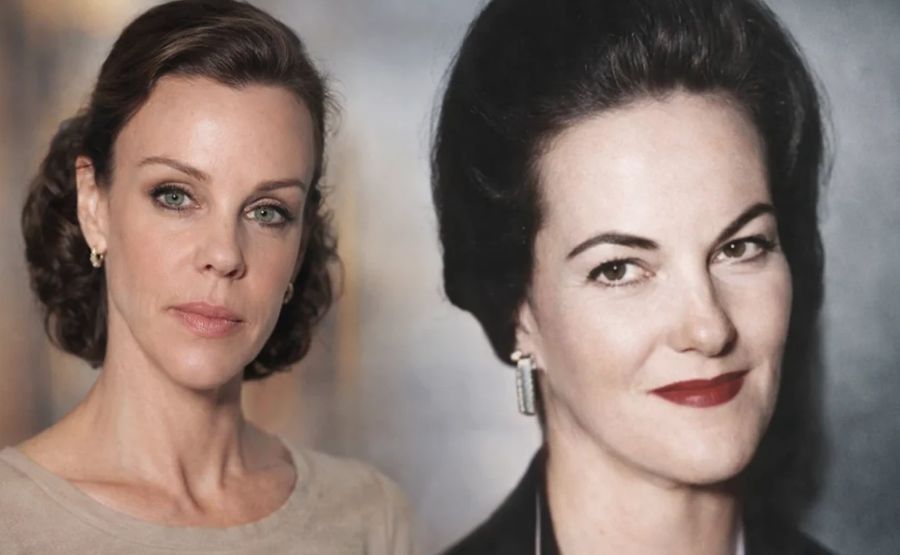
On a day in 1988, Doris Duke — then seventy-five years old — legally adopted Charlene “Chandi” Heffner as her adult daughter. Heffner was approximately thirty-five. The adoption was formalized in Hawaii, where adult adoptions are recognized under state law.
The announcement landed like a brick through a window in Duke’s inner circle. Her lawyers, advisors, and longtime associates had not anticipated it. Several opposed it. An adult adoption between two women of such different social and financial standing carried enormous legal implications — not merely symbolic ones.
Duke was emphatic about her reasons. She introduced Heffner to associates as her daughter. She bought her a million-dollar ranch in Hawaii. She included her in her estate plans and in the philanthropic work she cared most about. By all contemporary accounts, the women functioned as a mother-daughter pair — sharing Duke’s estates, traveling together, and engaging in the kind of private domestic intimacy that typically escapes public record.
While the public saw an eccentric billionaire making an impulsive decision, those closest to both women described something more textured: a genuine emotional bond formed over years, between two people who were both, in different ways, searching for family.
Life Inside the Fortune
For roughly two years after the adoption, Chandi Heffner lived inside one of the most rarefied environments in the United States. She traveled with Duke between her estates — Shangri-La in Honolulu, Falcon Lair in Beverly Hills, and other properties. She participated in Duke’s philanthropic interests and was present in the social world that orbited the tobacco heiress.
Several members of Duke’s staff resented Heffner almost immediately. A cook named Colin Shanley, who later sued the estate, claimed she changed after the adoption and became imperious toward household staff. Others disputed this characterization, describing her as a natural extension of Duke’s own eccentric household culture. The record is inconsistent, and the motivations of those making accusations — many of whom had financial grievances against the estate — deserve scrutiny.
What is not disputed is that Heffner’s presence reshaped the power dynamics in the household. Two men in particular entered Duke’s life through Heffner: Bernard Lafferty, an Irish-born butler whom Heffner had introduced to Duke, and James Burns, who served as Duke’s bodyguard and who would later become Heffner’s romantic partner. That second relationship would prove to be the fault line along which everything cracked.
The Unraveling: Suspicion, Illness, and Betrayal
In the winter of 1990, Doris Duke fell mysteriously ill at Shangri-La. She later suffered a fall that left her unconscious. The causes of her illness were never definitively established. In the fog of those events, Lafferty seized an opportunity. He promoted the idea — to Duke and to others — that Heffner and Burns were conspiring against Duke, possibly poisoning her. Duke reportedly had her food and sherry tested for toxins. None were found.
Whether Lafferty’s accusations were sincere or calculated, they worked. Duke’s attitude toward Heffner shifted from love to suspicion, and then from suspicion to rejection. By February 1991, Duke had legally revoked the adoption. She severed contact with Heffner and removed her from any position in her estate plans.
Liz McConville, who served as Duke’s secretary for eighteen years, later said of the rupture: Duke felt that Heffner’s loyalty had been divided when Heffner entered a relationship with Burns. “She had bought and paid for Chandi 100 percent,” McConville observed — a statement that captures both Duke’s possessiveness and the emotional complexity at the heart of the relationship.
The full truth of what passed between the two women in those final months remains sealed. A confidentiality clause in the eventual legal settlement ensured that the interior of the relationship would never be fully exposed in court.
The Final Will and Duke’s Last Word
On April 5, 1993, Doris Duke signed what would become her last will and testament at her Beverly Hills home. She was frail and increasingly dependent on medication, including antidepressants, painkillers, and sleeping pills. At least three physicians later stated in affidavits that the combination of drugs she was taking could have impaired her judgment.
The will was notable not only for what it contained but for what it said about Heffner. Duke wrote in the document that she was confident her father “would not want Chandi Heffner to have any interest” in the trust funds he had established. The language was personal, almost wounded. It was not the language of a legal document; it was the language of a woman who felt betrayed.
Control of the estate fell to Lafferty — a barely literate man who Duke named as co-executor despite having no legal or financial credentials. By the time Duke died on October 28, 1993, at age eighty, Lafferty’s influence over her final years was the subject of criminal allegations. A nurse named Tammy Payette claimed Lafferty had hastened Duke’s death with escalating morphine doses. The Los Angeles District Attorney investigated. No criminal charges were ever filed.
Duke’s $1.2 billion estate was the wreckage Chandi Heffner was left to navigate.
The Legal Battle: Three Years in Court
Chandi Heffner filed suit against the Doris Duke estate following Duke’s death. Her legal arguments ran along two parallel tracks. The first challenged the validity of Duke’s final will, arguing that Duke lacked sufficient testamentary capacity when she signed it — that she did not adequately understand the extent of her assets or the consequence of her decisions. The second pursued a breach-of-contract claim, asserting that Duke had made explicit oral commitments to support Heffner financially for life.
The litigation was expensive, protracted, and publicly embarrassing for nearly everyone involved. It generated headlines for two years and forced the exposure of intimate details about Duke’s physical and mental decline in her final months. Lafferty himself faced separate litigation over misuse of estate funds; he eventually agreed to resign as executor in exchange for a cash settlement.
In late December 1995, Heffner’s attorney, David Keyko, negotiated a resolution. The settlement, finalized in New York, awarded Heffner approximately $65 million — equivalent to roughly $127 million in 2024 dollars. As a fraction of Duke’s $1.2 billion estate, it was modest. As a reflection of the fundamental uncertainty about whether Duke had been competent when she signed her final will, it was significant.
Heffner dropped all remaining claims and agreed to confidentiality. Probate concluded in 1996 with the formal establishment of the Doris Duke Charitable Foundation.
Personal Life: Romance, Rumor, and Privacy
Chandi Heffner’s personal relationships attracted as much speculation as her legal battles, and the public record on this subject is thinner than the tabloid coverage suggested.
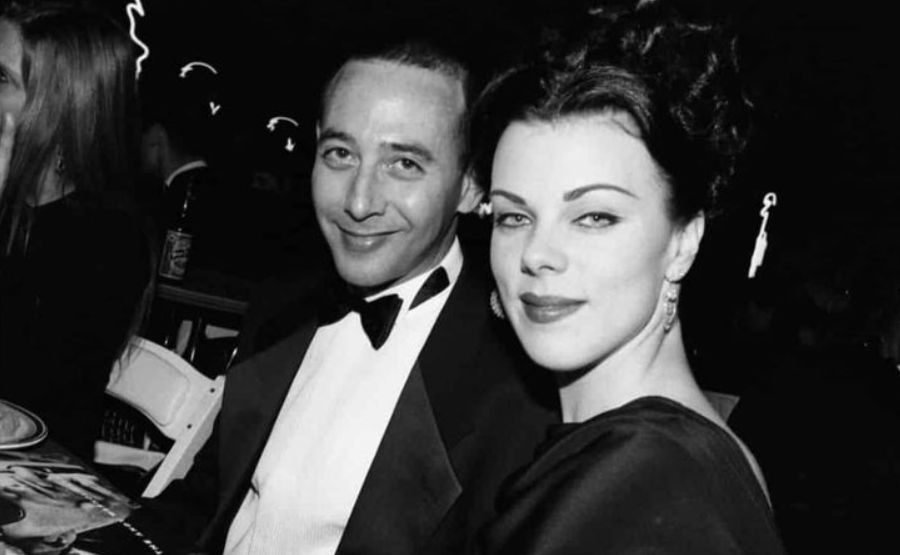
In 1989, she participated in a mock wedding with actor Paul Reubens, best known for his character Pee-wee Herman. The ceremony, held at a dinner party and was presided over by former Philippine First Lady Imelda Marcos, was never legally binding. Contemporary accounts describe it as a playful theatrical event rather than a genuine commitment. Regardless, the image — Chandi Heffner in a mock bridal ceremony at an eccentric dinner party attended by Imelda Marcos — gave the tabloid press material for years.
Her relationship with James Burns, Duke’s bodyguard, was more substantive. The two were involved romantically for a period. That relationship ultimately ended in a palimony lawsuit, adding one more legal dispute to a decade already crowded with them. The details of that settlement, if any, were not publicly disclosed.
She has no children. She is divorced. She lives between Hawaii and India. These are the verified biographical facts. Everything else, she has kept to herself — a choice that is itself a statement.
The Heffner Family Constellation
The Heffner family story carries its own fascination, independent of Chandi’s. Her sister Claudia Heffner followed a very different path: she became a professional fashion model and married billionaire activist investor Nelson Peltz, one of the most prominent figures in American finance and corporate governance. That union connected the Heffner family to extraordinary wealth through entirely conventional channels — money, marriage, modeling.
Claudia and Nelson’s daughter, Nicola Peltz Beckham, married Brooklyn Beckham in April 2022. Brooklyn is the son of former England football captain David Beckham and fashion designer Victoria Beckham. This genealogical thread — from a modest Baltimore Catholic household to two of the world’s most photographed families — is a remarkable accident of biography.
Chandi, meanwhile, married into and divorced out of the spotlight through entirely different doors. The two sisters represent divergent answers to the same question of how to move through the world when the world starts paying unusual attention to you.
After the Settlement: Building a Life on Her Own Terms
Three years after Duke’s death and immediately after the legal settlement, Chandi Heffner did something that gets less attention than it deserves: she built a foundation from scratch and went to work.
In 1998, she established CDHIF USA — the CDH International Foundation — as a 501(c)(3) nonprofit headquartered in Waimea, on Hawaii’s Big Island. The organization serves as the financial engine for CDHIFI, its Indian counterpart, which deploys funding in rural communities across India where access to basic medical care and veterinary services is scarce or nonexistent.
The operational scale of the foundation is, by any measure, substantial. Each year, CDHIFI’s daily village programs dispatch doctors, pharmacists, and support personnel directly into interior villages. Physicians conduct examinations, perform rapid diagnostic tests, write prescriptions filled on-site, and treat wounds. Veterinarians treat livestock, administer vaccines, and address diseases like theileriosis, a tick-borne parasite that devastates cattle populations and, by extension, the livelihoods of farming families. The foundation also distributes food, clothing, blankets, wheelchairs, and temporary shelter.
Current estimates put the foundation’s annual reach at more than 80,000 human patients and 50,000 animal patients. Officers and trustees receive no compensation. Heffner herself serves as president of both the American and Indian entities.
On her ranch in Waimea, she shelters rescued horses, donkeys, birds, and pigs. Her involvement in equestrian sport led her to co-own a horse named Authentic, whose rider won gold in show jumping for Team USA at the 2004 Athens Olympics. That is the kind of biographical footnote that surfaces when you spend enough time looking at a life that most coverage reduces to one story.
Legacy and Influence: What Endures
Chandi Heffner does not have a legacy in the conventional sense of monuments and institutional recognition. She has something rarer: evidence of sustained, unglamorous commitment to work that nobody asked her to do.
For decades, other people’s narratives shaped her public image almost entirely. Duke’s will casts her as an intruder. Lafferty’s maneuvering cast her as a threat. The tabloid press cast her as a gold digger. None of these characterizations survive prolonged scrutiny. The woman who emerges from the full biographical record is someone who held consistent values — service, spiritual life, compassion for animals and people — across radically different circumstances.
Her sister Claudia’s connection to the Peltz and Beckham families has, somewhat accidentally, revived periodic public interest in Chandi’s story. Younger readers discovering the Doris Duke saga through true-crime podcasts or documentary series often end up asking the same question: what happened to Chandi? The answer — she’s running a medical foundation in rural India — consistently surprises people who were expecting something more dramatic.
The Doris Duke Charitable Foundation, which controls the bulk of the original $1.2 billion estate, continues its philanthropic work in the arts, environment, child welfare, and medical research. In some ways, the two women’s legacies now run on parallel tracks: one billion-dollar institutional legacy, one small and personal foundation doing work in places most people have never heard of. History will decide which one left a deeper mark on actual lives.
Final Words
The biography of Chandi Heffner ultimately serves as a study of what happens to people once the limelight fades. The headline version of her story is real: the adult adoption, the reincarnation belief, the suspicious illness, the revoked inheritance, the $65 million settlement. These events happened. They were strange and consequential and worthy of examination.
But the longer story — the one that began in Baltimore in 1953 and continues today in a Hawaii ranch and a rural Indian village — is more interesting. It is the story of a woman who found her values in a religious movement before she had anything to protect, who formed a genuine bond with an eccentric billionaire that the courts could not ultimately explain, who endured a public legal battle and emerged on the other side with something to do.
She is neither the villain of the Duke estate drama nor a saint. She is a person who was drawn into extraordinary events, bore the costs of them without surrendering her identity, and built a quieter second act that looks, on balance, more meaningful than the first.
That is not a simple story. But simple stories are rarely accurate.
FAQs
1. Who is Chandi Heffner?
Chandi Heffner, born Charlene Gail Heffner on August 26, 1953, in Baltimore, Maryland, is an American philanthropist best known for being the adult adoptee of tobacco heiress Doris Duke. She is also the founder and president of CDHIF USA, a nonprofit organization supporting medical and humanitarian work in rural India.
2. What made Doris Duke decide to adopt Chandi Heffner?
Duke stated that she believed Heffner was the reincarnation of her only biological daughter, Arden, who was born prematurely in Honolulu in July 1940 and died the following day. Beyond the spiritual dimension, Duke also cited the deep emotional companionship and genuine maternal bond the two had developed over several years.
3. When did the adoption take place, and was it legally valid?
In Hawaii, the adoption was officially recognized in 1988. Adult adoptions are legally recognized in Hawaii. Duke subsequently revoked the adoption in 1991, citing a breakdown in the relationship.
4. What caused the fallout between Doris Duke and Chandi Heffner?
Multiple factors converged. Heffner’s romantic relationship with James Burns, Duke’s bodyguard, generated deep tension. The butler Bernard Lafferty promoted allegations — never proven — that Heffner and Burns were conspiring against Duke. Duke fell mysteriously ill in Hawaii in 1990, and Lafferty used those events to consolidate his own influence while marginalizing Heffner.
5. What did Duke’s final say about Heffner?
Duke’s will, signed April 5, 1993, explicitly excluded Heffner from any benefit from the estate or the trust funds established by Duke’s father. It stated that Duke was “confident” her father “would not want Chandi Heffner to have any interest” in those trusts. Duke also lamented the adoption in the document.
6. Did Chandi Heffner receive any money from Doris Duke’s estate?
Yes. After filing suit against the estate, Heffner settled in late 1995 for approximately $65 million — equivalent to roughly $127 million in 2024 dollars. This represented a fraction of Duke’s $1.2 billion estate, the majority of which funded the Doris Duke Charitable Foundation.
7. What was Chandi Heffner’s connection to the Hare Krishna movement?
In the early 1970s, Heffner joined the International Society for Krishna Consciousness (ISKCON) while living in Hawaii. She embraced the movement’s principles of devotion, vegetarianism, and communal service. During this period, she adopted the name “Chandi,” derived from Sanskrit and associated with a form of the Hindu goddess Durga representing feminine divine energy.
8. What does Chandi Heffner do today?
She serves as president of CDHIF USA (founded 1998, based in Waimea, Hawaii) and its Indian counterpart, CDHIFI India. Together, the organizations provide free medical and veterinary care to more than 80,000 human patients and 50,000 animal patients annually in rural India. She also maintains an animal rescue ranch in Hawaii and divides her time between Hawaii and India.
9. What was the name of the horse she co-owned, and what did it achieve?
Heffner co-owned a horse named Authentic. The horse’s rider won a gold medal in show jumping for Team USA at the 2004 Summer Olympics in Athens, Greece.
10. Did Chandi Heffner ever marry?
She is divorced and has no children. In 1989, she participated in a mock wedding ceremony with actor Paul Reubens (Pee-wee Herman), reportedly presided over by Imelda Marcos, but the ceremony was never legally binding. She later had a long-term relationship with James Burns, Duke’s former bodyguard, which ended in a palimony lawsuit.
11. How is Chandi Heffner connected to the Beckham family?
Her sister Claudia Heffner married billionaire investor Nelson Peltz. Their daughter Nicola Peltz married Brooklyn Beckham in April 2022. Brooklyn is the son of David and Victoria Beckham. This makes Chandi Nicola Peltz Beckham’s aunt.
12. Who was Bernard Lafferty, and what was his role in the Duke-Heffner story?
Bernard Lafferty was an Irish-born butler whom Heffner had introduced into the Duke household. He later became Duke’s sole confidant during her final years, was named co-executor of her estate in her final will, and became a central figure in the estate litigation. Allegations that he had isolated Duke, improperly influenced her decisions, and possibly hastened her death were investigated but never resulted in criminal charges. He resigned as executor in exchange for a cash settlement.
13. What was the legal basis for Heffner’s claim against the estate?
Heffner’s attorneys pursued two arguments. The first challenged Duke’s testamentary capacity at the time she signed her final will, arguing that heavy medication impaired her understanding. The second alleged a breach of oral contract, claiming Duke had made explicit promises to support Heffner financially for life. The case settled out of court before a verdict was reached.
14. What is the CDHIFI Village Program?
The Daily Village Program for Humans dispatches doctors, pharmacists, and support personnel into remote Indian villages. They conduct examinations, run rapid diagnostic tests, write and fill prescriptions on-site, and treat wounds. The parallel Daily Village Program for Animals sends veterinarians to examine and vaccinate livestock and treat diseases including theileriosis. No charges are imposed on any patient or animal owner.
15. How much is Chandi Heffner worth today?
As of recent estimates, her net worth is approximately $20 million — substantially derived from the 1995–1996 Duke estate settlement. She lives modestly and has directed significant resources toward her philanthropic work rather than personal accumulation.
Connecting curious minds with stories that educate, inspire, and inform with The Editorial Times.