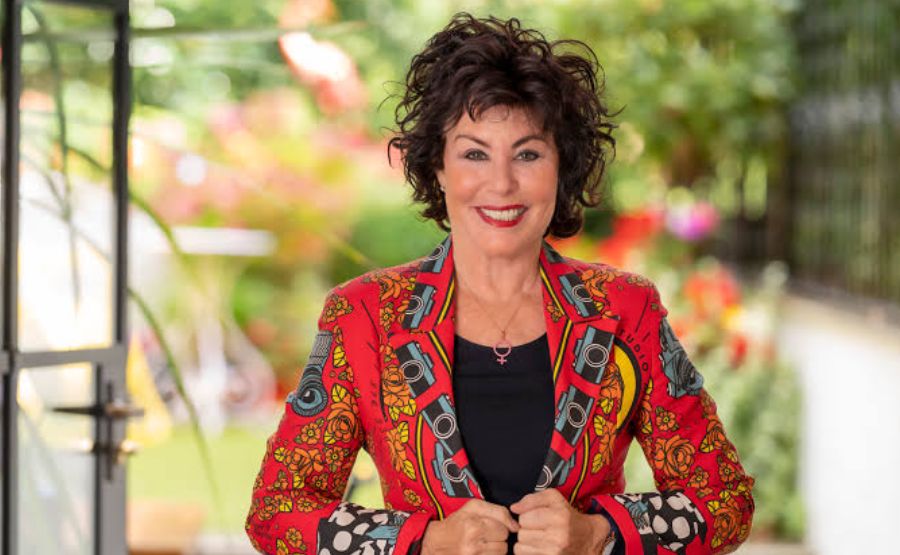
How Old is Ruby Wax: The Comic Who Chose Truth Over the Punchline
Ruby Wax matters in 2026 not because she made Britain laugh for two decades, but because she chose — at the peak of her fame — to stop performing happiness and start dismantling the silence around mental illness.
Quick Facts
| Detail | Information |
| Full Birth Name | Ruby Wachs |
| Date of Birth | April 19, 1953 |
| Age (as of 2026) | 73 years old |
| Birthplace | Evanston, Illinois, USA |
| Nationality | Dual — American and British |
| Occupation | Comedian, actress, writer, mental health advocate, professor |
| Education | University of California, Berkeley (psychology, did not graduate); Royal Scottish Academy of Music and Drama; MSc, Mindfulness-Based Cognitive Therapy, Kellogg College, Oxford (2013) |
| Major TV Work | Girls on Top (1985–86), The Full Wax (1991–94), Ruby Wax Meets… (1994–98), Absolutely Fabulous (script editor, 1992–2012), The Ruby Wax Show (2002) |
| Books (Selected) | How Do You Want Me? (2002); Sane New World (2013); A Mindfulness Guide for the Frazzled (2016); How to Be Human (2018); I’m Not As Well As I Thought I Was (2023) |
| Major Awards | OBE (2015, Services to Mental Health); Mind Champion of the Year (2010); Honorary Doctorate, University of East London (2016) |
| Academic Posts | Visiting Professor in Mental Health Nursing, University of Surrey (from 2015) |
| First Marriage | Andrew Porter (married 1976, divorced 1980) |
| Second Marriage | Ed Bye, television producer-director (married 1988, ongoing) |
| Children | Max (b. 1988), Madeleine (b. 1990), Marina (b. 1993) |
| Charitable Work | Established Frazzled Café in collaboration with Marks & Spencer in 2017; MIND and SANE Ambassador |
| Net Worth (est.) | £3–4 million |
The Child Who Carried Someone Else’s Shadows
To understand Ruby Wax, you first need to stand in Evanston, Illinois, in 1953, and understand the weight that filled the house she was born into.
In 1938, her parents, Austrian Jews from Vienna named Edward and Berthe Wachs, fled Nazi persecution. They arrived in the United States carrying whatever they could save — and carrying everything they could not. Her father rebuilt himself as a sausage manufacturer in Chicago, anglicizing the family name from Wachs to Wax. Her mother trained as an accountant. Both were survivors of a kind that leaves permanent marks on children even when nothing is ever said directly.
Wax attended Evanston Township High School and later enrolled at the University of California, Berkeley, to study psychology — a choice that, in retrospect, reads less like career planning and more like a daughter trying to understand what lived in her own home. She left without finishing the degree.
The move that changed everything came when she relocated to the United Kingdom and enrolled at the Royal Scottish Academy of Music and Drama in Glasgow. She was chasing something — a stage, a language, a self — that America had not given her.
Shakespeare, Sheffield, and the Man Who Launched a Career
The trajectory from drama school to national television ran through a small theatre in Sheffield and a friendship that lasted a lifetime.
Wax took her first professional role as a straight actress at the Crucible Theatre in Sheffield, where she began a creative partnership with a young Alan Rickman. He became her flatmate, her sounding board, and eventually the director of her one-woman comedy shows. She has said with characteristic bluntness that the entire reason she moved into comedy was to make Rickman laugh — that his approval was the only approval she measured her work against.
In 1978, she joined the Royal Shakespeare Company, spending six years there and performing alongside Juliet Stevenson, Michael Hordern, and Ian Charleson. She appeared in Charleson’s breakthrough film Chariots of Fire in 1981, though her larger original role was reduced significantly in editing. Rickman directed her early comedy shows and cast Zoë Wanamaker, David Suchet, Richard Griffiths, and Jonathan Pryce in them — a staggering collection of British theatrical talent assembled on behalf of an American outsider with a sharp tongue and sharper instincts.
She made her West End debut in Wax Acts in 1992, directed once again by Rickman. The relationship between them was one of the most consequential artistic partnerships of her career — a man of disciplined craft and cool intelligence who saw something worth steering in Wax’s wild, confessional energy.
When Rickman died of cancer in January 2016 at the age of 69, Wax was devastated publicly and privately. She has spoken about the loss with raw honesty, describing him as irreplaceable.
How Britain Met Ruby Wax
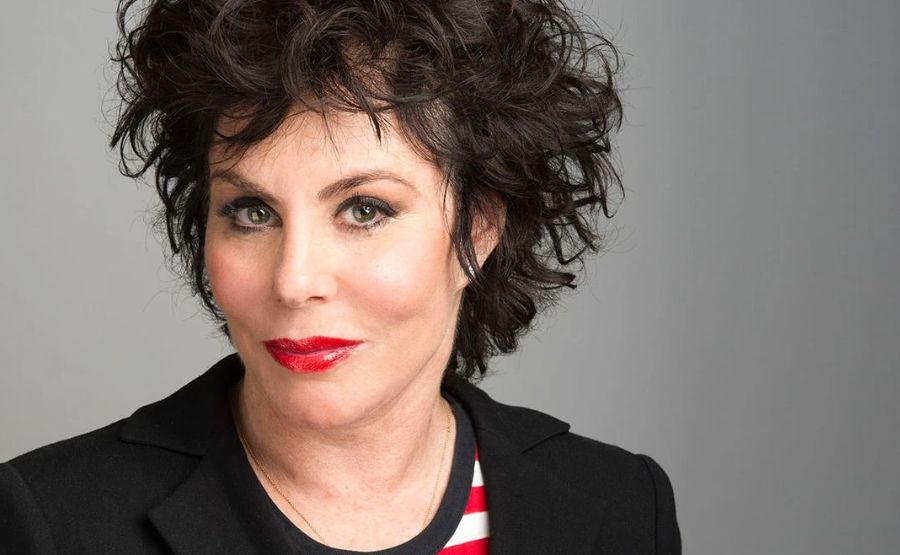
The British television audience encountered Ruby Wax in 1985 in the ITV sitcom Girls on Top, which she co-starred in alongside Jennifer Saunders, Dawn French, and Tracey Ullman. It was a modest beginning for a very immodest talent.
What made Wax distinctive — and divisive — was what followed. Through the early 1990s, she developed a style of interview television built on the performance of American aggression. The Full Wax (1991–1994), Ruby Wax Meets… (1994–1998), Ruby (1997–2000), and The Ruby Wax Show (2002) all deployed the same core conceit: a brash, relentless American woman who would say what a polite British interviewer never could. She sat across from heads of state, supermodels, politicians, and celebrities and refused to play by the usual rules.
She also spent twenty years as script editor on Absolutely Fabulous, Jennifer Saunders’ BBC sitcom that ran from 1992 to 2012 including its feature film. This backstage role is often underestimated. While Wax’s face dominated her own shows, her writing instincts quietly shaped one of Britain’s most beloved comedies.
The interviews were revelatory in some cases and chaotic in others. Her encounter with Donald Trump made for sharp television. Her session with Bill Cosby, viewed now through the lens of what the public later learned about him, reads differently than it did at the time — a reminder of how celebrity journalism can both expose and unwittingly protect.
By 2003, the show was over. Her contract was not renewed by the BBC. Wax has said, without excessive bitterness, that she was “kicked out of television.” What she found afterward was more lasting.
The Inner Life Behind the Performance
While the public saw a woman who was never lost for words, those closest to her witnessed someone who had been fighting herself since early adulthood.
Wax has lived with bipolar disorder and depression for decades. The illness did not announce itself politely or arrive with a single diagnosis. It accumulated, receded, and returned — sometimes manageable with medication, sometimes catastrophic. She spent time at The Priory, the private psychiatric clinic that has become a byword in Britain for the mental health struggles of public figures. She chose to receive her OBE there in 2015, a deliberate act of symbolism: she wanted to stand in the place that had treated her and say that there was nothing shameful about it.
In 2023, after twelve years of successful management with antidepressants and antipsychotics, she relapsed unexpectedly while staying at a monastery in Yorkshire. She admitted herself to a psychiatric clinic, where she stayed for five weeks. She later underwent repetitive transcranial magnetic stimulation, or rTMS — a non-invasive procedure using magnetic fields to act on brain circuits linked to depression.
She turned the relapse into a book, I’m Not As Well As I Thought I Was, published in May 2023, and a one-woman touring show. The Wax pattern is to take the worst thing that has ever happened, stand on a stage, and talk about it until it no longer has as much influence over you.
Audiences identified with her 2010 stand-up performance Losing It. The reaction to that show, in fact, is what prompted her to found a mental health website that was later absorbed into the SANE charity in 2011.
Love, Marriage, and the Complications of Intimacy
Ruby Wax’s personal life has not followed a conventional arc, and she has never pretended otherwise.
Her first marriage, to Andrew Porter in 1976, ended in divorce in 1980. Wax has spoken with both humor and honesty about her early romantic life, revealing that she married two men who were gay, admitting that she did not recognize or understand the signs at the time. In one account she described discovering pornographic magazines under the bed. She also inadvertently outed her first husband when, following Alan Rickman’s advice to change the man’s name in her memoir *How Do You Want Me?*, she chose a pseudonym so obvious that his parents would have known immediately who she meant.
She has told this story publicly, with a mix of self-deprecating wit and genuine regret. The marriage, whatever its nature, mattered to her. The ending was complicated.
Her second marriage, to television producer and director Ed Bye in 1988, has lasted. They have three children together: son Max, born in 1988, who works in technology, and daughters Madeleine and Marina, born in 1990 and 1993 respectively, who co-host a comedy podcast called Siblings. The comic inheritance traveled intact to the next generation.
The family knows depression up close. Her husband and children have navigated her illness alongside her, developing the kind of practical, unsentimental care that a long-term mood disorder requires from those who love someone who has it.
Oxford, Science, and the Reinvention
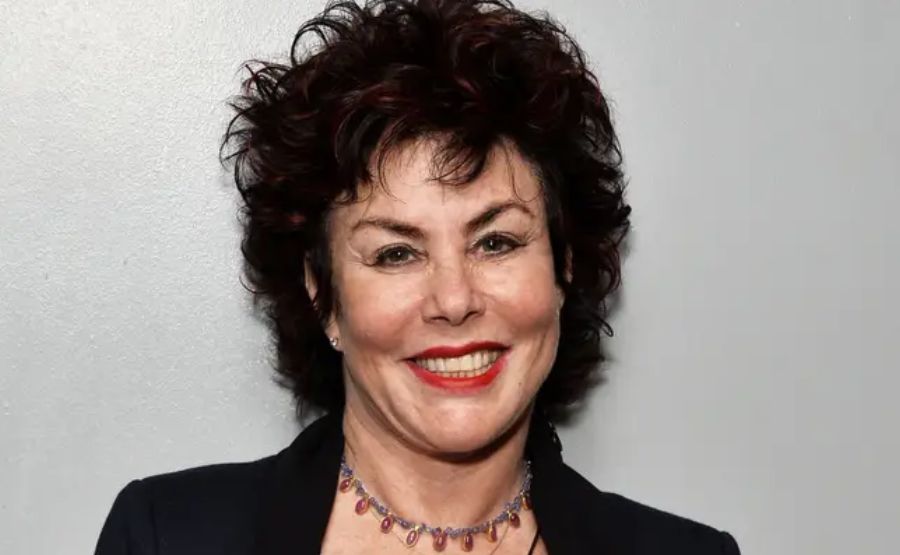
In 2013, at sixty years old, Ruby Wax did something that startled people who knew her primarily as a television comedian: she completed a master’s degree in mindfulness-based cognitive therapy at Kellogg College, Oxford.
The qualification was not decorative. She studied directly under Professor Mark Williams, one of the architects of the mindfulness-based cognitive therapy framework, and emerged with a rigorous understanding of how the brain processes stress, anxiety, and rumination. In 2015, she was appointed a visiting professor in mental health nursing at the University of Surrey.
This pivot is worth examining carefully, because it risked looking like a celebrity hobby — a famous name attaching itself to an academic institution for mutual benefit. What Wax actually did was spend years genuinely learning the science that sat beneath the suffering she had always experienced but never fully understood.
Sane New World, published in 2013 and based substantially on that study, reached number one on the Sunday Times bestseller list. Her 2012 TED Talk at TEDGlobal, titled “What’s So Funny About Mental Illness?”, accumulated more than 800,000 views. These were not the metrics of a vanity project. They reflected a public genuinely hungry for someone to talk about mental illness with both authority and humor — two qualities rarely found in the same person.
Frazzled Café and the Architecture of Community
The Frazzled Café, launched in 2017 in partnership with Marks & Spencer stores across the United Kingdom, is perhaps Wax’s most structurally original contribution to mental health.
The concept is deceptively simple. People who feel overwhelmed — not necessarily ill, not necessarily in crisis, just worn down by the velocity of modern life — gather in a facilitated group to speak and to be heard. No diagnoses required. No clinical threshold to cross. The café functions as what Wax calls a “tribe replacement”: a substitute for the community infrastructure that modern urban life has eroded.
Trained facilitators hold the space. Groups meet regularly, every two weeks in some locations, so that relationships form. The conversations are not therapy, but they are therapeutic. Wax has described the feeling of being heard as “half the cure.”
The model is brilliant in its accessibility. Most mental health provision catches people after the fall. Frazzled Café positions itself upstream — before the crisis, before the diagnosis, when the fraying is still manageable.
She also founded Black Dog Tribe, a social networking site for people with mental health challenges, which fed into the broader SANE ecosystem. With typical sarcasm, she referred to herself as “the poster girl for mental health” because of the billboards she appeared on for the Time to Change campaign, which used her image on bus shelters across the nation with the message that one in four individuals suffer from a mental illness.
The WHO Do You Think You Are Revelation
In 2017, Wax appeared on the BBC’s genealogy series Who Do You Think You Are? and encountered something that explained, with terrible specificity, why anxiety had always felt so native to her.
The research revealed that her great-grandmother and her great-aunt had both been committed to mental asylums — one in Brno, one in Vienna — diagnosed as incurably “agitated.” This discovery, broadcast to a national audience, illuminated the generational dimension of Wax’s own mental illness with a clarity that no memoir could have manufactured.
It also placed her suffering in historical context. Her parents fled Vienna in 1938. The family members left behind were institutionalized in an era when mental illness and Jewish identity converged catastrophically under the Nazi regime. Wax’s anxiety, her depression, her relentless high energy — these were not merely individual symptoms. They were the signature of a family that had survived by force of will in the face of annihilation.
The episode transformed something private into something ancestral. It was among the most emotionally resonant appearances of Wax’s career.
The Celebrity and the Jungle
In November 2025, at 72 years old, Ruby Wax entered the Australian jungle as a contestant on the twenty-fifth series of I’m a Celebrity… Get Me Out of Here! on ITV. She became the oldest contestant in that series, though not in the show’s history — Arlene Phillips holds that record, having competed at 78 in 2021.
Wax approached the project with her usual lack of pretense. Her pre-camp hotel room received a sharp assessment. A fellow contestant received a note that he was standing in her light. Viewers began drawing comparisons to Lady C, a previous contestant famous for uncurated opinions.
What made Wax’s participation interesting was its ambiguity. Was it a genuine entertainment venture? An extension of her mental health platform to a new demographic? A personal experiment in resilience? She had already completed Ruby Wax: Cast Away in 2023, spending ten days alone on a remote island — so discomfort was not new to her.
The jungle was a reminder that at 72, she had no intention of softening.
Legacy and Lasting Influence
Ruby Wax reshaped two fields that rarely interact: celebrity television and mental health advocacy.
In television, she helped invent a format — the confessional, unstable, deliberately uncomfortable celebrity interview — that was widely imitated. Her time as script editor on Absolutely Fabulous cemented her reputation as someone whose influence extended beyond the camera.
In mental health, she did something harder and more durable. She modeled what it looks like to be both seriously ill and publicly functional. She showed that a person could hold a master’s degree from Oxford, lecture at a university, write bestselling books, fill theatres, and still be admitted to a psychiatric clinic. These things are not contradictions. They are the truth of living with a brain that periodically turns against you.
Her books — particularly Sane New World, A Mindfulness Guide for the Frazzled, and I’m Not As Well As I Thought I Was — have reached audiences that academic psychology texts never would. She translated neuroscience into English that ordinary, frightened people could understand and use.
Two daughters who have inherited her comic instincts now perform together. A son works in technology. A husband of nearly four decades continues to share her life. These are not footnotes. They are evidence of a life built, with effort and care, inside and alongside the illness.
Final Thoughts
Ruby Wax turned 73 in April 2026. She has lived most of her adult life managing a condition that periodically destroys her ability to function, and she has not allowed that fact to be the final word on who she is.
What makes her story useful — and the word is deliberate — is the absence of false resolution. She has not been cured. She has not transcended her illness. In 2023 she relapsed, spent five weeks in a clinic, and wrote a book about it. This is not a redemption arc. It is a more accurate and therefore more valuable story: that mental illness is chronic, that recovery is not linear, and that a life can be full and meaningful and funny and still include psychiatric wards.
She arrived in the United Kingdom as an outsider — American, Jewish, abrasive, unwilling to be softened by social convention — and she stayed for half a century. She made that outsider quality into a craft. The girl from Evanston who left university without a degree returned to academia in her sixties and graduated with a master’s from Oxford. The comedian who lost her television career found an audience larger and more loyal than the one she had before.
There is a stubbornness at the center of Ruby Wax that has served her well. It will not let her stay quiet, and it will not let her stay still. At 73, she is still performing, still writing, still running Frazzled Café, still turning her own suffering into something other people can use. That, in the end, is a life genuinely well spent.
FAQs
1. How old is Ruby Wax?
Ruby Wax was born on April 19, 1953, making her 73 years old as of 2026.
2. Where was Ruby Wax born?
She was born in Evanston, Illinois, USA, and raised in the Chicago area.
3. What is Ruby Wax’s real name?
Her birth name is Ruby Wachs. After the family left Vienna to immigrate to the US, her father changed the family name from Wachs to Wax.
4. What mental health conditions does Ruby Wax have?
Wax has spoken publicly about living with bipolar disorder and clinical depression for most of her adult life.
5. Did Ruby Wax go to university?
She briefly attended the University of California, Berkeley, where she studied psychology, but did not complete the degree. She later graduated from the Royal Scottish Academy of Music and Drama, and in 2013 earned a master’s degree in mindfulness-based cognitive therapy from Kellogg College, Oxford.
6. Who is Ruby Wax married to?
She is married to Ed Bye, a television producer and director. They married in 1988 and have three children: Max, Madeleine, and Marina.
7. Has Ruby Wax been married before?
Yes. She married Andrew Porter in 1976; they divorced in 1980. That was her first marriage.
8. Who is Frazzled Café and how does it work?
Ruby Wax founded Frazzled Café in 2017 in partnership with Marks & Spencer. It provides facilitated group sessions in which people who feel overwhelmed by everyday life can speak openly in a non-clinical, supportive environment. It operates as a preventative community resource rather than a clinical service.
9. What was Ruby Wax’s connection to Alan Rickman?
Rickman was her flatmate, closest friend, and the director of many of her stage comedy shows. She has credited him as the primary reason she moved from straight acting into comedy, saying she pursued humor largely to make him laugh. His death from cancer in January 2016 deeply affected her.
10. What OBE did Ruby Wax receive?
In 2015, she was appointed an Honorary Officer of the Order of the British Empire for her services to mental health. She chose to receive the honor at The Priory clinic, a deliberate statement about destigmatizing psychiatric treatment.
11. What if I’m Not As Well As I Thought I Was?
It is Ruby Wax’s 2023 book and accompanying one-woman stage show, written following a relapse into serious depression that led to a five-week stay in a psychiatric clinic. She also underwent rTMS treatment during this period.
12. Did Ruby Wax appear on I’m a Celebrity… Get Me Out of Here!?
Yes. In November 2025 she entered the jungle as a contestant on the twenty-fifth series, becoming the oldest contestant in that edition at age 72.
13. What is Ruby Wax’s net worth?
Her net worth is estimated at between £3 million and £4 million, built across a career in comedy, television, writing, public speaking, and mental health advocacy.
14. What does Ruby Wax do now?
As of 2026, she continues to run Frazzled Café, write books, lecture, speak at corporate events, and perform on stage. She also holds her visiting professorship at the University of Surrey.
15. Were any of Ruby Wax’s ancestors affected by mental illness?
Yes. A 2017 episode of the BBC’s Who Do You Think You Are? revealed that her great-grandmother and great-aunt had both been institutionalized in mental asylums in Brno and Vienna, diagnosed as incurably “agitated.”
Connecting curious minds with stories that educate, inspire, and inform with The Editorial Times.