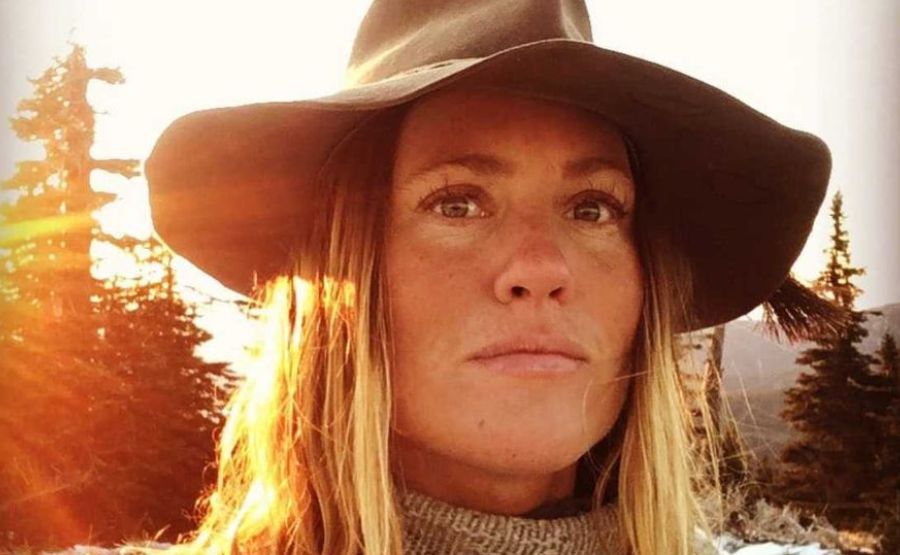
Misty Raney: The Real Thing in a World of Manufactured Survival
In an era when “off-grid living” has become a lifestyle brand sold in sleek YouTube thumbnails and glossy Instagram feeds, Misty Raney Bilodeau represents the genuine, unglamorous article — a woman who learned to survive not from a screen but from the unforgiving ground of one of the most extreme environments on earth.
Quick Bio
| Detail | Information |
| Full Name | Misty Raney Bilodeau |
| Born | November 9, 1979, Sitka, Alaska, USA |
| Nationality | American |
| Zodiac Sign | Scorpio |
| Parents | Marty Raney (father); Mollee Roestel (mother) |
| Siblings | Miles Raney (older brother); Melanee Raney (older sister); Matt Raney (younger brother) |
| Spouse | Maciah Bilodeau (married March 17, 2000) |
| Children | Gauge Bilodeau (born April 14, 2011) |
| Height | Approximately 5 feet 8 inches (172 cm) |
| Known For | Farmer, master carpenter, homesteader; co-star of Discovery Channel’s Homestead Rescue (2016–present) |
| Family Business | Alaska Stone and Log (construction and carpentry) |
| Primary Residences | Hatcher Pass, Alaska (summers); Kauai, Hawaii (winters) |
| Alaska Home | 800-square-foot hand-built log cabin, Hatcher Pass |
| Television | Homestead Rescue (Discovery, 2016–present, 14+ seasons); Homestead Rescue: Raney Ranch (Discovery spinoff) |
| Estimated Net Worth | $400,000–$800,000 |
| Notable Achievement | Climbed Denali alongside her father, Marty Raney |
| Specialty on show | Predator-proofing livestock, food preservation, greenhouse engineering, and agricultural systems |
Born Into the Classroom
Most people acquire survival skills as a hobby. Misty Raney acquired them before she understood she was learning anything at all.
She was born on November 9, 1979, in Sitka, Alaska — a coastal city at the edge of the Tongass National Forest, surrounded by sea and mountains and famously inaccessible by road. Her parents, Marty Raney and Mollee Roestel, had married in 1974 and staked their lives to the Alaskan wilderness years before Misty arrived. Growing up off the grid was not a choice she made. She knew only this world.
Misty is the third of four children, all of whose names begin with M — a deliberate choice by Marty and Mollee meant to bond the family. Her older siblings, Miles and Melanee, preceded her. Her younger brother Matt followed. The Raney household operated on a single organizing principle: contribution was non-negotiable, regardless of age.
By the time she was old enough to hold a tool, Misty was already using one. The family’s daily work included hauling water, splitting firewood, tending crops, building and repairing structures, and participating in the annual hunting cycles — moose, caribou, sheep — that filled the family’s food stores. She has said in interviews that her friends spent their childhoods doing things she never quite understood, while she and her siblings worked. Looking back, she credits that expectation as the foundation of everything she later became.
See also “Debby Clarke Belichick: The Quiet Foundation of a Football Dynasty“
The School Nobody Teaches
Misty Raney never earned a formal credential in carpentry, farming, or construction. Her education unfolded in the family business.
Marty Raney founded Alaska Stone and Log, a construction company that built cabins, structures, and homestead infrastructure using natural materials — stripped logs, quarried stone, river rock, beetle-killed timber. This was not aesthetic rustic romanticism. It was an economically rational, environmentally adapted building rooted in the materials the Alaskan landscape actually provided. The children were part of that operation from the beginning.
Misty has described her relationship with chainsaws and hammers as something that initially repelled her. By age 12, she says, it had become her favorite thing. That reversal — from reluctance to passion — captures something important about her formation. She did not decide to love the tools and the land. The tools and the land wore down her resistance until she discovered she had loved them all along.
She went on adventures with her father that most kids don’t get to go on. The family walked the Chilkoot Pass together. She shared difficult climbs and remote camps where the gap between competence and danger was narrow. One experience in particular stands out from her own accounts: she climbed Denali — North America’s highest peak, at 20,310 feet — alongside her father. Marty suffered altitude sickness during the ascent and they remained at 14,000 feet for approximately ten days waiting for weather to clear. The episode became a documentary in Japan. For Misty, it was simply something the Raneys did.
That breadth — the building, the farming, the mountaineering, the hunting, the land management — gave her a practical intelligence that no single course of study produces. She entered adulthood not as a specialist but as someone who understood systems: how structures related to weather, how soil related to food, how food related to survival.
A Marriage Built on Shared Ground
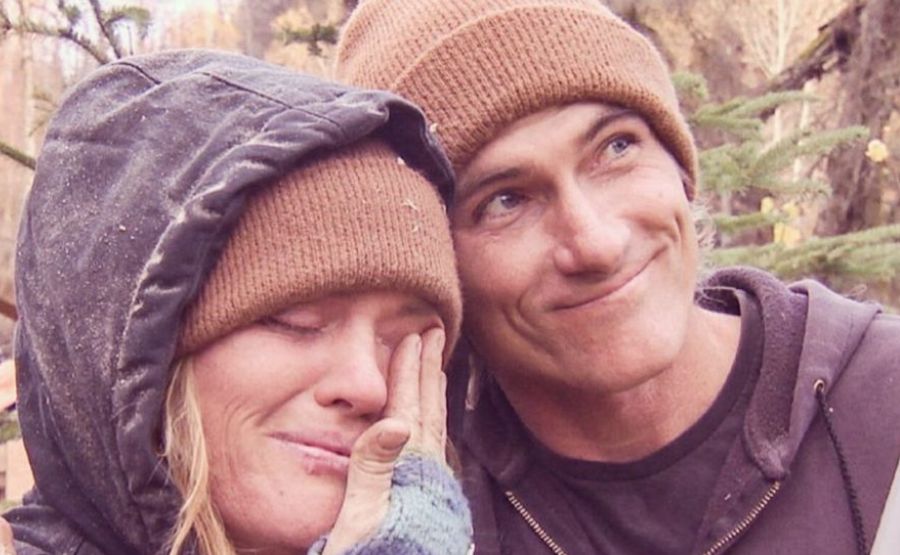
Misty Raney met Maciah Bilodeau at a crossroads between two very different worlds — Alaska’s demanding wilderness and Hawaii’s surf culture — and found in him someone whose values mapped onto hers precisely.
Maciah is a skilled carpenter and an experienced surfer. He and Misty have been together since 2000, when they married. The pairing makes a kind of intuitive sense: a carpenter-farmer and a carpenter-surfer, both people who work with their hands and find their rhythm in physical environments others might find extreme. Their marriage has lasted more than two decades without significant public drama, a record in any context.
Their family rhythm is defined by geography. Summers bring them to their hand-built, 800-square-foot log cabin in Hatcher Pass, Alaska, where Misty contributes to the family business and remains connected to the landscape that formed her. Winters send them to Kauai, Hawaii, where Maciah surfs and the climate provides a counterweight to Alaska’s isolation and darkness. The couple built the Hatcher Pass cabin themselves, using beetle-killed spruce — a choice that reflects not just availability but ecological awareness, since a spruce beetle outbreak has killed timber across more than 1.6 million acres of Southcentral Alaska since 2016.
Their son Gauge was born on April 14, 2011. He has grown up navigating two radically different environments: the sub-arctic valleys of Hatcher Pass and the wave-shaped rhythms of Kauai. He has appeared alongside his mother in Homestead Rescue builds, absorbing the same practical education by proximity that Misty absorbed from her own parents.
Maciah joined the Homestead Rescue build crew in more recent seasons and became a regular on-screen presence. His carpentry skills contribute genuine operational value to the projects — he is not a token family addition but a working member of the team. Their partnership, now spanning more than 25 years, has remained at the center of Misty’s personal and professional life in ways that she keeps largely private. She posts selectively on Instagram and shares very little of the texture of her marriage in public forums, a restraint that stands in notable contrast to the intimacy she offers when discussing her work.
From Family Trade to National Television
The Discovery Channel reached out to Marty Raney in 2016 with an idea rooted in a gap the network had identified: millions of Americans were attempting to live off the grid, and the majority were failing. The network wanted a show that offered genuine expertise, not manufactured drama. Marty was skeptical but persuaded.
He approached all four of his children about participating. According to his own account, it took approximately a month before Misty and Matt agreed. The hesitation was understandable. The family’s way of life was not a performance — it was simply their lives, and the act of filming it introduced a layer of artificiality they had to decide they could tolerate.
Homestead Rescue premiered on June 18, 2016, on Discovery Channel. The format was straightforward: struggling homesteaders in remote American locations, living on the edge of failure, called in the Raneys for intensive rescue operations lasting roughly seven to ten days. Marty handles structural strategy, water systems, and the major construction. Matt manages hunting, fishing, and predator management. Misty owns the agricultural systems — greenhouses, soil work, food preservation, composting, and predator-proofing livestock enclosures.
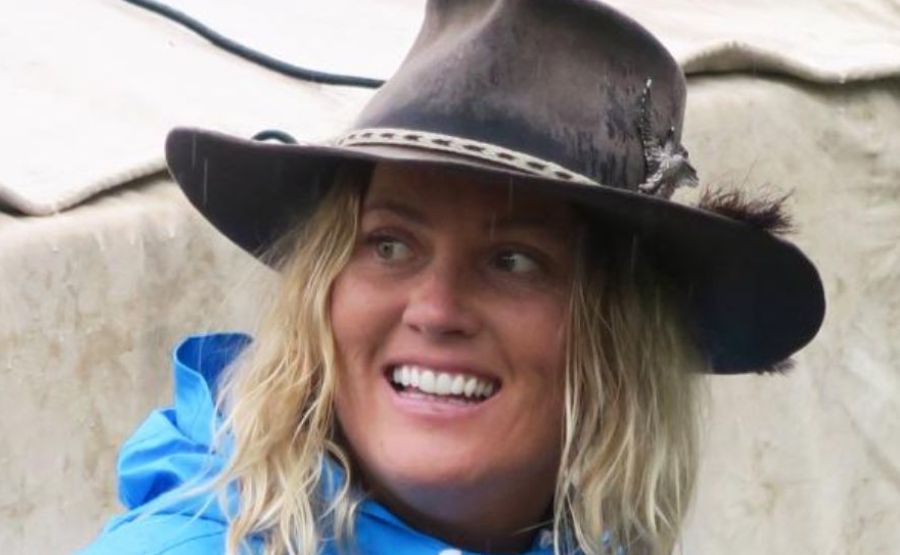
That division of labor, which appeared clean on paper, turned out to be more fluid in practice. Misty proved as skilled with structural carpentry as either of the men. She is photographed hauling timber, pouring concrete, constructing buildings, and diagnosing structural problems with the same fluency she brings to identifying soil deficiencies or building a smokehouse. The show, which viewers had reason to expect might cast her in a supporting role based on gender convention, instead revealed someone whose expertise cut across every domain.
By 2026, Homestead Rescue had reached its fourteenth season on Discovery, celebrated its 100th rescue in a May 2026 special retrospective episode, and maintained a 7.9 rating on IMDb across more than 100 episodes. The show airs on Discovery, streams on Max, Discovery+, Prime Video, and Apple TV. It is, by any practical measure, one of the most durable reality programs the network has produced — and Misty Raney Bilodeau has appeared in every season.
The Work Itself: What Misty Actually Does
The word “farming” undersells what Misty Raney does on Homestead Rescue. The word implies soil and seeds. What she actually practices is a synthesis of permaculture design, greenhouse engineering, structural carpentry, food systems analysis, and ecological problem-solving.
She has built snow-resistant greenhouse structures in northern climates where frost arrives seven months of the year. She has constructed raised-bed garden systems in flood-prone lowlands, elevated specifically to survive the water events that periodically overtake them. She has installed gravity-fed irrigation systems in areas where water is scarce and pumping is not an option. She has built predator-proof enclosures for livestock in bear and wolf country, designed not just for strength but for the specific predator pressure of each location.
On each rescue, the Raneys arrive without advance preparation at the property — the first encounter between the family and the homesteaders happens on camera, not beforehand. What viewers see is genuine assessment, genuine disagreement, and genuine problem-solving under real time pressure. The show’s production timeline — filming through harsh weather, with episodes sometimes airing just weeks after footage was shot — enforces that authenticity.
A phrase attributed to Misty across multiple interviews and episodes captures her professional philosophy precisely: “You can grow food anywhere. It all comes down to technique.That is not rhetoric that inspires. It is an empirical claim, demonstrated repeatedly across locations ranging from subarctic Alaska to Louisiana bayou to California wildfire country to the volcanic slopes of Hawaii.
Her Discovery Channel official bio describes her skills plainly: she can diagnose what is wrong with a homestead, build greenhouses and smokers, convert raw meat and vegetables into shelf-stable survival food, and construct enclosures that keep predators out of livestock even in the most demanding wilderness conditions. None of those descriptions are inflated. They are what she does, week after week, across climates that test entirely different skill sets.
The Raney Family: A System of People
To understand Misty Raney fully, you have to understand the family she comes from — not as backdrop but as context for everything she is.
Marty Raney is the gravitational center of the Raney public story. He is a former Denali mountain guide, master stonemason, log builder, songwriter, and the host and driving personality of Homestead Rescue. He built Alaska Stone and Log from scratch, raised four children in the Alaskan wilderness without consistent electricity or plumbing, and summited Denali multiple times as both climber and guide. His business card, as he once described it to Outside Magazine, listed his occupations separated by commas and ended with another comma — an open-ended list.
Mollee Roestel Raney, Misty’s mother, appears less frequently in public coverage but is, by Marty’s own consistent account, the family’s moral and organizational backbone. She raised four children in extreme conditions, managed household survival in one of the harshest environments in North America, and lives with Type 1 diabetes — a medical condition that carries additional risk in an off-grid, remote setting. Matt Raney, Misty’s younger brother and the show’s hunter-fisherman, also has Type 1 diabetes. The family has lived for decades with the challenge of managing insulin-dependent diabetes in environments where medical infrastructure is distant.
Misty’s older sister Melanee owns Chugach Adventures, a wilderness rafting operation in Girdwood, Alaska, accessible only by the Alaska Railroad. Her older brother Miles pursues mountain biking and adventure travel and avoids public attention entirely. The two siblings who appear on television are, in one sense, the family’s public face. The two who don’t are, as one profile of the family notes, arguably leading more remarkable lives.
Maciah’s husband has described Misty as “Little Marty,” a nickname she says is simultaneously painful and the highest compliment she can imagine. That tension — between being her own person and being the product of a father whose influence is everywhere in her work — runs quietly through her public persona. She is clearly not a copy of Marty. She brings something different: a warmth with the families they rescue, a particular patience with struggling homesteaders who resist help, and an agricultural expertise that exceeds what he can offer. But she would not exist as she does without the formation he provided.
Private Struggles and Public Scrutiny
Misty Raney Bilodeau has managed, with notable success, to be a television personality while remaining a genuinely private person. This is rarer than it should be and more difficult than it seems.
The most widely circulated controversy around her has been absurdly trivial: a weight gain noticed by viewers from Instagram posts in 2019, which triggered online speculation about pregnancy. Misty addressed it plainly. She lives and works in extreme physical conditions, she said. Her body needs fuel. She used the phrase “I needed fuel to work,” and added with a kind of wry humor that she thought she might have gotten pregnant again, a comment taken drastically out of context and magnified into baseless rumors. No pregnancy materialized. The rumors dissolved. Unsubstantiated claims about OCD and compulsive eating — traced to no credible source — circulated in parallel and were never confirmed.
The weight debate was a microcosm of a broader issue: women who appear on television in physically demanding, typically male-coded positions are subject to extra scrutiny. Misty wears practical work clothing, handles heavy materials, gets dirty, and makes no visible effort to perform feminine aesthetics for the camera. The audience response has been overwhelmingly positive — she has been called “badass” in fan comments, praised for demonstrating what women can physically do — but the weight commentary exposed the persisting tendency to evaluate women’s bodies as part of their professional performance.
To her credit, she declined to be derailed by it. She answered once, clearly, and returned her attention to her work. That economy of response is consistent with her broader approach to public life: say what needs to be said, and get back to building something.
A more significant private challenge, referenced rarely but meaningfully, is the physical toll of the work itself. Living off the grid in Alaska involves sustained physical stress — hauling, lifting, cutting, working in extreme cold and wet — over decades, not seasons. The show films in demanding conditions year-round. The Raney family operates in environments where a single misstep can have serious physical consequences. Marty’s mobility was momentarily restricted during the Raney Ranch spinoff due to a serious fall. The family has adapted to these risks as part of the life they chose, but they are real.
Season 14 and the Rescue That Hit Home
The fourteenth season of Homestead Rescue brought a development that no previous season had managed: it turned the camera on Misty’s own home.
Episode 8, titled “Raney S.O.S.” and airing June 23, 2026, documented catastrophic flash flooding that struck Misty and Maciah Bilodeau’s personal farmstead in Kauai, Hawaii. The floods saturated volcanic soil, caused severe erosion, destroyed agricultural terrace walls, and threatened the livestock enclosures and crop systems Misty had built over years. The entire Raney family traveled to the island to help.
The solution they built drew on a collision of techniques from two very different climates. Alaskan construction often elevates structures on heavy wooden piers to prevent permafrost and snowmelt from rotting foundations. Applied in Kauai, that logic translated to raised animal shelters and elevated garden beds that allowed floodwater to pass beneath rather than through them. It was a moment that illustrated the transferability of hard-won knowledge — and it was more affecting on screen than most of the show’s external rescues, because the stakes were unmistakably personal.
The season also deepened Misty’s leadership role. When Marty was pulled from the California wildfire episode early, Misty and Matt completed the rescue independently. That transition — from the third member of a trio to someone capable of leading the operation — has been developing across multiple seasons and reflects not just her growing confidence but the show’s own evolution. Maciah now serves as a regular member of the on-screen build crew, and Gauge has made appearances alongside his mother. The generational story is beginning.
In May 2026, the show celebrated its 100th rescue with a special retrospective episode, marking a milestone that few reality programs reach. Misty Raney Bilodeau has been present for all of them.
Legacy and Influence: Teaching America to Survive
The influence Misty Raney has accumulated is not the kind that comes with awards or official recognition. It is the kind that changes how people think about what they can do.
The homesteading movement she represents has grown significantly during the period of the show’s run. Interest in off-grid living, food self-sufficiency, and sustainable construction surged during and after the COVID-19 pandemic, as millions of Americans confronted the fragility of supply chains they had taken for granted. Misty and the Raneys were already there with a decade of television content demonstrating that the skills exist, can be learned, and can transform failing situations into functional lives.
Her specific contribution to that cultural conversation is the agricultural expertise that nobody else on the show provides. Marty builds structures. Matt hunts and fishes. Misty makes things grow. In environments that range from subarctic to tropical, she demonstrates that food security is achievable with knowledge and technique — not with ideal conditions or modern infrastructure.
She has also subtly acted as a potent refutation of the notion that conventional femininity and physical prowess are incompatible. She does not frame it that way herself. She simply does the work — drives the drill, swings the hammer, lays the foundation, plants the greenhouse — and leaves viewers to draw their own conclusions. The effect has been, by fan response, substantial. The social media trail around her is filled with women who cite her as evidence that capability is not gendered.
Her personal model of living — the 800-square-foot Hatcher Pass cabin, the seasonal migration between climates, the son raised between surf culture and wilderness survival — represents a version of life that mainstream American culture rarely presents as available. She does not advertise it as a philosophy. She lives it and films it, and the combination of those two things carries more weight than any manifesto.
Final Words
Misty Raney Bilodeau is, in the most literal sense, what reality television promises and rarely delivers: a genuine expert, solving real problems, in front of an audience large enough to make the expertise matter.
Her contradictions are mild and human. She grew up without modern conveniences and now travels between Alaska and Hawaii. She values privacy deeply and appears on television every year. She carries the weight of her father’s influence while carving out a professional identity distinctly her own. She works in a field — homesteading, construction, off-grid agriculture — that has historically excluded women in its public-facing dimensions, and she navigates that exclusion not through confrontation but through consistent, undeniable competence.
The body-image controversy of 2019 was not trivial — it revealed the specific vulnerabilities that come with being a physical woman in a physical profession on television. That she absorbed it and continued, without self-pity and without performative resilience, says something accurate about her character.
What matters most, in the end, is the work. Over 14 seasons and more than 100 rescues, Misty Raney has helped families build greenhouses in frozen soil, smoke meat for winter storage, keep predators out of chicken coops, and grow food where most people would insist food cannot grow. She has done this while raising a son, maintaining a marriage, managing a seasonal life across two climates, contributing to a family business, and occasionally dealing with flash floods in her own backyard.
Alaska, she has said, keeps them tough. What the cameras have confirmed, across a decade of evidence, is that she was already tough before the cameras arrived — and will remain so long after they are gone.
FAQs
1. Who is Misty Raney?
Misty Raney Bilodeau is an American homesteader, farmer, master carpenter, and television personality born on November 9, 1979, in Sitka, Alaska. She co-stars in the Discovery Channel reality series Homestead Rescue alongside her father Marty Raney and younger brother Matt Raney, where she specializes in agricultural systems, greenhouse construction, food preservation, and predator-proofing livestock enclosures.
2. When and where was Misty Raney born?
She was born on November 9, 1979, in Sitka, Alaska — a coastal city in the Alaska Panhandle surrounded by the Tongass National Forest and accessible primarily by air or sea.
3. Who are Misty Raney’s parents?
Her father is Marty Raney, a master builder, stonemason, former Denali mountain guide, and founder of Alaska Stone and Log. Her mother is Mollee Roestel, who raised the Raney children in the Alaskan wilderness and lives with Type 1 diabetes.
4. Does Misty Raney have siblings?
Yes. She has three siblings, all with names beginning with M: Miles Raney (older brother, mountain biker and adventure traveler); Melanee Raney (older sister, founder of Chugach Adventures rafting in Girdwood, Alaska); and Matt Raney (younger brother, hunter and fisherman on Homestead Rescue).
5. Who is Misty Raney’s husband?
Misty married Maciah Bilodeau on March 17, 2000. He is a skilled carpenter and experienced surfer. In more recent seasons of Homestead Rescue, Maciah has joined the on-screen build crew as a working member of the rescue team.
6. Does Misty Raney have children?
Yes. She and Maciah have one son, Gauge Bilodeau, born April 14, 2011. Gauge has appeared occasionally on Homestead Rescue and grows up splitting his time between Hatcher Pass, Alaska, and Kauai, Hawaii.
7. Where does Misty Raney live?
She and her family spend summers at their hand-built, 800-square-foot log cabin in Hatcher Pass, Alaska, where they contribute to the family business. They relocate to Kauai, Hawaii, for winters, where Maciah surfs and Misty maintains a tropical farmstead.
8. When did Homestead Rescue premiere, and how many seasons has it run?
Homestead Rescue premiered on June 18, 2016, on the Discovery Channel. As of 2026, it is airing its fourteenth season. The show celebrated its 100th rescue with a special episode in May 2026 and holds a 7.9 rating on IMDb.
9. What is Misty Raney’s specific role on Homestead Rescue?
She focuses primarily on food production systems — including permaculture design, greenhouse engineering, composting, food preservation, and predator-proof livestock enclosures — though she is also a capable structural carpenter. Discovery Channel’s official bio describes her as a “farmer, homestead builder and carpenter” who can diagnose problems, construct food infrastructure, and convert raw produce and meat into long-term survival food supplies.
10. Did Misty Raney climb Denali?
Yes. She climbed Denali alongside her father, Marty Raney. During the climb, Marty developed altitude sickness, and the team spent approximately ten days at the 14,000-foot camp waiting for weather to clear. The experience was documented in a Japanese film and book series.
11. What happened with Misty Raney’s weight gain controversy?
In 2019, viewers noticed Misty had gained weight from social media posts and speculated she was pregnant. She responded directly, stating that her body required fuel to sustain the physical demands of her work. No pregnancy was announced. Separately circulated rumors about OCD and stress eating were never confirmed by credible sources and appear to have originated without substantiation.
12. What is Alaska Stone and Log?
Alaska Stone and Log is the family construction business founded by Marty Raney. It specializes in log and stone construction using natural materials, including stripped logs, quarried stone, and river rock. Misty worked in the business from childhood and serves as a master carpenter within it. Her brother Matt also contributes to the company’s building projects.
13. What happened in the Season 14 episode “Raney S.O.S.”?
Episode 8 of Season 14, which aired June 23, 2026, documented flash floods that devastated Misty and Maciah Bilodeau’s personal tropical farmstead in Kauai, Hawaii. The entire Raney family traveled to the island to help restore the property, blending Alaskan structural techniques with solutions adapted for Pacific island conditions. It is one of the few episodes in the show’s history to turn the rescue lens on the Raneys themselves.
14. What is Misty Raney’s estimated net worth?
Multiple sources estimate her net worth between $400,000 and $800,000, derived from her television salary, work in Alaska Stone and Log, and associated homesteading activities. Exact figures are not publicly confirmed.
15. Is Homestead Rescue still airing in 2026?
Yes. As of July 2026, Homestead Rescue is in its fourteenth season, airing on the Discovery Channel on Tuesdays at 8:00 PM ET and streaming on Max, Discovery+, Prime Video, and Apple TV.
Connecting curious minds with stories that educate, inspire, and inform with The Editorial Times.