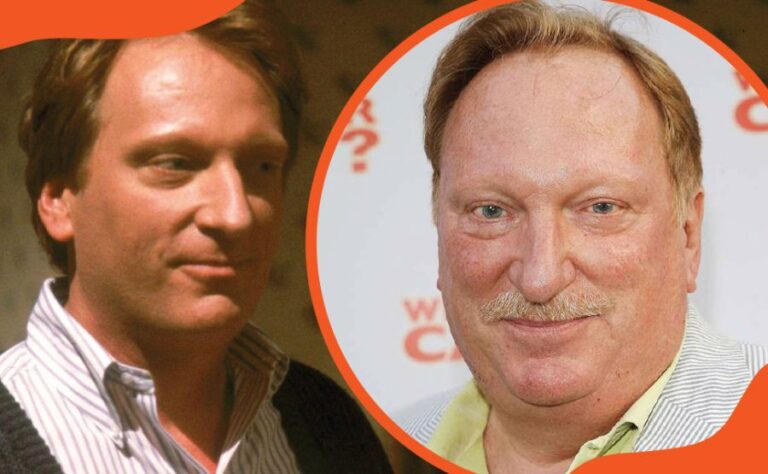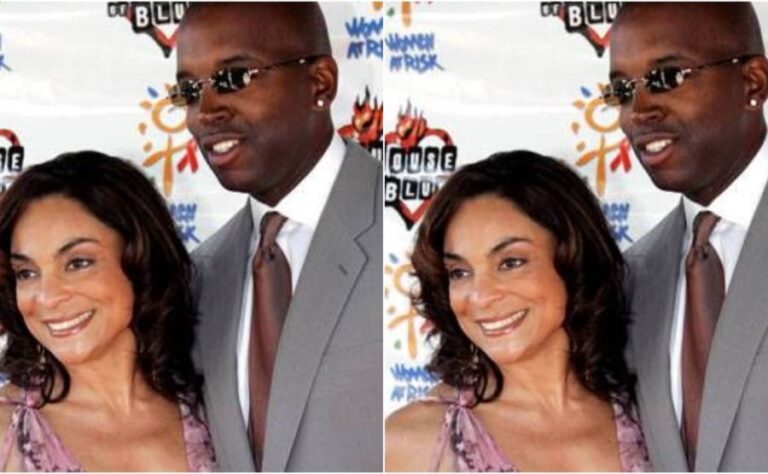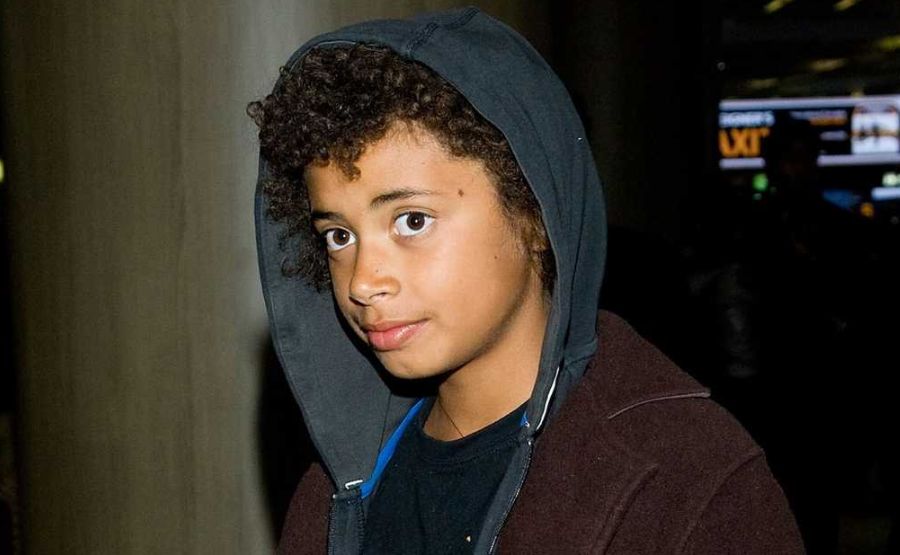
Oscar Maximilian Jackman: Identity, Privacy, and the Weight of an Extraordinary Name
In an era when celebrity offspring routinely convert inherited fame into personal brand, Oscar Maximilian Jackman has done something quietly remarkable — he has simply refused to.
Quick Bio
| Detail | Information |
| Full Name | Oscar Maximilian Jackman |
| Date of Birth | May 15, 2000 |
| Birthplace | California, United States |
| Nationality | Australian (raised between Australia and New York, USA) |
| Adoptive Parents | Hugh Jackman (actor, producer) and Deborra-Lee Furness (actress, producer, adoption advocate) |
| Biological Mother | Amber Lanham (b. circa 1977, Vinton, Iowa; d. 2005, by suicide, age 28) |
| Biological Father | Identity never publicly confirmed |
| Biological Siblings | Olivia Lanham and Nyomi Lanham (raised by aunt Rochelle in Vinton, Iowa) |
| Adoptive Sibling | Ava Eliot Jackman (b. July 2005, also adopted) |
| Heritage | Mixed-race; confirmed partial Bosnian ancestry; additional heritage unconfirmed by family |
| Education | Ross School, New York (graduated 2018); reported studies in film/cinema in the UK |
| Known Public Statement | Instagram post, February 2018 — reunion with biological sisters in Iowa |
| Parents’ Separation | Announced September 2023; Deborra-Lee Furness filed for divorce May 2025; finalized June 2025 |
| Social Media | No verified public accounts maintained |
| Notable Fact | His 2018 Instagram reunion post remains the only direct public statement he has ever made |
The Decision That Made Everything Possible
Before Oscar Maximilian Jackman existed in any public sense, a decision had to be made in a Los Angeles adoption agency that would shape every fact of his life.
Hugh Jackman and his wife, actress Deborra-Lee Furness, had married on April 11, 1996 — a relatively quiet ceremony in Melbourne, two people with serious professional ambitions and serious intentions about family. They planned, initially, to have biological children. That plan encountered IVF treatments, multiple miscarriages, and the particular kind of grief that accumulates over years of medical intervention without a resolved outcome.
Adoption had always been something both of them believed in philosophically. After their fertility experiences, it became their path forward.
When they met with an adoption official in Los Angeles, they were advised against selecting the mixed-race designation on their application. The counselor’s reasoning was pragmatic, not prejudiced: mixed-race children waited significantly longer to be placed because fewer families selected them. The Jackmans marked the box anyway.
Hugh explained this to People magazine in 2017: “Our motivation behind adopting was, ‘Where is the need?”And we simply knew that the greatest need is in mixed-race children when we were looking around and conversing with people in that area.”
That sentence — functional, direct, devoid of sentimentality — tells you something important about both his character and the framework in which Oscar would be raised.
See also “Bobbye Brooks Oliver: The Arkansas Woman Who Witnessed Leslie Nielsen’s Transformation“
Born in California, Rooted Elsewhere
Oscar Maximilian Jackman was born on May 15, 2000, in California. His biological mother was Amber Lanham, a young woman from Vinton, Iowa — a small town of roughly 5,000 people in Benton County, surrounded by farmland. To give birth, she moved to California. She placed Oscar for adoption without first telling her own family he existed.
The Jackmans adopted Oscar the same year he was born. Hugh later described the shift in emotional register that accompanied completing the process: the anxiety of years of failed fertility treatment simply lifted. He told the Herald Sun in 2011 that from the moment they began the adoption process, he stopped feeling anxious. He said he did not think of Oscar as adopted. He considered him his offspring.
That framing — not adopted, simply his — defined the household Oscar grew up in. It was not a performance of parental feeling. It was a genuine philosophical position that the Jackmans maintained consistently across decades of interviews and public statements.
The family split time between Australia and New York City, eventually settling more permanently in Manhattan. Oscar grew up between two countries, two cultures, and two very different scales of public recognition. His father’s face appeared on subway advertisements. His daily life was school, family dinners, and the routines his parents deliberately constructed to keep the extraordinary at a distance from the ordinary.
The Parenting Philosophy Behind the Privacy
Hugh Jackman became globally recognizable as Wolverine in 2000 — the same year Oscar was born — and that recognition did not diminish for the next quarter century. Deborra-Lee Furness built a parallel career as an actress and, increasingly, as one of Australia’s most prominent advocates for adoption reform, founding Adopt Change and championing National Adoption Awareness Week.
Neither of them wanted their children to live inside that visibility.
The decisions were specific and sustained. Limited public photographs. No social media presence encouraged or enabled. School environments where the expectation was academic engagement, not celebrity adjacency. Hugh told People: “My kids have so many advantages, and I want them to know that they have a responsibility to use those advantages to help others.” He described his children as constantly reminded of how fortunate they were — not as a way of manufacturing guilt, but as a way of grounding privilege in obligation.
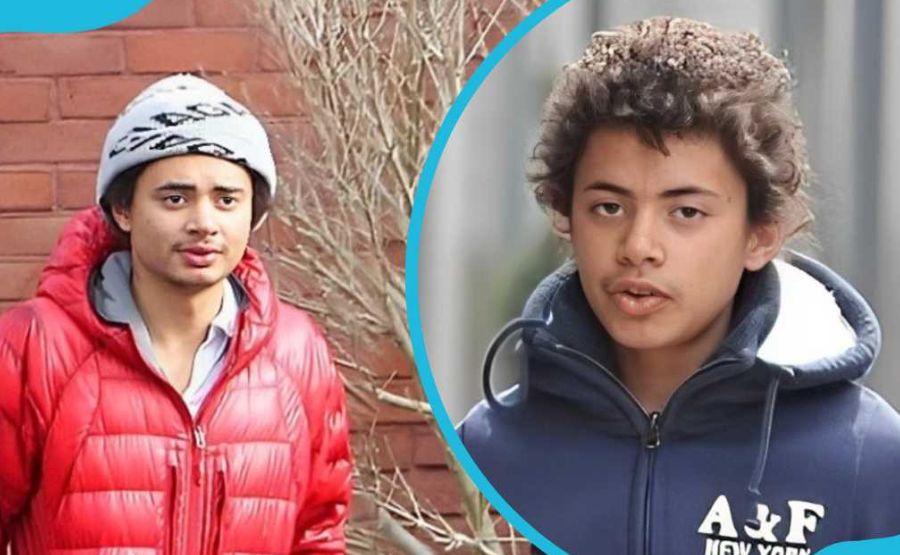
For almost twenty years, the plan needed to be consistent. It was held. Oscar grew up largely unrecognized outside the handful of family photographs his parents shared sparingly on their own accounts. He graduated from the Ross School in New York in 2018 without generating any media coverage in his own right.
That is, in the landscape of celebrity parenthood, genuinely unusual.
Amber Lanham: The Life Behind the Adoption
The facts of Amber Lanham’s life are few and they are devastating.
She was from Vinton, Iowa. She was born around 1977. She gave birth to Oscar in California in 2000 and placed him for adoption without telling her family in Iowa that she had been pregnant. Her father, Thomas Lanham, did not know Oscar existed until he started seeing photographs of a child named Oscar Jackman in magazines accompanying Hugh Jackman’s growing fame.
Amber had two other children after Oscar — Olivia and Nyomi Lanham, who were raised in Vinton by Amber’s sister Rochelle after Amber’s death. In 2004, approximately a year before she died, Amber told an American magazine: “The only time I see my son is when he’s photographed with Hugh in magazines.”
In 2005, Amber Lanham died by suicide. She was twenty-eight years old.
Oscar’s biological father’s identity has never been made public.
In 2016, Thomas Lanham — Oscar’s maternal grandfather, then seventy-eight years old — spoke to the National Enquirer. He said, “I didn’t get to see Oscar as a baby.” “I would still love to see him before it’s too late for me.”
Thomas Lanham died after a short illness in late 2018. He was eighty years old. He never met Oscar.
These are the facts surrounding Oscar’s origins. They sit behind his public biography — rarely surfaced, rarely contextualized, almost never connected to the more comfortable narrative of celebrity adoption. They are part of his story whether or not he has spoken about them.
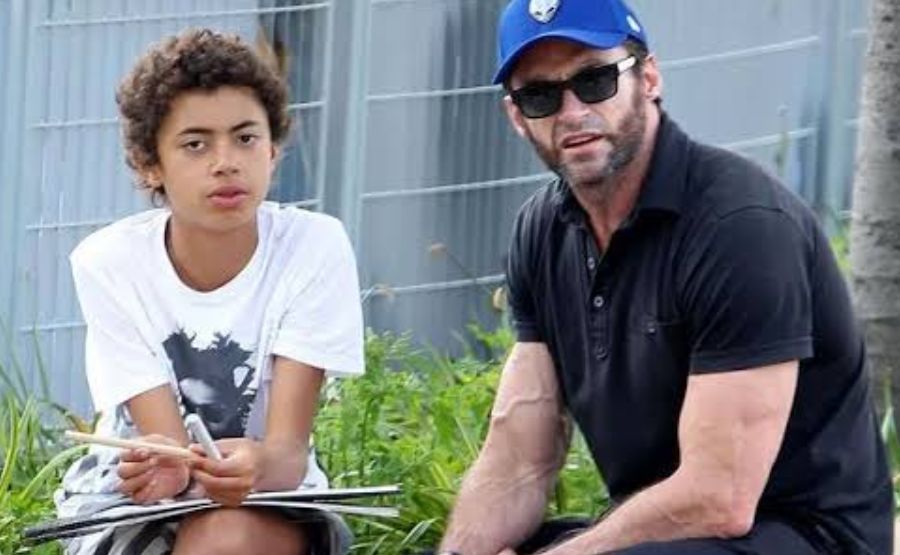
Personal Life: Roots, Reunion, and the Iowa Journey
In February 2018, Oscar Jackman was seventeen years old and approaching high school graduation. He traveled to Vinton, Iowa — his biological mother’s hometown — to meet his biological sisters, Olivia and Nyomi Lanham, for the first time. His aunt Rochelle, who had raised them after Amber’s death, was also present. Hugh and Deborra-Lee accompanied him.
The family shared a photograph afterward. Oscar posted it to Instagram — one of the only verifiable public statements he has ever made — with a caption that is worth reading without paraphrase:
“There is no doubt that today has been the most significant day of my life.I finally got to meet my biological family. Although I was only in Iowa for half a day, I felt that I got to know each of you personally. You are some of the kindest people I’ve ever met, and I promise I’m not just saying that.”
His biological sister Olivia responded: “I feel like I’ve known you my whole life. Love you forever and always little brother.”
The grandfather who had spoken publicly of his wish to see Oscar — Thomas Lanham — died in December 2018, eleven months after that Iowa visit, without having met his grandson. Oscar posted about his grandfather’s death on Instagram as well, writing that he was sorry he never got to meet him and sharing a photograph of Thomas Lanham’s newspaper obituary.
These two posts constitute the most complete public record of who Oscar Maximilian Jackman is in his own voice. Together, they describe a young man who sought connection to his biological past, felt the weight of the connections that arrived too late, and chose to express both of those things briefly and directly, without dramatic elaboration.
The Jackman family also worked actively to connect Oscar to his cultural heritage during childhood. When a young Oscar discovered he had partial Bosnian ancestry, Deborra-Lee told People in 2020, the family found a Croatian-Bosnian cookbook. He carried it around with evident pride at age seven. The detail is minor and precisely revealing: here was a child given the tools to understand his own origins, rather than being encouraged to simply absorb the identity of his adoptive family.
The Shadow and the Humor of Growing Up as Wolverine’s Son
Hugh Jackman has played Wolverine in seventeen films across twenty-four years. The character is one of the most recognizable in popular culture. Oscar Jackman grew up as that character’s real-world son, which generated its own particular domestic texture.
Hugh shared one story at the 2018 Hollywood Film Awards that became widely repeated. Oscar, around thirteen, was on a beach in Sydney talking to a girl approximately his age. He mentioned his father was Wolverine and asked Hugh to walk past and play along. Hugh obliged. He described himself, laughing, as his teenage son’s wingman for an afternoon.
The story is affectionate, self-deprecating on Hugh’s part, and revealing about Oscar’s relationship to his father’s fame: he was not above deploying it strategically in adolescence, and his father was not above finding that funny and human.
The family also navigated more serious proximity to danger. Hugh Jackman has talked of a time when Oscar and his sister Ava were swimming off the coast of Sydney when they got caught in a riptide. Hugh, with help from another swimmer, pulled them out. The incident drew no particular media attention at the time — another mark of how successfully the family had insulated Oscar from public exposure.
Deborra-Lee noted in 2020 that parenting had made her smarter than she could have been on her own. She said this of both her children without distinguishing between them. Whatever role Oscar played in that mutual education remains, appropriately, his own.
When the Family Changed: Separation and Its Aftermath
In September 2023, Hugh Jackman and Deborra-Lee Furness released a joint statement to People announcing the end of their marriage after twenty-seven years. The language was measured: they described almost three decades of a loving marriage, a journey now shifting, and a decision to pursue individual growth. They asked for privacy as their family navigated the transition.
In May 2025, Deborra-Lee officially filed for divorce.In a statement around that time, she described the end of the marriage as a traumatic journey of betrayal — language markedly different from the careful neutrality of the 2023 announcement. In June 2025, the divorce was finalized.
Hugh Jackman began a relationship with Broadway actress Sutton Foster in January 2025. They made their first public red carpet appearance together in October 2025.
Oscar made no public comment on any of this. He did not post. He gave no interviews. He was, by every available indication, absent from the media coverage entirely by choice.
At the 2025 AFI Fest premiere of Song Sung Blue, Hugh was asked by E! News whether Oscar or Ava might pursue acting. “They’d both be very good, but I don’t know,” he remarked. I just want them to do what they love.”
That is the most recent verified public statement about Oscar’s direction. It is exactly as specific as Oscar would apparently prefer.
Education and the Question of What Comes Next
Oscar graduated from the Ross School in East Hampton, New York, in 2018 — the same year he traveled to Iowa to meet his biological sisters. The Ross School is a private institution with a curriculum organized around cultural history and interdisciplinary learning, which is a relevant context for a student with Oscar’s particular biographical complexity.
At least one source — The Salford Magazine — reports that Oscar subsequently studied film and cinema at Leeds Arts University in the United Kingdom. This detail has not been confirmed by Hugh Jackman or Deborra-Lee Furness in any verified interview, and it should be treated as reported but unverified. If accurate, it would suggest an interest in working behind the camera rather than in front of it — a notable contrast with both his parents.
What is clear is that Oscar, now twenty-six years old, has not entered the entertainment industry. He has not pursued acting, music, or any public-facing creative work that has attracted documentation. His career interests remain his own business, kept that way by sustained and consistent effort.
Hugh Jackman has expressed nothing but support for that autonomy. His framing — “I just want them to do what they love” — is the opposite of pressure.
Legacy and Influence: A Different Kind of Story
Oscar Maximilian Jackman does not have a professional legacy in the conventional biographical sense. He hasn’t published anything, started any businesses, recorded any songs, or made any movies. He is twenty-six years old and has, by every available measure, chosen a private life.
But his story carries weight in a different register.
His adoption, and the Jackman family’s entire approach to it, contributed meaningfully to public conversations about mixed-race adoption in Australia and the United States. Deborra-Lee Furness translated the experience into sustained advocacy, founding Adopt Change and working for years to reform Australian adoption law. Oscar’s existence — and the choices his parents made in pursuing it — gave that advocacy its biographical foundation.
The February 2018 Iowa trip and Instagram post generated coverage that reached well beyond celebrity gossip. It surfaced, briefly, the story of Amber Lanham — a young woman whose grief and loss had been entirely invisible until her son’s reunion with his sisters made it marginally less so. That coverage was uncomfortable and incomplete, but it introduced a dimension of the adoption narrative that the cheerful version typically obscures: the biological parents who do not get to watch their children grow up.
Oscar’s approach to privacy in the social media era is also, quietly, its own kind of cultural statement. He is a young man who grew up with more access to public platforms than almost anyone, by virtue of his surname alone, and chose not to use them. In an environment that rewards continuous self-disclosure with attention and opportunity, that refusal is a considered position even if it has never been stated as one.
What he builds from here — career, relationships, the ongoing connection with his biological sisters in Iowa — is unknown. But the foundation is documented: he is a young man who traveled across the country to meet the family he did not grow up with, stood at a grandmother’s funeral for a grandfather he never met, and posted about it simply, without performance.
Final Words
Oscar Maximilian Jackman’s biography is, in one sense, full of extraordinary events: the deliberate adoption of a mixed-race infant by two internationally recognized actors; the death of his biological mother when he was five years old; the grandfather who waited and died without the meeting he wanted; the reunion with two sisters who had grown up a world away in a small Iowa town; the dissolution of his parents’ twenty-seven-year marriage when he was an adult.
In another sense, his story is about the sustained effort to make those extraordinary circumstances into an ordinary life.
He has not always succeeded in avoiding public attention — the nature of his parentage makes total invisibility impossible. But he has declined, consistently, every opportunity to convert that attention into a platform. That consistency, maintained from childhood into adulthood, across the full arc of his father’s global celebrity, is neither easy nor incidental. It is a choice made repeatedly, over years, against considerable available alternatives.
The result is a young man whose inner life is almost entirely his own. What the public knows fits in a few paragraphs. What lies beneath — his relationship to his biological family, his understanding of Amber Lanham’s story, his sense of his own mixed heritage, his response to his parents’ divorce — remains private.
Perhaps the most honest thing that can be said about Oscar Maximilian Jackman is also the simplest: he appears to be exactly what his parents spent two decades trying to raise. A person who knows who he is, and doesn’t need anyone else to confirm it.
FAQs
1. Who is Oscar Maximilian Jackman?
Oscar Maximilian Jackman is the eldest adopted son of Australian actor Hugh Jackman and actress-producer Deborra-Lee Furness. Born in California on May 15, 2000, he was adopted by the couple the same year and has maintained an intensely private life throughout his upbringing and young adulthood.
2. Why was Oscar put up for adoption?
His biological mother, Amber Lanham of Vinton, Iowa, placed him for adoption in California in 2000, without informing her own family. The circumstances of her decision are not fully documented. She died by suicide in 2005 at age twenty-eight.
3. Who are Oscar Jackman’s biological parents?
His biological mother was Amber Lanham. The identity of his biological father has never been made public. Amber never disclosed his identity before her death.
4. Why did Hugh Jackman and Deborra-Lee Furness choose to adopt?
The couple experienced multiple miscarriages and unsuccessful IVF treatments. They had always intended to adopt as part of their family plan. They specifically requested to adopt a mixed-race child after learning that mixed-race children faced significantly longer waits in the adoption system.
5. Does Oscar Jackman have siblings?
He has one adoptive sister, Ava Eliot Jackman, born in July 2005 and adopted the same year. Olivia and Nyomi Lanham, his two biological sisters, were brought up in Vinton, Iowa, by their aunt Rochelle. Oscar met his biological sisters for the first time in February 2018.
6. What did Oscar post on Instagram about his biological family?
In February 2018, after meeting his biological sisters and aunt in Iowa, Oscar posted a photograph and wrote: “Today has undoubtedly been the most important day of my life. I finally got to meet my biological family. Although I was only in Iowa for half a day, I felt that I got to know each of you personally.” It remains one of the only verified public statements he has ever made.
7. Did Oscar’s biological grandfather ever meet him?
No. Thomas Lanham, Oscar’s maternal grandfather, told the National Enquirer in 2016 that he had never seen Oscar and hoped to before he died. Thomas passed away in late 2018, eleven months after Oscar’s visit to Iowa to meet his sisters. The two never met. Oscar posted publicly about Thomas’s death and expressed regret that they had not had the chance to know each other.
8. What is Oscar Jackman’s ethnic background?
He is of mixed heritage. His confirmed cultural background includes partial Bosnian ancestry, which his parents acknowledged and actively helped him explore during childhood. Other elements of his heritage have been reported in various sources but have not been confirmed directly by the family.
9. Where did Oscar Jackman go to school?
He attended and graduated from the Ross School, a private institution in East Hampton, New York, in 2018. He is reported by some sources to have subsequently studied film and cinema at Leeds Arts University in the United Kingdom, though this has not been confirmed in verified interviews with his family.
10. Does Oscar Jackman have social media?
He has no verified, maintained public social media presence. The 2018 Instagram posts about his biological family reunion and his grandfather’s death appear to be his only documented public digital statements.
11. What happened to Hugh Jackman and Deborra-Lee Furness’s marriage?
They announced their separation in September 2023 after twenty-seven years of marriage. Deborra-Lee filed for divorce in May 2025, and the divorce was finalized in June 2025. Hugh Jackman subsequently began a relationship with Broadway actress Sutton Foster.
12. Has Oscar Jackman pursued an acting career?
No. He has not entered the entertainment industry in any documented capacity. His father, asked about this at the 2025 AFI Fest premiere, said: “I just want them to do what they love.”
13. What nationality is Oscar Jackman?
He holds Australian nationality through his adoption by Hugh Jackman and Deborra-Lee Furness, both Australian citizens.According to his father’s recollections, he was raised in both Australia and New York City and identifies as both Australian and American.
14. What is known about Oscar’s relationship with his biological sisters today?
He maintains contact with Olivia and Nyomi Lanham in Iowa. His sister Olivia responded to his 2018 Instagram post: “I feel like I’ve known you my whole life. Love you forever and always little brother.” No further public detail about their ongoing relationship is available.
15. Why does Oscar Jackman maintain such a private life?
He has never explained his reasons publicly. His parents’ deliberate approach to shielding their children from media attention throughout their upbringing is the most documented contributing factor. Whether his privacy reflects their influence, his own temperament, or both, can only be speculated. What is verifiable is that the choice has been consistent, sustained, and — by every available measure — intentional.
Connecting curious minds with stories that educate, inspire, and inform with The Editorial Times.