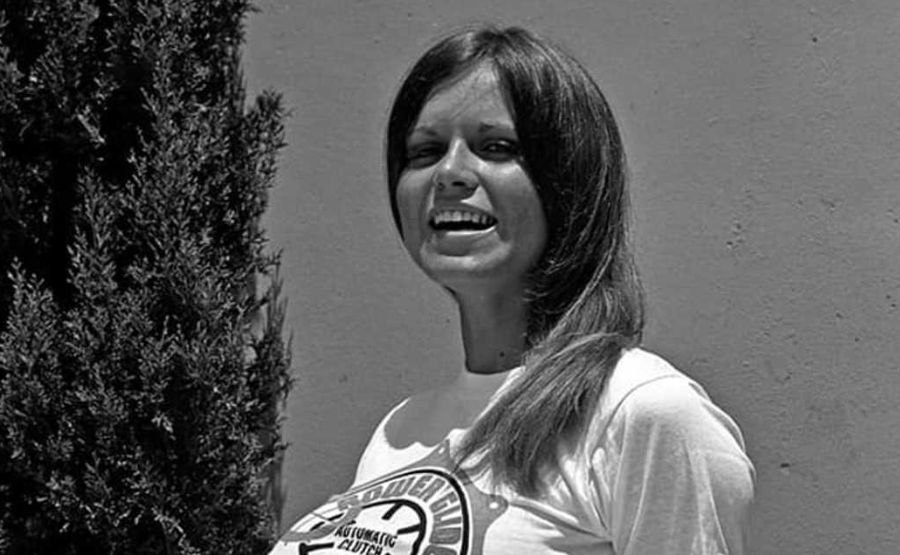
What Happened to Barbara Roufs: What Actually Happened to Drag Racing’s “Queen of the Strip”
Barbara Roufs still matters because her life traces a shape many public figures share: intense, photographed visibility followed by decades of private silence, ending in a death that outside sources still can’t fully explain.
Quick Bio
| Category | Details |
| Full Name | Barbara Roufs (born Barbara Riley) |
| Born | 1944, Southern California, United States |
| Died | January 1991, age 47 |
| Nationality | American |
| Occupation | Drag racing trophy girl, promotional model |
| Known For | Trophy girl at Orange County International Raceway; crowned PDA (Professional Dragster Association) Queen, 1973 |
| Parents | Wayne Eldon Riley (father) and Thelma Ruby Riley (mother) |
| Siblings | Vivian Deaton, James Riley, Bruce Riley (biological); Ben Gube (adopted) |
| Spouse | Unnamed in public sources |
| Daughter | Jet Dougherty, born 1973 |
| Cause of Death | Reported by multiple sources as suicide; not confirmed by an official public record |
| Resurgence | Photographs by Tom West recirculated online starting in 2016, renewing public interest |
A Face Built for the Track, Before Anyone Called It Branding
Barbara Roufs did not race. She stood beside the cars that did, and for a few years in the early 1970s, she was arguably as recognizable as the machines themselves.
She worked as a trophy girl at the Orange County International Raceway, one of Southern California’s most storied drag strips. In 1973, she was named Queen of the Professional Dragster Association, a title that placed her at the center of the sport’s promotional identity.
What made her stand out wasn’t only her look, though that mattered. She entered the trophy-girl circuit around age 29 — older than most of her peers, who tended to be in their late teens or early twenties. Fans and photographers treated that difference as an asset, not a liability.
See also “Grace Gail: The Quiet Daughter of a Hollywood Character Actor“
The World She Stepped Into
Drag racing in early-1970s Southern California was not a fringe hobby. It was a fast-growing spectator sport, drawing crowds numbering in the thousands to purpose-built strips across the region.
The Orange County International Raceway, where Barbara Roufs became a fixture, opened in 1967 in Irvine, California. Within a few years, it had become one of the premier quarter-mile tracks in the country, hosting national-caliber events that drew top fuel and funny car competitors from across the United States.
The Professional Dragster Association, the organization that crowned Roufs its queen in 1973, existed to formalize and promote professional drag racing at a moment when the sport was rapidly outgrowing its amateur, backyard-mechanic roots. Titles like “PDA Queen” weren’t vanity honors. They were part of the sport’s deliberate effort to build a recognizable public identity, similar to how other American motorsports cultivated visible figures beyond the drivers themselves.
Trophy girls occupied a specific, evolving role in that identity-building. Earlier in the 1960s, the position leaned formal — structured poses, coordinated outfits, a presentation style borrowed from beauty pageants. By the time Roufs entered the circuit, the aesthetic had loosened considerably, tracking the same cultural shifts reshaping fashion and gender expectations across the country.
That looser, more natural style is part of why Roufs’s presence read as distinctive rather than interchangeable. She wasn’t inventing the shift single-handedly, but she arrived at exactly the moment the sport’s visual culture was ready for someone like her.
The Photographer Who Made Her a Fixture
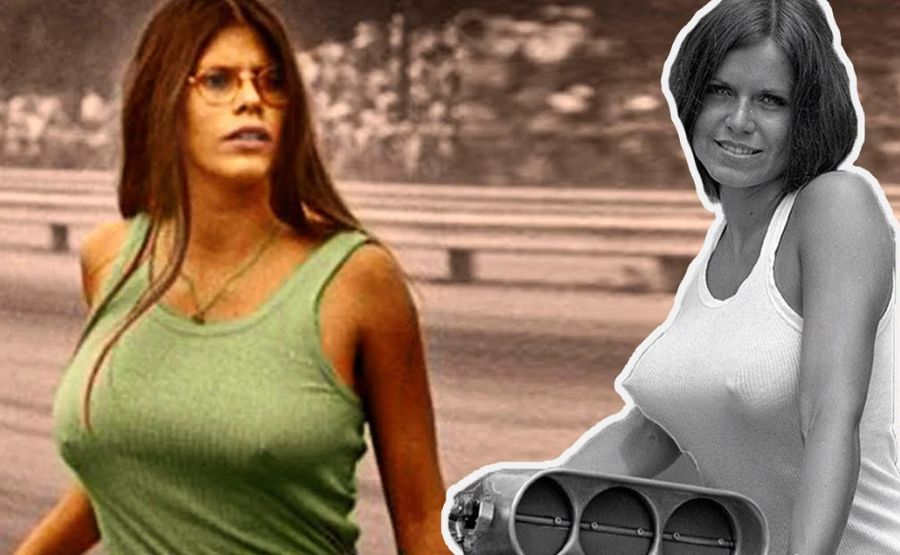
Much of what survives of Barbara Roufs today exists because of one man’s camera. Photographer Tom West documented her extensively at racetrack events throughout the early 1970s, capturing the long hair, go-go boots, and easy confidence that became her visual signature.
Those images did something unusual: they outlived the era they were taken in by decades. West’s photographs remained largely dormant in archives and private collections for over forty years.
Then, in 2016, some of that work resurfaced online. The recirculation introduced Barbara Roufs to an entirely new generation of viewers who had never seen a single drag race in person.
Why Her Photographs Still Circulate
Vintage motorsport photography has become its own small collector’s economy. Images from the 1960s and 1970s drag-racing scene now attract dedicated followings on social media, auction sites, and enthusiast forums, decades after the events they depict.
Barbara Roufs benefits from that trend more than most trophy girls of her era, largely because Tom West’s archive of her was extensive and well-preserved. Where many of her contemporaries left behind a handful of scattered images, Roufs left behind a substantial, coherent visual record.
That volume matters. A single photograph can be a curiosity; a large, consistent body of work can sustain an entire second life online, which is essentially what happened to her image starting in 2016.
A Childhood Rooted in Small-Town California
Barbara Roufs was born Barbara Riley in 1944, and her family’s roots ran deep in the Fresno-area community of Clovis, California. Her father, Wayne Eldon Riley, raced motorcycles at the Kearney Bowl and spent his free time fishing from a houseboat he owned.
Her mother, Thelma Ruby Riley, ran a beauty salon in Clovis for roughly five decades and played organ at a local Church of the Nazarene congregation. Together, by some local accounts, her parents were the first couple inducted into the Clovis Hall of Fame.
She grew up with three biological siblings — Vivian, James, and Bruce — and an adopted brother, Ben Gube. The household blended small-town religious life with a genuine, hands-on relationship to motor racing, long before Barbara ever stood in a winner’s circle herself.
Marriage, Motherhood, and a Life Kept Deliberately Private
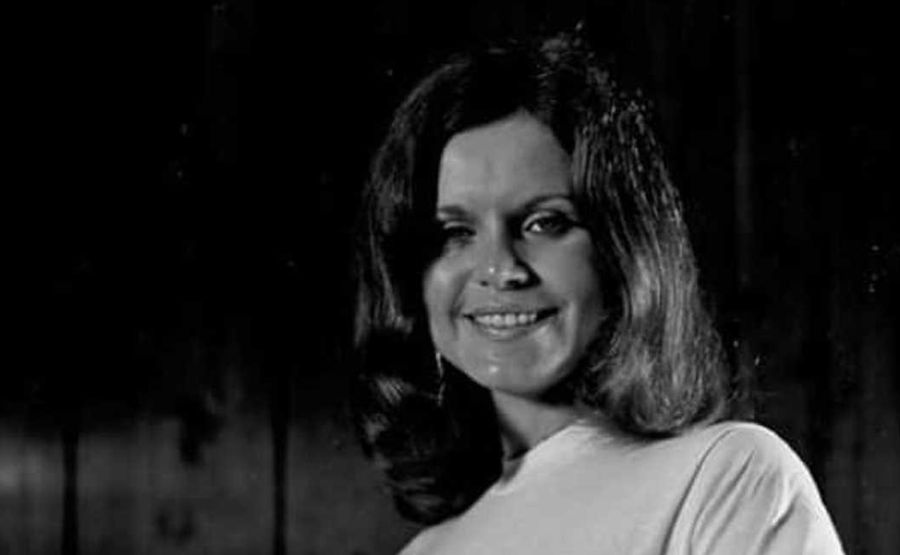
Despite her public-facing career, Barbara Roufs kept significant parts of her adult life out of view. She married at some point before 1973, but the identity of her husband was never widely publicized and remains absent from available public records.
That same year, she had her only child, a daughter named Jet Dougherty. Roufs was 29 at the time — the same age at which she began working the drag-racing circuit, suggesting her public career and her private family life started almost simultaneously rather than in sequence.
Colleagues from the racing world later described her as warm and unpretentious, someone who treated the demanding travel schedule of weekend events with steady good humor. Few of them, by most accounts, knew much about her life once she left the track.
The Years Between Fame and Death
After her most visible years in the early-to-mid 1970s, Barbara Roufs’s public trail goes largely quiet. She is described in multiple secondary sources as having eventually stepped back from trophy-girl appearances and settled into private family life, reportedly in the Fresno area where she’d grown up.
No verified interviews, profiles, or first-person accounts from Roufs herself have surfaced from this later period. What existed of her public image had essentially been frozen in the early 1970s, while she herself kept living, aging, and changing largely outside of any camera’s view.
That gap — roughly fifteen years between her racing prominence and her death — is the least documented part of her life. It’s also, by simple arithmetic, the majority of her adult years.
Her Death in January 1991
Barbara Roufs died in January 1991 at age 47. Multiple secondary sources describe her death as a suicide, though no official public record independently confirms the classification, and her family has not released details explaining the circumstances.
That absence of confirmed detail has not stopped decades of online speculation. Forums and fan communities continue to trade theories about her final years, often filling documented silence with guesswork rather than fact.
A responsible account has to hold two things at once: the loss was real, and the full story behind it was never made public. Respecting her family’s privacy means resisting the pull to manufacture certainty where none exists.
The Daughter Who Reconnected the Public to Barbara
When Tom West’s photographs resurfaced online in 2016, Barbara Roufs’s daughter, Jet Dougherty, responded publicly. She confirmed her mother’s identity in the images and offered warm, personal reflections on who her mother had been outside the frame.
Dougherty has indicated, in informal online tributes rather than formal interviews, that her mother was more than the images suggested — a fuller person than any photograph could capture. Because these comments circulated on social platforms rather than through verified journalism, they should be read as heartfelt family reflection, not documented biography.
Her willingness to speak at all, however briefly, gave Barbara Roufs something most vintage photo subjects never get: a living voice vouching for the humanity behind the image.
Legacy: A Symbol Larger Than the Documented Life
Barbara Roufs’s lasting influence has almost nothing to do with what she actually said or did after 1975, and almost everything to do with a small set of photographs taken before then. That’s an unusual kind of legacy — built on image rather than voice.
She’s frequently cited as representative of a transitional moment in motorsport culture, when trophy girls shifted from stiff, formal presentation toward something more natural and self-assured. Whether she caused that shift or simply embodied it well is difficult to prove from the surviving record, but she is consistently named among its clearest examples.
Modern audiences rediscovering her photos online are, in effect, encountering 1970s drag-racing culture through a single, well-documented face. That’s a strange kind of permanence for someone who spent most of her life avoiding public attention.
Final Words
Barbara Roufs lived two distinct lives, separated by roughly fifteen years of near-total public silence. The first was loud, photographed, and celebrated at a Southern California racetrack. The second was private, mostly unreported, and resulted in a death whose complete circumstances her family has not disclosed.
Both deserve equal respect. The temptation, with a story like hers, is to let the striking photographs stand in for the whole person, or to treat the unexplained ending as an invitation to speculate. The more honest approach is simpler: celebrate what’s verifiably known, and leave space around what isn’t.
FAQs
1. Who was Barbara Roufs?
An American drag racing trophy girl and promotional model, best known for her work at the Orange County International Raceway in the early 1970s.
2. When was Barbara Roufs born?
In 1944, in Southern California.
3. What was Barbara Roufs’s biggest career achievement?
Being crowned Queen of the Professional Dragster Association (PDA) in 1973.
4. Who photographed Barbara Roufs?
In the early 1970s, photographer Tom West took a lot of pictures of her during racing events.
5. Did Barbara Roufs have children?
Yes, one daughter, Jet Dougherty, born in 1973.
6. Who was Barbara Roufs married to?
Her husband’s identity has never been publicly disclosed in available records.
7. When did Barbara Roufs die?
In January 1991, at age 47.
8. What was the cause of Barbara Roufs’s death?
Multiple secondary sources report it as suicide, though no official public record independently confirms the exact circumstances, and her family has kept details private.
9. Why did interest in Barbara Roufs increase after 2016?
Photographer Tom West’s archived images of her resurfaced online that year, introducing her to a new generation of viewers.
10. Did Barbara Roufs’s daughter speak publicly about her mother?
Yes. Jet Dougherty responded to the resurfaced photos with informal online tributes describing her mother warmly.
11. Where did Barbara Roufs grow up?
In the Clovis, California area, near Fresno.
12. What did Barbara Roufs’s parents do for a living?
Her father, Wayne Eldon Riley, raced motorcycles and enjoyed fishing; her mother, Thelma Ruby Riley, ran a beauty salon in Clovis for about fifty years.
13. Did Barbara Roufs have siblings?
Yes — biological siblings Vivian, James, and Bruce, and an adopted brother, Ben Gube.
14. Is there an official Wikipedia page for Barbara Roufs?
No verified, comprehensive official record exists; most available biographical information comes from secondary blogs and fan-sourced material, which this article treats with appropriate caution.
15. Why is Barbara Roufs still remembered today?
Her recirculated 1970s photographs represent a distinctive, well-documented image of drag-racing culture’s transitional era, keeping her visually present in motorsport nostalgia decades after her death.
Connecting curious minds with stories that educate, inspire, and inform with The Editorial Times.