Elissa Leonard: The Filmmaker, Civic Leader, and Overlooked Half of a Washington Power Marriage
Long before her husband’s signature was on Federal Reserve press releases, Elissa Leonard was already winning Emmy Awards and getting elected to public office — and her story deserves to be told on its own terms.
Quick Facts
| Category | Details |
| Full name | Elissa A. Leonard |
| Born | May 20, 1957, Rockville, Maryland |
| Nationality | American |
| Education | Harvard College, A.B. 1979 (joint major: Visual and Environmental Studies and Government) |
| Spouse | Jerome Hayden Powell, married September 14, 1985, Bethlehem Chapel, Washington National Cathedral |
| Children | Three: Sam, Lucy, and Susie Powell |
| Parents | George Hill Leonard (U.S. Public Health Service administrator); Phyllis Leonard, née Bachner (Boston University and Radcliffe College) |
| Siblings | Jeffrey and Jonathan Leonard |
| Profession | Film and television producer, writer, director |
| Key film credits | Sally Pacholok (2015, producer/director/co-writer), Ladies in Black (2018, executive producer) |
| Career roots | WNET-TV Channel 13’s Innovation series; National Geographic Television’s Explorer; The Educational Film Center |
| Major honors | Two New York Emmy Awards for Innovation; Best Feature, DC Independent Film Festival, for Sally Pacholok (2015) |
| Civic role | Chair, Board of Managers, Chevy Chase Village, Maryland (term through June 2028); residency of 25+ years |
| Other affiliations | Board of Trustees, Levine Music; Board of Directors, Chevy Chase Historical Society; Trustee, Washington Drama Society |
| Public profile | Deliberately private; retained her own professional name throughout her marriage |
A Childhood Built on Quiet Ambition
On May 20, 1957, Elissa Leonard was born in Rockville, Maryland. Her father, George Hill Leonard, worked as a heart disease control administrator for the U.S. Public Health Service. He spent his career translating science into policy.
Her mother, Phyllis Leonard, held degrees from both Boston University and Radcliffe College. That pairing signaled something about the household: academic rigor mattered, and so did intellectual independence for women, even in the 1950s and ’60s.
Leonard attended Montgomery County Public Schools. She had two brothers, Jeffrey and Jonathan, growing up in a Washington suburb defined more by federal employees and civic institutions than by glamour.
See also “Letesha Marrow: The Daughter Who Became Her Own Story“
Harvard, and a Career Chosen Deliberately
In 1979, Leonard graduated from Harvard College with a joint major in Visual and Environmental Studies and Government. That combination was not accidental.
It paired the technical language of filmmaking with the structural language of public institutions. Decades later, both halves of that education would show up directly in her work.
She didn’t go straight into glamorous production roles. She started as a producer and writer at WNET-TV Channel 13’s Innovation series, a public-television science program rooted in careful research rather than spectacle.
From there she moved to National Geographic Television, serving as Senior Story Editor on the Explorer series. She also worked at The Educational Film Center, producing the Powerhouse and Give and Take series for younger audiences.

The Emmy Years
Leonard’s work on Innovation earned her two New York Emmy Awards. These were not vanity credits or local cable recognitions; New York Emmys are competitive, juried honors within the broadcast industry.
Her later feature work extended that recognition. Sally Pacholok, which she produced, directed, and co-wrote, told the true story of an emergency-room nurse who challenged the medical establishment over a misdiagnosis epidemic. It starred Annet Mahendru, known for her role on FX’s The Americans.
The film premiered at the 2015 DC Independent Film Festival, where it won Best Feature. Three years later, Leonard worked as executive producer on Bruce Beresford’s Ladies in Black, which was an adaptation of the Australian novel The Women in Black by Madeleine St. John.
Marriage to Jerome Powell — and a Deliberate Separation of Identities
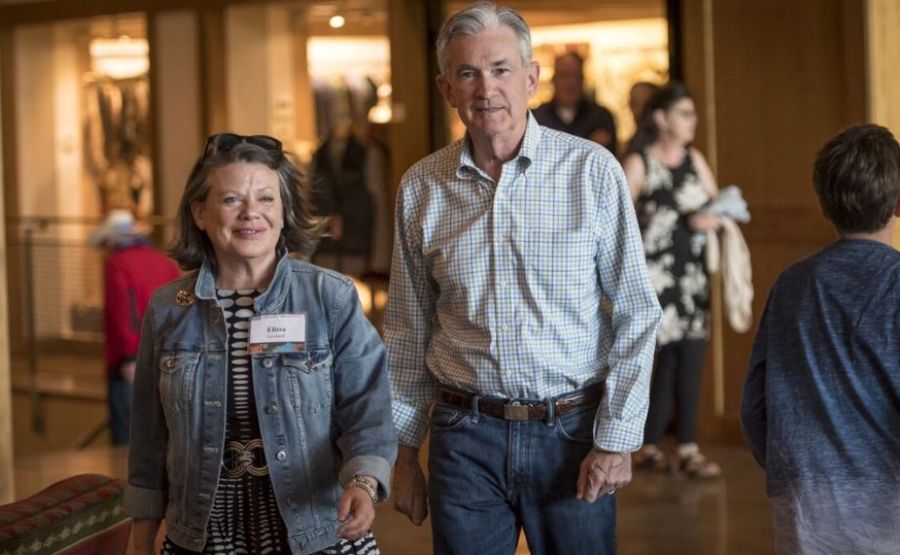
Leonard married Jerome Hayden Powell on September 14, 1985, at the Bethlehem Chapel inside Washington National Cathedral. Reporting from the Financial Times indicates the two met in the early 1980s through Powell’s sister, who was Leonard’s housemate at the time.
They had three children together: Sam, Lucy, and Susie Powell. The family settled in Chevy Chase Village, Maryland, a small, affluent D.C. suburb with its own municipal government.
What stands out across nearly every reliable source is a simple fact: Leonard kept her own professional name and her own career credits throughout the marriage. While Powell rose through investment banking, the Treasury Department, the Carlyle Group, and eventually the Federal Reserve Board of Governors, Leonard’s film and civic work proceeded as a parallel track, not a subplot.
Civic Leadership: Governing a Village
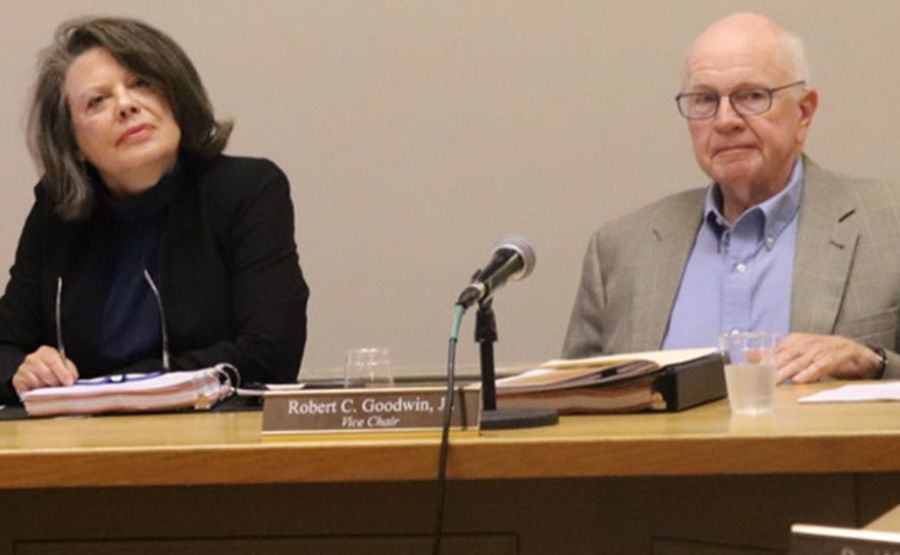
In 2013, Leonard joined the Chevy Chase Village Board of Managers, after already having lived in the community for more than 25 years. She first chaired the Buildings and Facilities Commission and served on the Tree, Parks, and Environment & Energy Committees.
She eventually became Chair of the Board of Managers, an elected position that functions as the head of the Village’s local government. Chevy Chase Village is small, but it is a genuine municipality, with its own police department, its own budget, and its own elected leadership structure.
This detail matters more than it might seem. Leonard didn’t simply attend galas adjacent to power; she stood for election and ran a local government, a role entirely separate from anything connected to her husband’s career.
Village records confirm her current term runs through June 2028. Her 2023 “State of the Village” address, delivered as board chair, touched on fiscal health, environmental projects, and a joint resolution among Montgomery County municipalities condemning antisemitism — the kind of unglamorous, procedural civic work that rarely makes headlines but defines actual governance.
Personal Life, Privacy, and What Remains Unknown
Leonard has been notably resistant to public exposure. There is no significant trove of personal interviews, no memoir, no extensive on-record reflection about her marriage or family life.
This is itself a meaningful fact about her, not an absence of one. In a city built on visibility, she chose the opposite path.
Her net worth is not independently documented; estimates that circulate online typically conflate her finances with her husband’s combined household wealth, which public filings have placed somewhere between roughly $20 million and $55 million. That figure describes the Powell household, not Leonard’s individual earnings or assets, and should be read with that distinction in mind.
Her children — Sam, Lucy, and Susie — have largely been kept out of public view as adults, a pattern consistent with their mother’s general approach to privacy. Beyond the bare facts of marriage, children, and residence, there is little verified detail about her private struggles, health, or personal setbacks. That gap isn’t a flaw in this account; it reflects a genuinely private life, and any biography claiming otherwise should be read with skepticism.
Legacy and Why She Matters Now
Leonard’s significance isn’t built on a single achievement. It’s built on the unusual breadth of her record: juried broadcast honors, a festival-winning feature film, and elected local office, achieved across three distinct decades and three distinct fields.
Her continued civic work — at Levine Music, the Chevy Chase Historical Society, and her Village leadership — suggests someone still actively shaping institutions in 2026, not someone resting on a connection to power. That she’s done this work largely without press attention says as much about how the media frames “the spouse of a powerful man” as it does about Leonard herself.
Her example is also a quiet rebuttal to a familiar pattern in Washington: the assumption that a spouse’s identity dissolves into a powerful partner’s title. Leonard never adopted “Mrs. Powell” professionally. She kept “Elissa Leonard” on her film credits and on her ballot.
Final Thoughts
Elissa Leonard’s life resists the tidy narrative that usually gets applied to her — “the Fed Chair’s wife” — because the chronology runs the other way. She built a broadcast career, won industry honors, and was producing award-winning film work years before Jerome Powell’s name became a fixture in financial news.
She is, by every available record, a private person who has nonetheless chosen public service at the local level, repeatedly and for over a decade. That combination — public office paired with deliberate personal privacy — is not a contradiction so much as a consistent value: do the work, skip the spotlight.
What’s missing from her record isn’t drama or scandal; it’s simply documentation, because she never courted it. That absence deserves to be respected, not filled in with invented detail, even as her professional achievements are given the credit they’re due.
FAQs
1. Is Elissa Leonard related to Jerome Powell?
Yes. She has been his wife since their marriage on September 14, 1985.
2. What did Elissa Leonard study at Harvard?
She earned a joint degree in Visual and Environmental Studies and Government, graduating in 1979.
3. What Emmy Awards has she won?
Two New York Emmy Awards, earned for her producing and writing work on WNET’s Innovation series.
4. What is her most well-known film?
Sally Pacholok (2015), which she produced, directed, and co-wrote, and which won Best Feature at the DC Independent Film Festival.
5. Did she work on any other major productions?
Yes — she served as executive producer on Ladies in Black (2018) and earlier worked on National Geographic’s Explorer series.
6. What public office does she hold?
She is Chair of the Board of Managers of Chevy Chase Village, Maryland, an elected municipal leadership position.
7. How long has she lived in Chevy Chase Village?
More than 25 years as of her 2013 appointment to the Village’s Board of Managers.
8. Did she keep her maiden name after marriage?
Yes, professionally and publicly, she has used “Elissa Leonard” throughout her career and civic life.
9. How many children do she and Jerome Powell have?
Three: Sam, Lucy, and Susie Powell.
10. Where did she grow up?
Attending Montgomery County Public Schools in Rockville, Maryland.
11. What did her parents do?
Her father worked as a heart disease control administrator for the U.S. Public Health Service; her mother held degrees from Boston University and Radcliffe College.
12. Is her net worth publicly known?
No. Only the combined Powell household estimate (roughly $20–55 million, per financial disclosures) is documented; her individual finances are not.
13. What other organizations is she involved with?
She serves on the Board of Trustees of Levine Music, the Board of Directors of the Chevy Chase Historical Society, and as a Trustee of the Washington Drama Society.
14. Does she give public addresses as Village Chair?
Yes — she has delivered annual “State of the Village” remarks covering budget, environmental initiatives, and civic resolutions.
15. Why is so little known about her personal life?
By most accounts, this is intentional. She has avoided interviews and public commentary on her marriage and family, maintaining a deliberately private profile despite her husband’s high-visibility role
Connecting curious minds with stories that educate, inspire, and inform with The Editorial Times.